A month ago, somebody on the air was talking about the old two-meter rigs. An Azden came up.
I have one of those, I thought. Somewhere.
So I opened the cabinet in the laundry room.
No Azden.
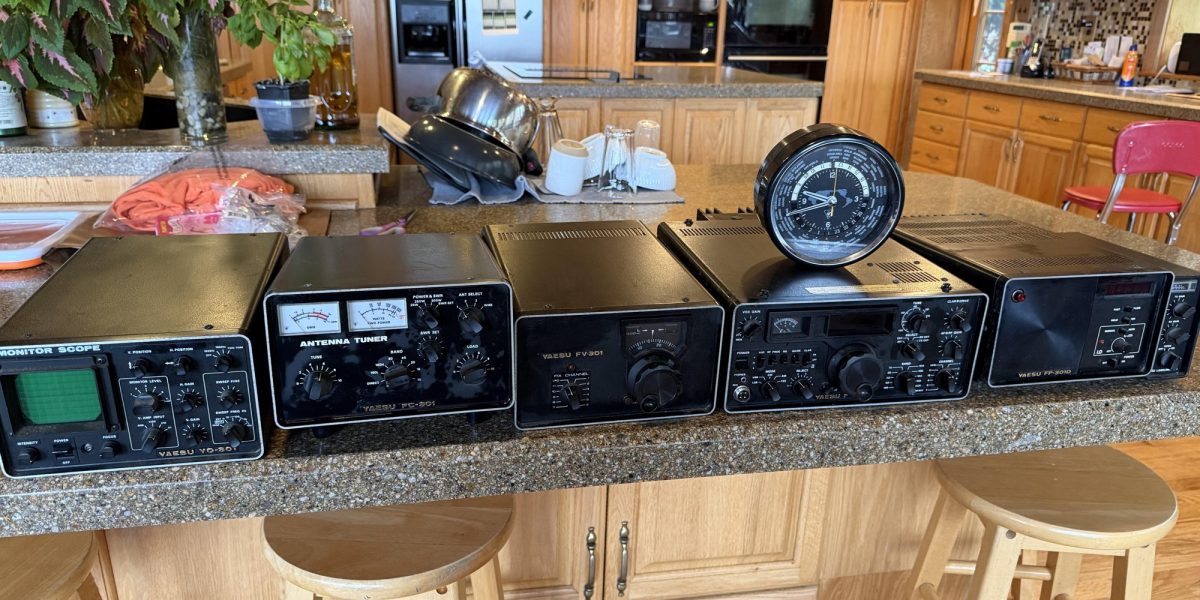
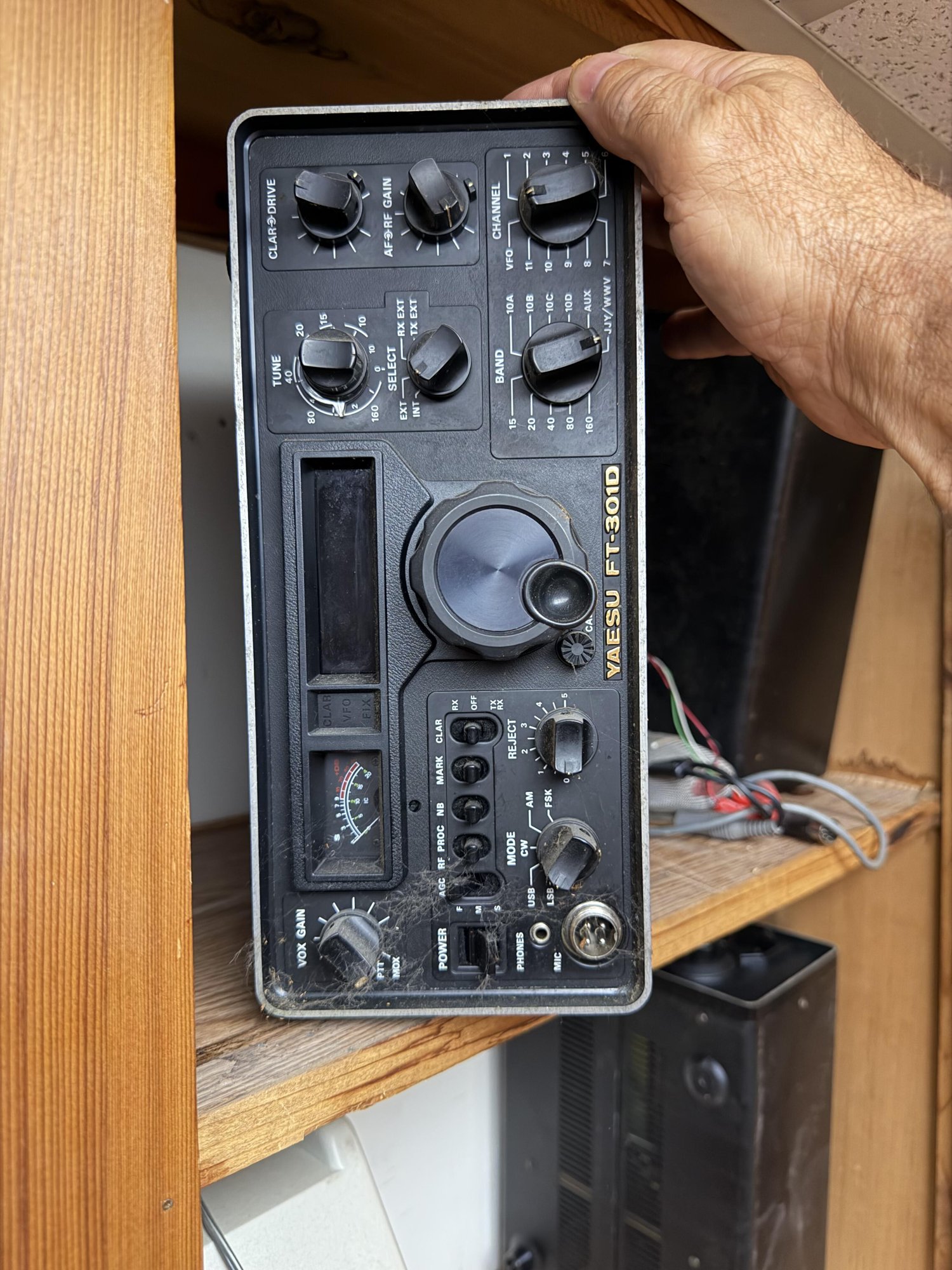
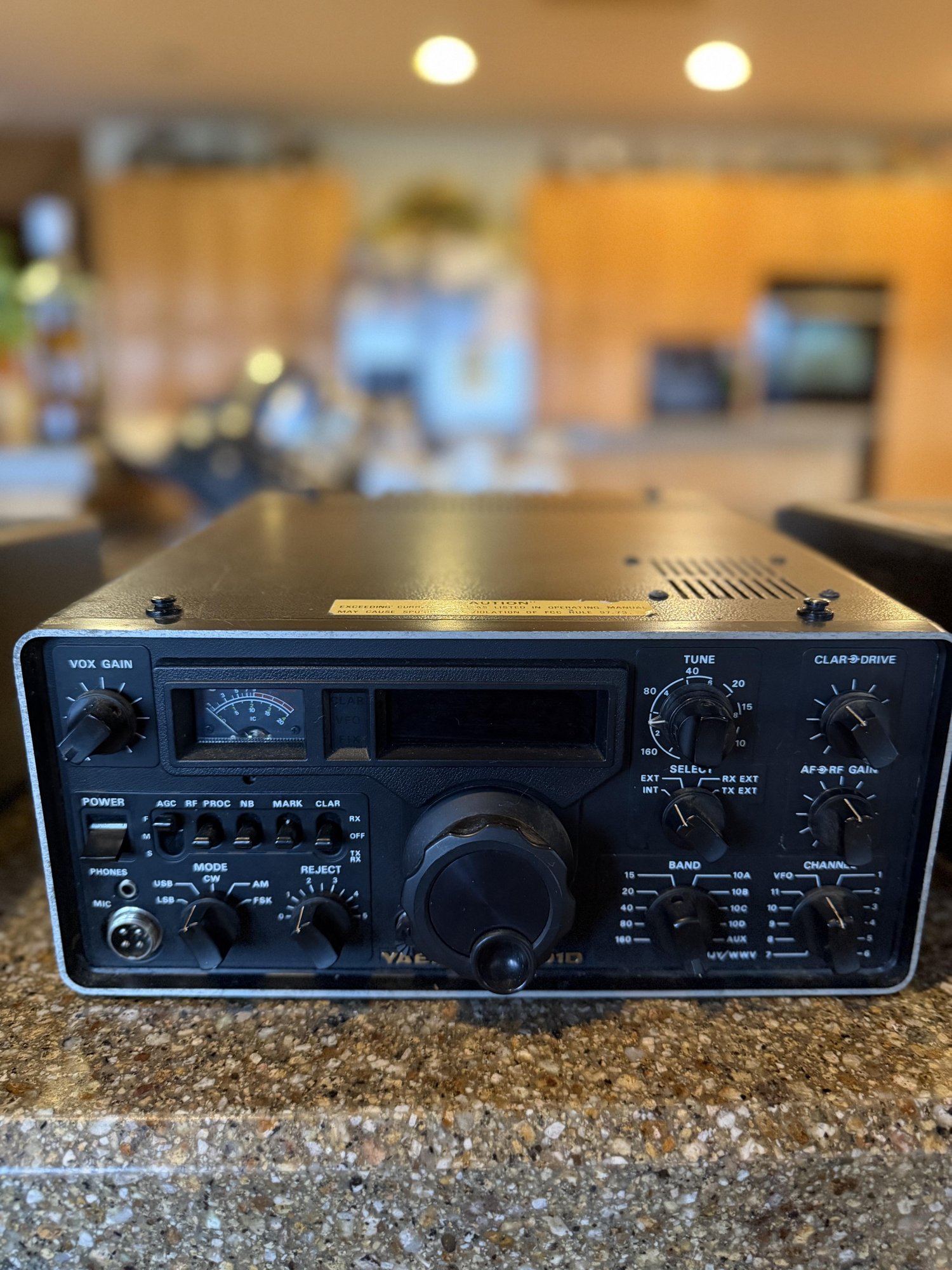
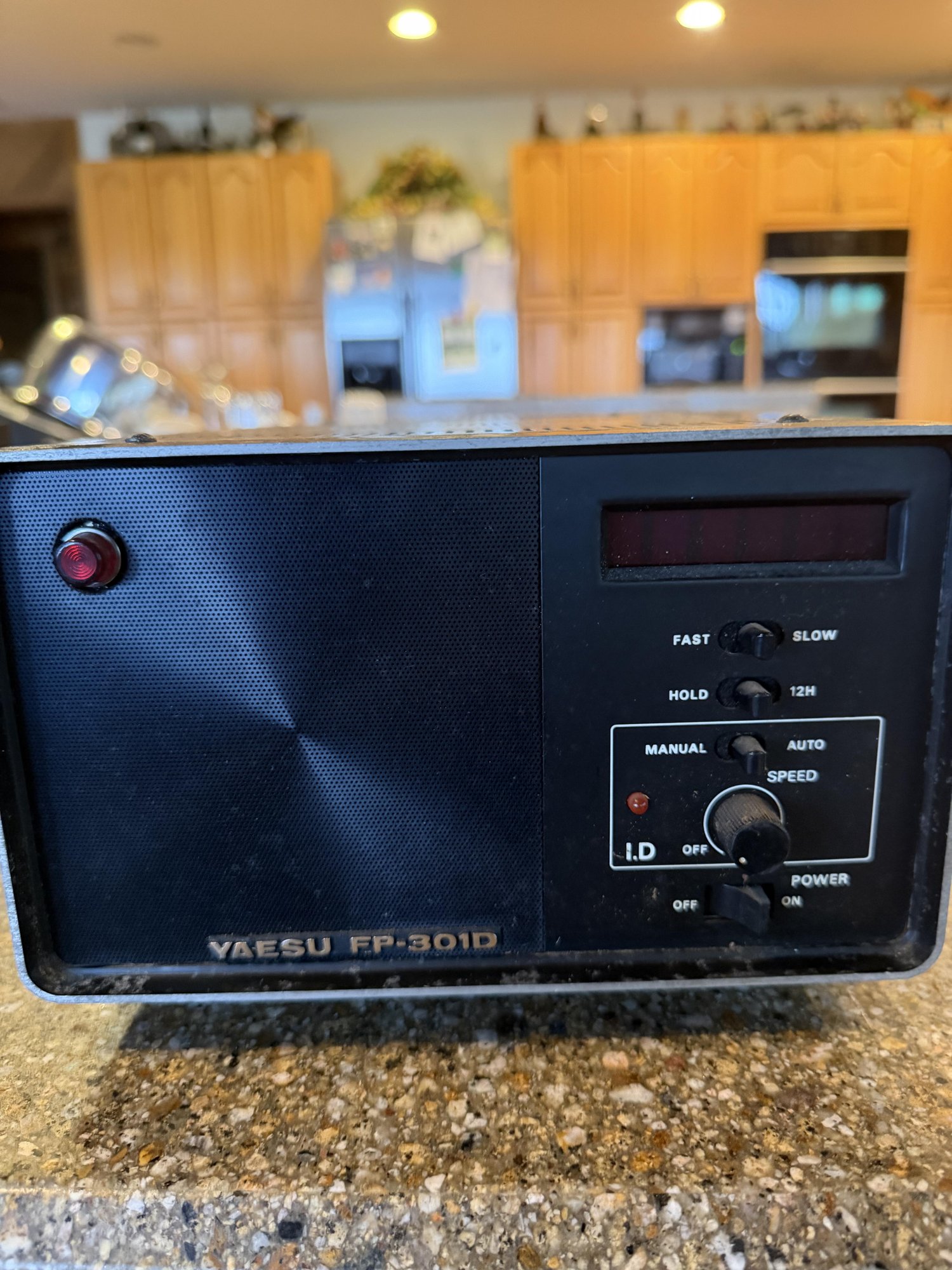
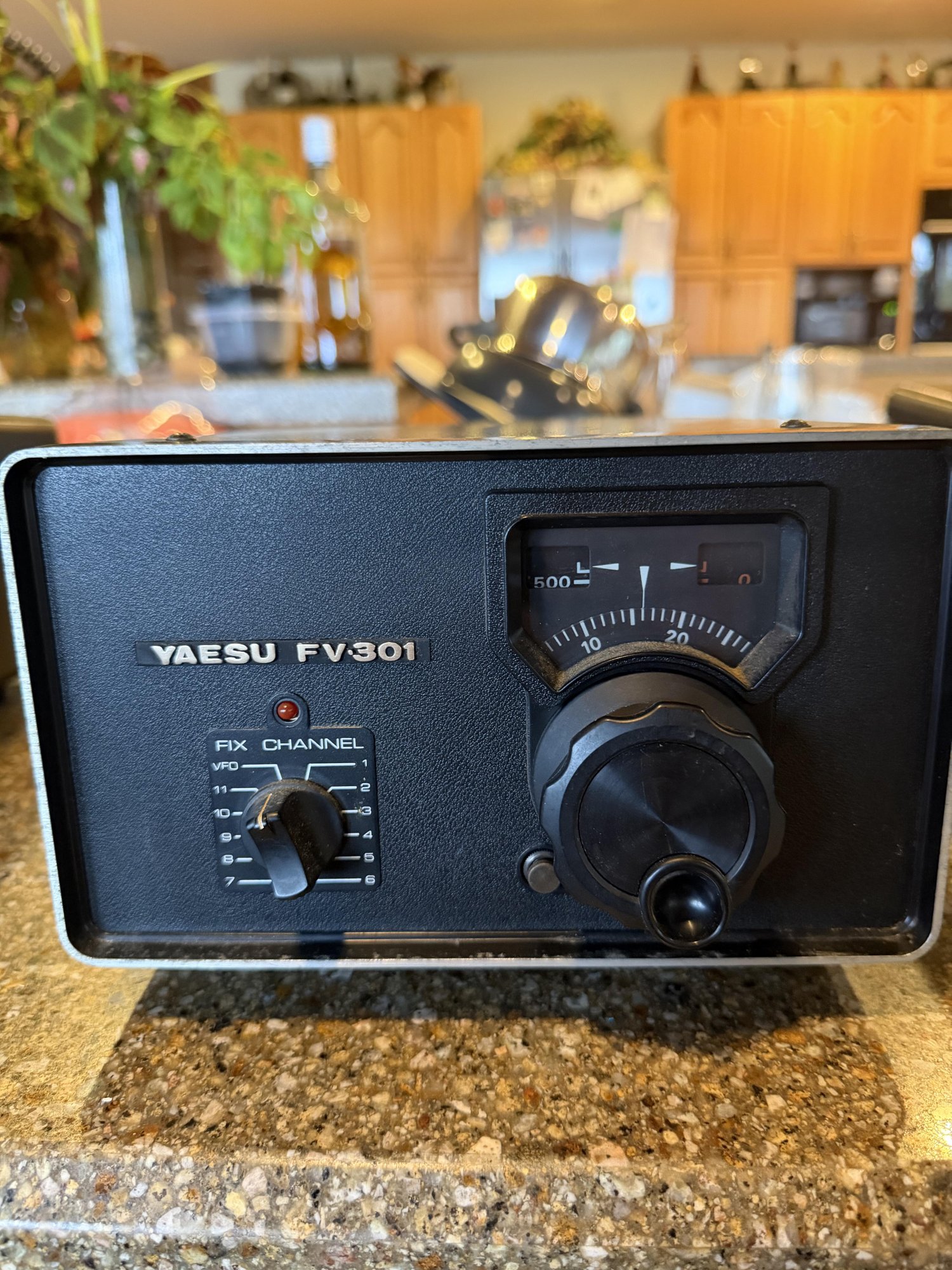
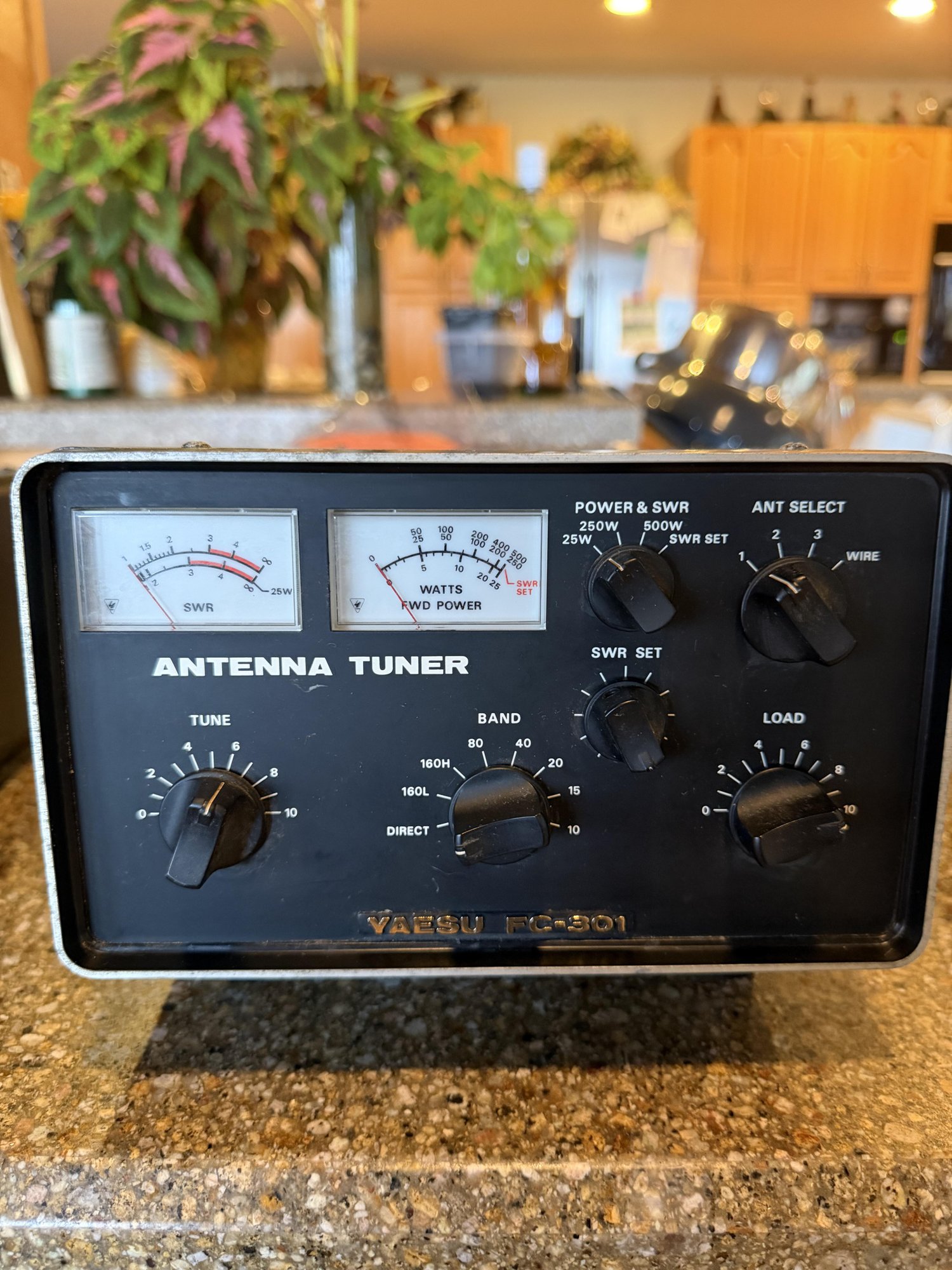
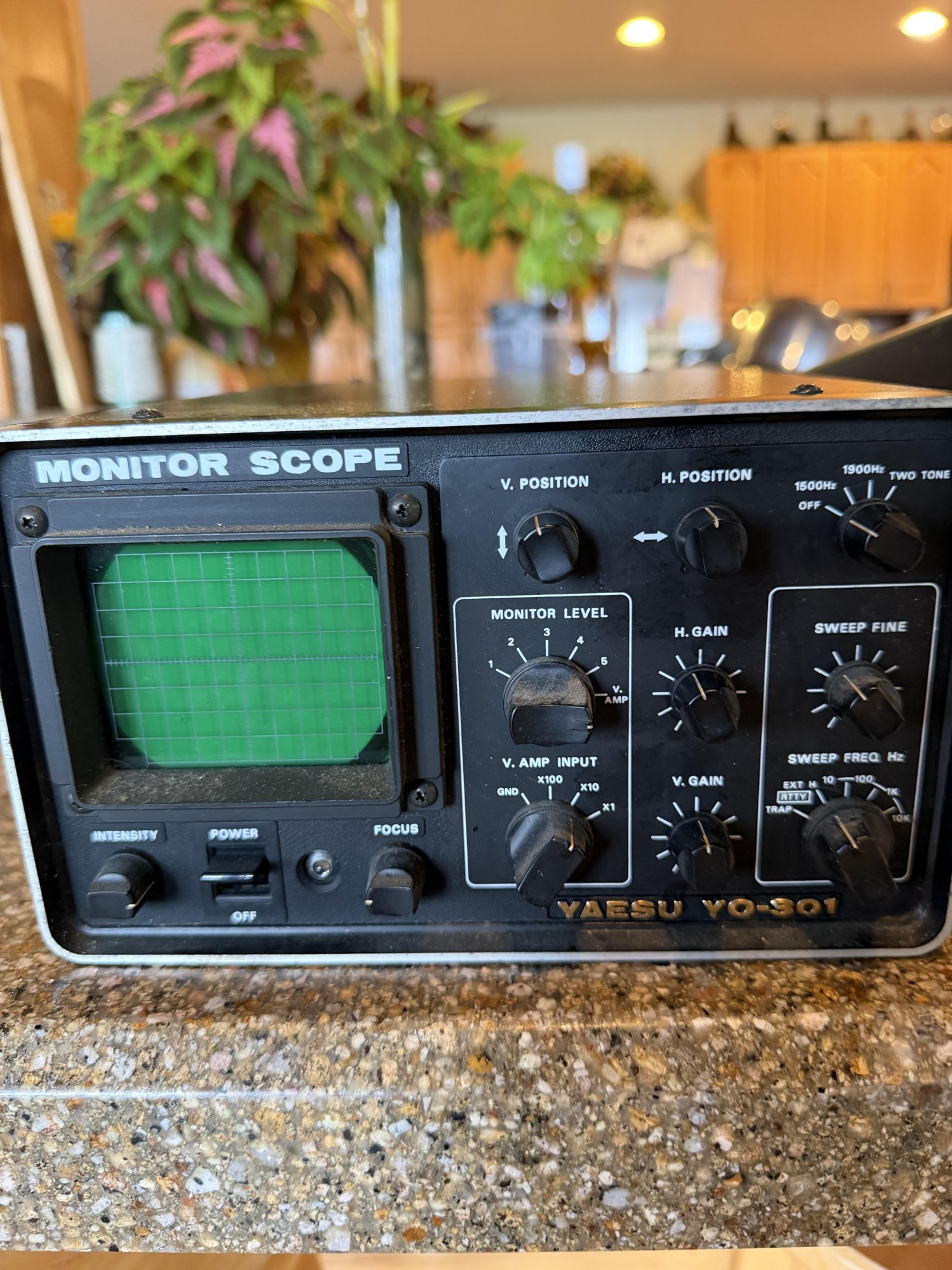
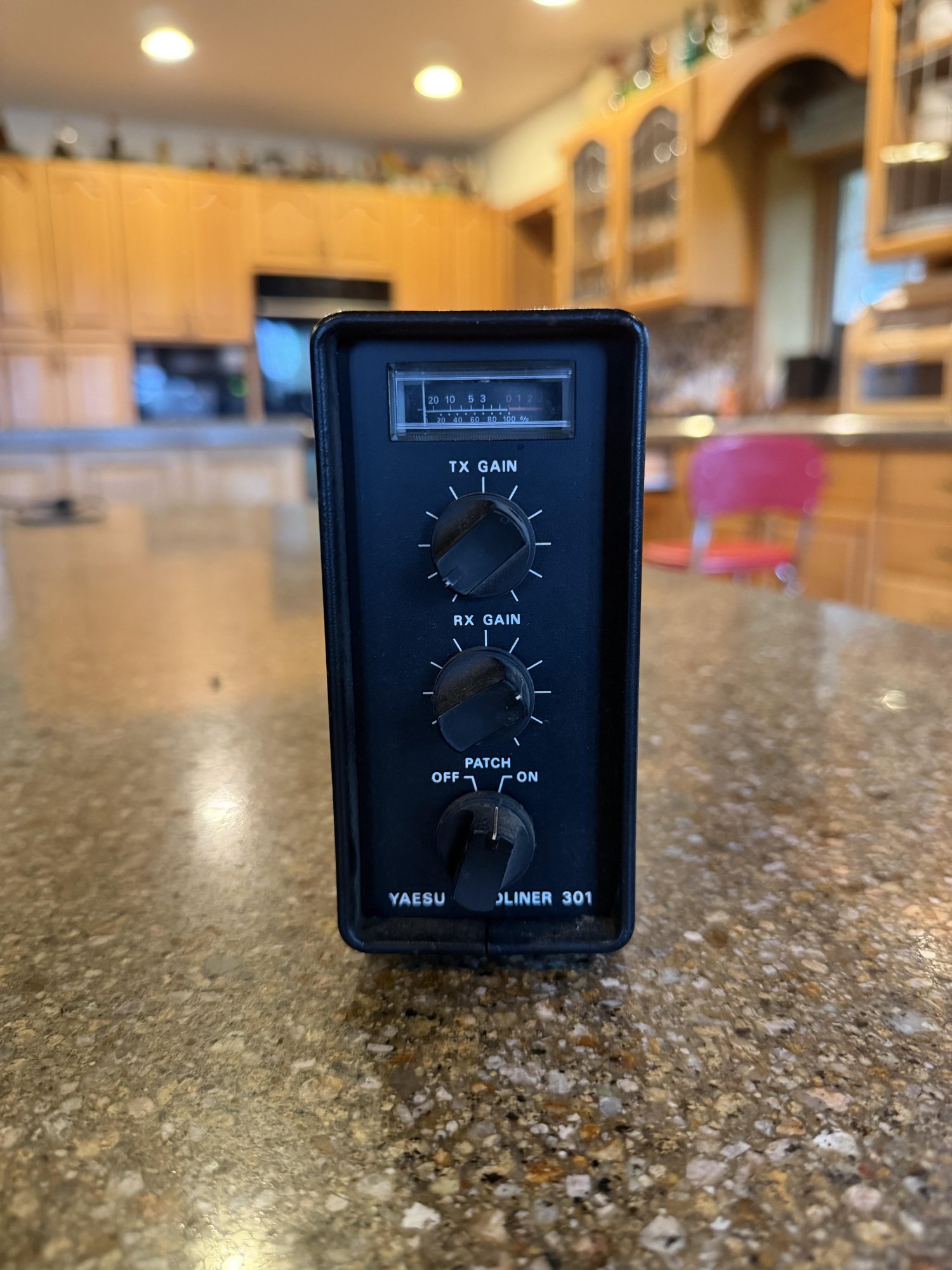
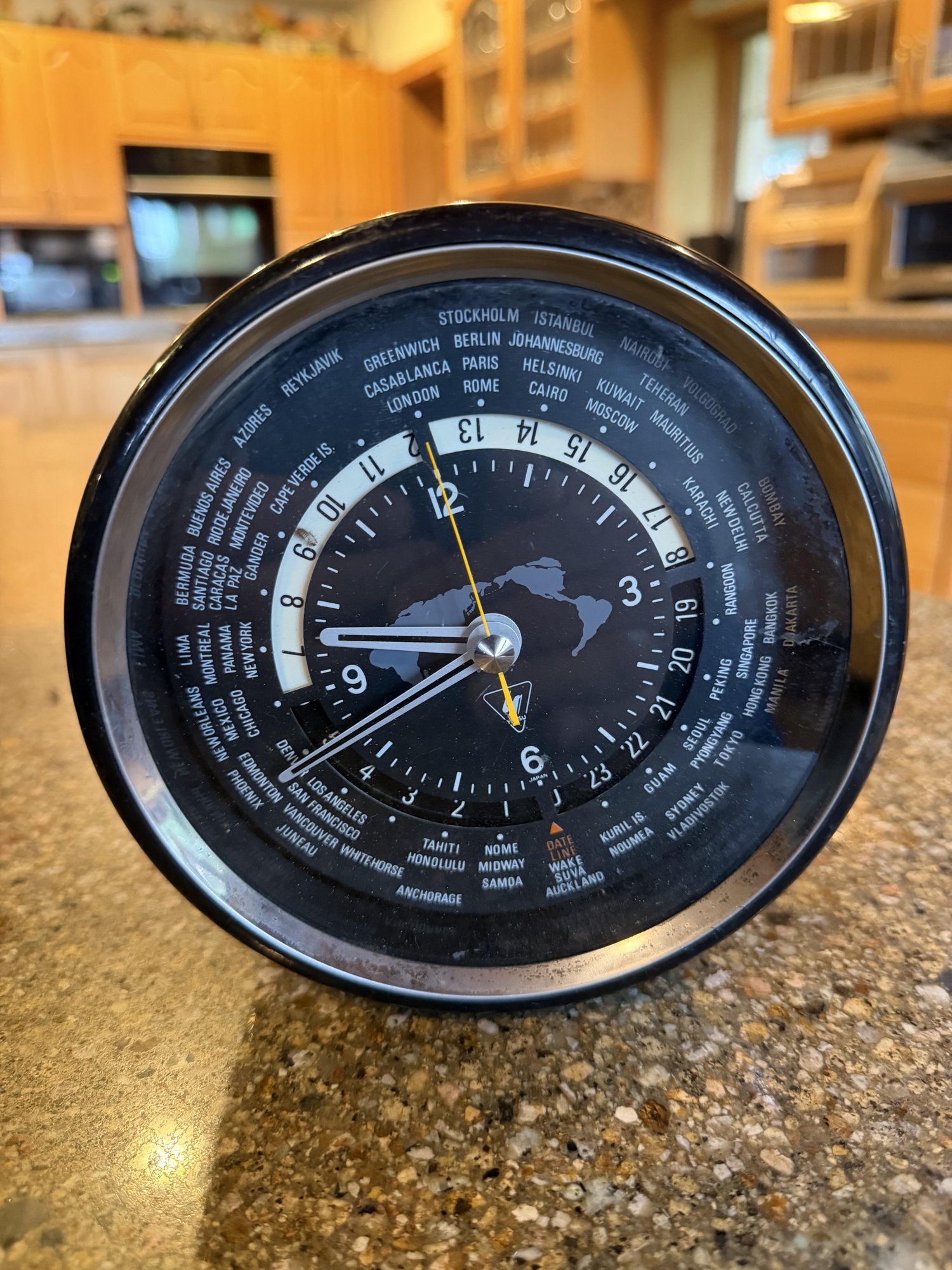
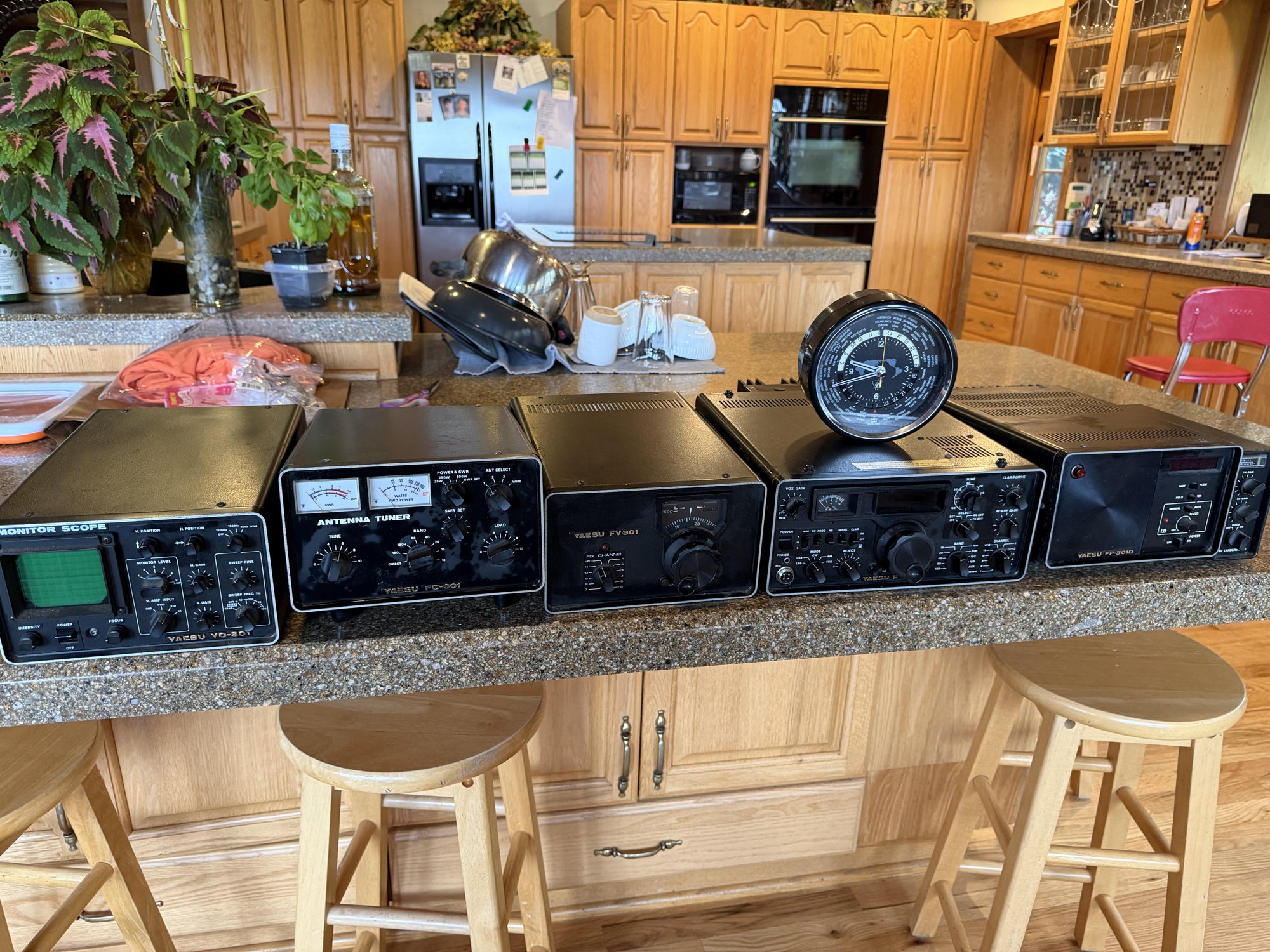
What I found was my entire first HF station, sitting right where I left it a quarter century ago. The FT-301D. The FP-301D power supply. The FV-301 VFO, the FC-301 tuner, the YO-301 monitor scope, the Landliner 301 phone patch, and the Yaesu world clock that sat on top of it all.
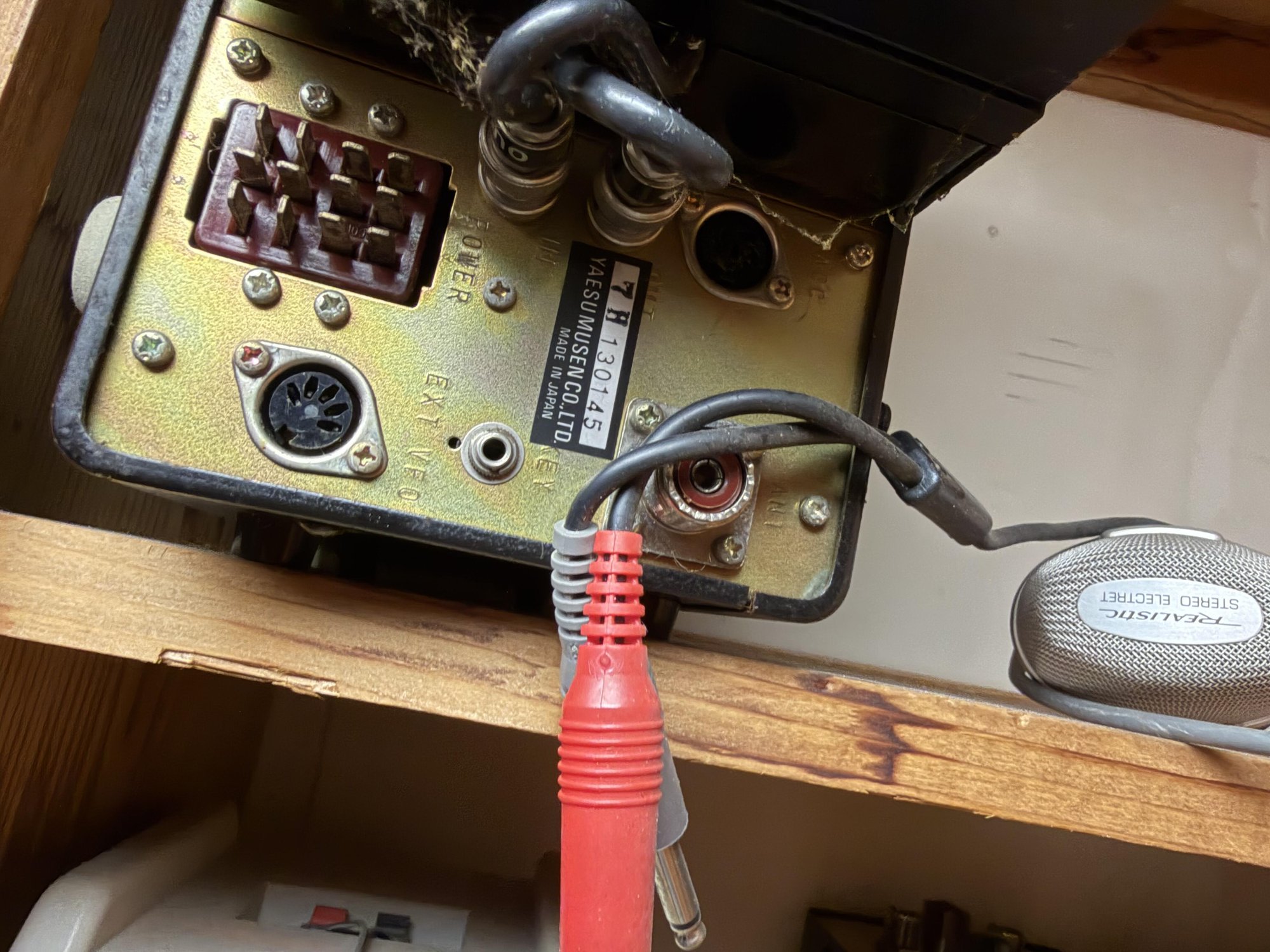
Cobwebs hung off the switches. A Radio Shack Realistic mic was still plugged into the back. The world clock looks like it stopped at twenty to nine. Don’t ask me what year.
I took some pictures and closed the door. Today I finally pulled it all out.
How It Got to Me
I can’t tell you the year. Early ’90s, not long after I got my license.
I wasn’t in a club back then. I had a group of friends who were my Elmers, all older than me. Not much has changed there.
One of them was Harold, out in Yardley, PA. This was his station, and he sold it to me.
It came in the original Yaesu boxes. Cardboard, with flaps that met in the middle and tied shut with string. Every piece had its own box and its own manual. I think the boxes bit the dust at my mom’s house before I got married. Who knows.
The gear wasn’t new even then. If I’m reading Yaesu’s serial codes right, every piece was built between April and October of 1977. Fifteen years old when I bought it. Pushing fifty now.
The Line, Piece by Piece
Every box had a job, and Yaesu dressed them all to match. Here’s the whole family, cleaned up on the kitchen counter.
The Bedroom Station
This monstrosity lived in my bedroom. It took up the whole desk. To the left sat a rack with a giant Astron 50-amp power supply and some early packet gear. Kantronics TNCs, if I remember right.
My sister reminds me there was a tower right outside my window. The coax went out the window and straight up the tower. I’d forgotten all about it. Then I remembered where it went. I gave it to my friend John “G-Boys” Grasso for his Nextel system.
Remember Nextel?
I must have had some kind of wire up for 10 meters. I honestly don’t remember.
What I remember is two meters. I was big into packet radio. HF was a fantasy.
I was just a repeater guy.
The Ultimate Party Line
Before cell phones, there were autopatches.
When you were connected to a repeater, or another system set up for it, you keyed a few digits on your mic and got a dial tone. Then you dialed a real phone number, right from your car. Everyone listening heard every word.
The ultimate party line.
The Landliner 301 did the same thing through your own rig. I don’t remember using it. I’m sure I tried.
A Beast I Didn’t Understand
I’ll be honest. I didn’t understand half of this station.
I loved the YO-301 scope. Green screen, cool traces. No idea what they meant. Today I know it has a built-in two-tone generator for checking whether your signal is clean or splattering. Back then it was a light show.
The FP-301D had a CW IDer that sent your callsign in Morse every ten minutes to keep you legal. I liked it. I didn’t know why it was there. Odds are it’s still programmed with someone else’s call. Time will tell.
The FT-301 series came out in 1976, billed as the first solid-state 100-watt HF rig. Mine is the full-power D model: 200 watts input, about 100 watts out. Yaesu also sold a 10-watt version. Back then, 200 watts was a big deal.
Then there was my license. Technician Plus, back when you still needed 5 words a minute. On HF, that meant voice on 10 meters and Novice CW on 80, 40, and 15.
So I had a CW IDer on a rig where most of my privileges were CW.
I was just a repeater guy.
The Guys From Back Then
I do remember the people.
Bill worked for the Associated Press. He traveled the world setting up networks for big sporting events, and he always set up the IT for the Olympics. I was forever angling for an invite to work that gig.
I never got it.
Years later, I saw a posting for some radio equipment for sale. Somehow I put it together. It was Bill’s gear. His daughter was selling it off after his wife, Nancy, passed.
Then there was Harold, the man who sold me this station. Nice guy. He tried to help me. Somewhere along the way, we stopped being friends. I still don’t know why.
There’s a lot of that in this hobby. Maybe it’s because you can’t hear tone or humor over a microphone. Packet was worse. Today it’s text.
We lose a lot of Elmers in this hobby. Most of the hams I knew then were older than me. Most of the hams I know now are too.
Why It Went Dark
The timing was bad from day one. Cycle 22 peaked around 1989 to 1991 and was sliding toward the bottom. By the time this station landed on my desk, 10 meters was dead.
Sound familiar?
I made very few contacts on this rig, if any. I didn’t keep a log. If I did, it’s gone.
Then life showed up. I bought a house and got an eight-year-old daughter in the package. I was starting a family and, honestly, a business. I was trying to make something of myself.
The radios went back in their boxes and moved from house to house. When I bought this place in 2000, they went into the laundry room cabinet. Worst spot possible. Heat, humidity, and you can see the rust on the screws.
They haven’t come out since.
Until today.
Where It Goes From Here
I’d love to tell you it all came flooding back. It didn’t. It was a long time ago.
I remember the station. I remember sitting in front of it. Mostly, I remember how little I knew.
I owned a scope I couldn’t read, a CW IDer I didn’t understand, and 200 watts on a dead band.
I was just a repeater guy.
Today there’s an SO2R Flex setup, an 8600 and a 6400 with the Tuner Genius, Antenna Genius, Power Genius, and all the candy. There’s an Icom 9700 for satellite and EME. I know why every piece is there.
Funny thing. Ham radio lines up with my day job more now than it ever did in the ’90s. It’s all computers and IT.
The gear on my kitchen counter hasn’t changed in thirty years.
I have.
Maybe it goes on a shelf in the new shack, a reminder of how it all started. Or maybe one day I bring that power supply up slow and see if the old girl still has a voice.
If I fire it up, you’ll be the first to know, in a future post right here at n2lqh.com.
73 de N2LQH · Terry Rossi · South Jersey