The Second Signature: what a silent station in the Pine Barrens, a dead band at eleven at night, and a jar of honey taught me about belonging at K3LR.
This is part two. Part one: how a YouTube video and a backyard cook ended up at K3LR.
Looking Up
I spend more time than I should driving through the Pine Barrens with my head tilted back.
The pines down here top out around seventy feet. I’m looking for what stands above them. In Mays Landing, about twenty miles from my QTH, there are towers well over a hundred feet tall, aging in the South Jersey sun and the South Jersey winters. They belong to a long-gone station called N2RM.
If you were contesting in the nineties, you know the call. I didn’t. I learned about it back in March from Rick, W2CK, one of the local legends and my neighbor, who told me the whole history. Somewhere in that conversation I mentioned that I knew Sal Anastasio, WM2H, and that I’d been invited to help cook at K3LR.
I don’t think Rick believed me. He called Sal to check me out.
I can’t blame him. N2RM was a mammoth multi-multi in its day. In the 1999 CQ Worldwide phone contest the team put up 24.4 million points on 9,380 contacts. Sal was in that lineup. So were John, N2NC, Andy, N2NT, and Bill, W2RQ. Dig through the old results and you’ll find Phil, K3UA, in there too.
I know them now. I didn’t know them then. Sal was the only name on that list that meant anything to me, and it took me a while to understand that the men I cook breakfast for in western Pennsylvania made their names twenty miles from my kitchen.
The big multi-multi efforts from N2RM stopped in the early 2000s. The towers are still there. The people went somewhere else.
I know where they went. I’ve now been there twice.
“You’re Going to Be There in October, Right?”
The short version of my first trip, for anyone just pulling up a chair.
Last year I spotted Sal on slide 154 of a YouTube presentation by Tim Duffy, K3LR. Sal is the older brother of my childhood friend, and the guy who drove me to high school in a Chevelle with Hot Tuna on the 8-track. One email led to another, Sal told Tim I was a great chef, and in March I was cooking for the K3LR team at the ARRL DX Phone contest. The whole story is here.
I am still not a great chef. But they asked me back.
The invitation landed at the Huntsville Hamfest, during the ARRL National Convention. Tim was supposed to MC the mini Contest University, but American Airlines had other ideas, and he spent the night stuck at a Pittsburgh airport hotel. He sent word ahead that the session was in capable hands. Kirk, K4RO, was one of the speakers. I ended up as the MC. When he caught up with me, he didn’t ask whether I was coming to CQ Worldwide. He told me.
“You’re going to be there in October, right? You’re going to be there in October.”
I was going to be there in October.
Before the trip I wrote Tim a note. Was I going to get a chance to operate this time? Because my guys back home were going to break my stones if I didn’t. I had upgraded to Amateur Extra since March, and I’ll admit part of the reason was to look a little more useful to people who do this for real.
Tim’s answer was short. We’ll get you in the chair.
Hold that thought. It comes back.
This time I drove. Southern New Jersey to West Middlesex, the Pennsylvania Turnpike from the Jersey border to damn near Ohio, in my Ford Lightning. It was the first long trip in the electric truck, and in 70,000 miles the first time I ever had to charge on the road. The Turnpike has chargers at the rest stops. It was easy.
Sal flew into Pittsburgh and got delayed. He walked into the airport hotel around one o’clock Friday morning. By eight we were shopping.
We hit the Giant Eagle Market District, which is a gigantic supermarket, and worked with the meat man and the fishmonger to get exactly what we needed. Then BJ’s for rolls. We buy too much. We always buy too much. Better to have it than to need it.
Then an hour north to K3LR.
The House That Tim Rebuilt
I thought I knew what to expect. I didn’t.
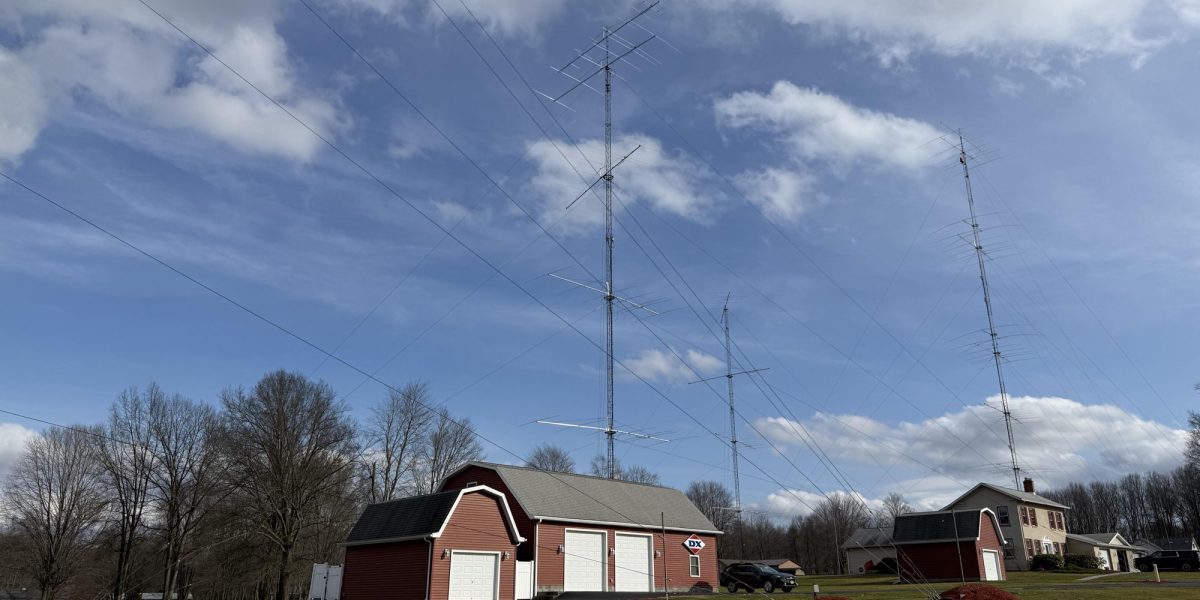
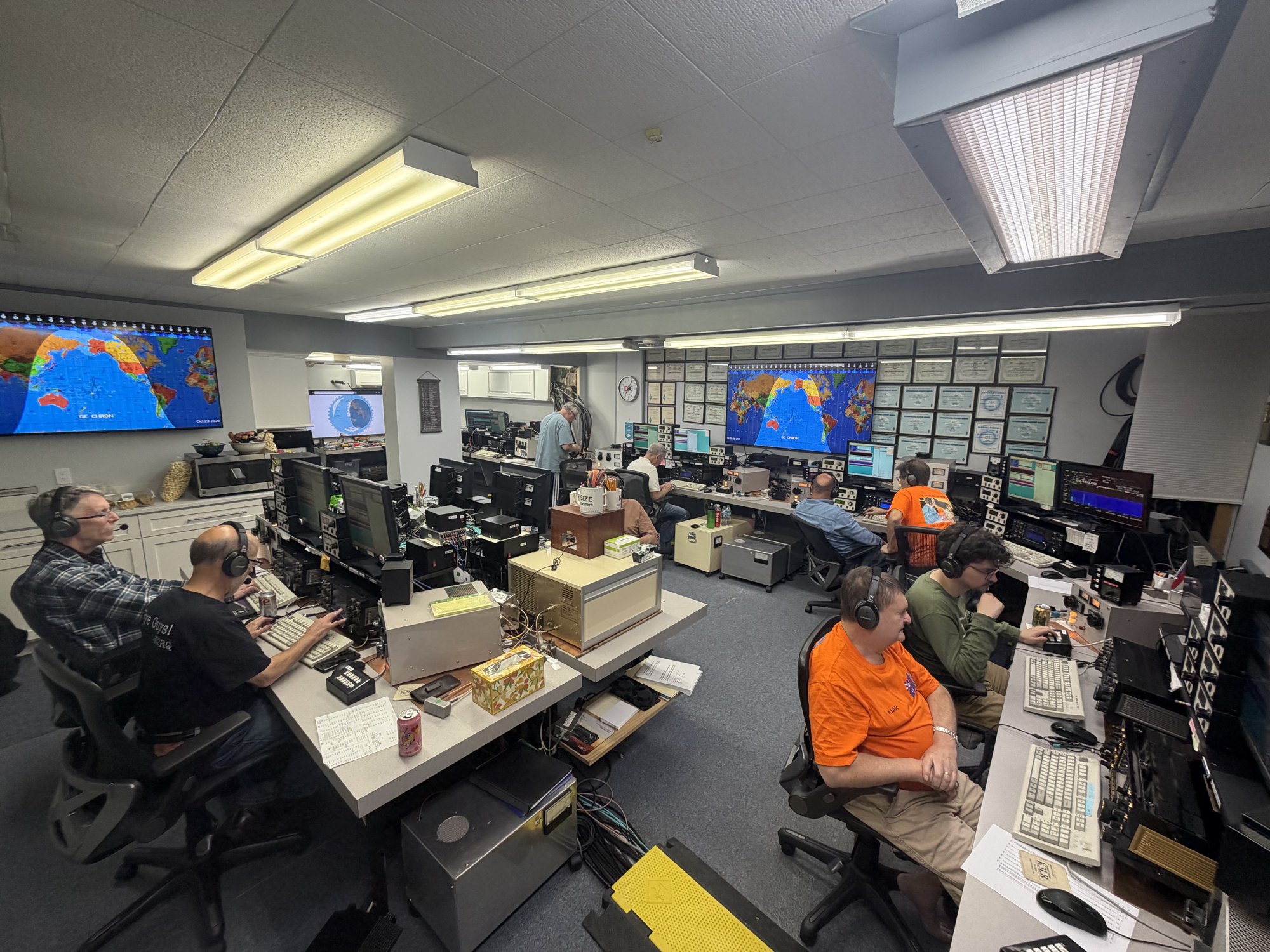
The shack has been completely redone, and it is twice the size if not more. In March there were eleven operating positions. Now there are twelve, two on every band from 10 through 160. Tim will show you the line on the floor where the old carpet meets the new. That’s where the shack used to end.
You don’t have to take the stairs anymore, either. You come in the back of the house on the main level and ride an elevator down one story, two people at a time. You can see out the whole way down. As the operators age, that elevator is going to matter more and more. Tim knows it. That’s why it’s there.
There are two restrooms where there used to be one, and one of them is urinal-only. More air conditioning. And a lounge, with a nice couch, a television, and a small refrigerator for sandwiches and drinks.
Now, Tim doesn’t like people lounging in the lounge. Sit there a little too long and you may be in line for some electroshock therapy. Hi hi.
Upstairs, the kitchen doubled too, which matters a great deal to Chef Sal and me. It’s an L now, with counter space for days, cabinets everywhere, a new dishwasher, a garbage disposal, and a spice rack with every spice you could think of. Outside there’s a gigantic new grill. And a pool. And a hot tub. And a sauna.
If you know Tim, you already know the catch.
The hot tub and the sauna are shut down for the contest. No pumps. No motors. No electrical noise of any kind for 48 hours. I got a swim and a soak in on Friday with Sal and Sandy before the start, and then it was down to business.
In my first article I wrote about the wall warts Tim won’t allow and the incandescent bulbs he tracked down for the beacon on the 275-foot tower. This time the policy came for my truck. I was not allowed to charge the Lightning on the property. During the contest I wasn’t even allowed to turn it on and drive down the street.
That was okay. I had plenty of juice, and I topped up at a dealer down the road before I headed home. But let the record show that Tim Duffy has now grounded a hot tub, a sauna, and a pickup truck.
The whole place runs like that. There were no real hardware failures all weekend. One computer quit, and it was swapped for a spare in minutes. Because of course Tim has a spare, as well as an IT tech on call.
Sleeping this many people takes what amounts to a small community. There are at least three houses on the street, plus the DX Barn, where eight or ten operators bunk on the second floor. I had a two-bedroom house to myself. It’s called the Mouse House, because somebody once saw a mouse in the shack out back. One mouse, one time. That’s all it takes. The keychain says “Mouse House.”
Sal sleeps on the couch. He has slept on the couch for twenty years. Why he does it, I don’t know. But he does.
Here’s the part that stuck with me. K3LR has been running multi-multi since 1992. Nobody builds an elevator, a twelfth chair, and a kitchen with room for two cooks for the team they already had. That’s a man building for the next thirty-five years.
Feeding the Machine
Before the contest I sent the operators an informal survey asking what they wanted to eat. Somebody said barbecue. I answered with a picture of ribs I made at Myron Mixon’s barbecue school, down on his farm in Unadilla, Georgia. Less talk, more ribs.
There are only two meals all weekend when everybody sits at the table together: Friday night before the start, and Sunday night after the finish. In between, we’re carrying food down to the operators, or they’re coming through the kitchen in ones and twos as they go on and off shift.
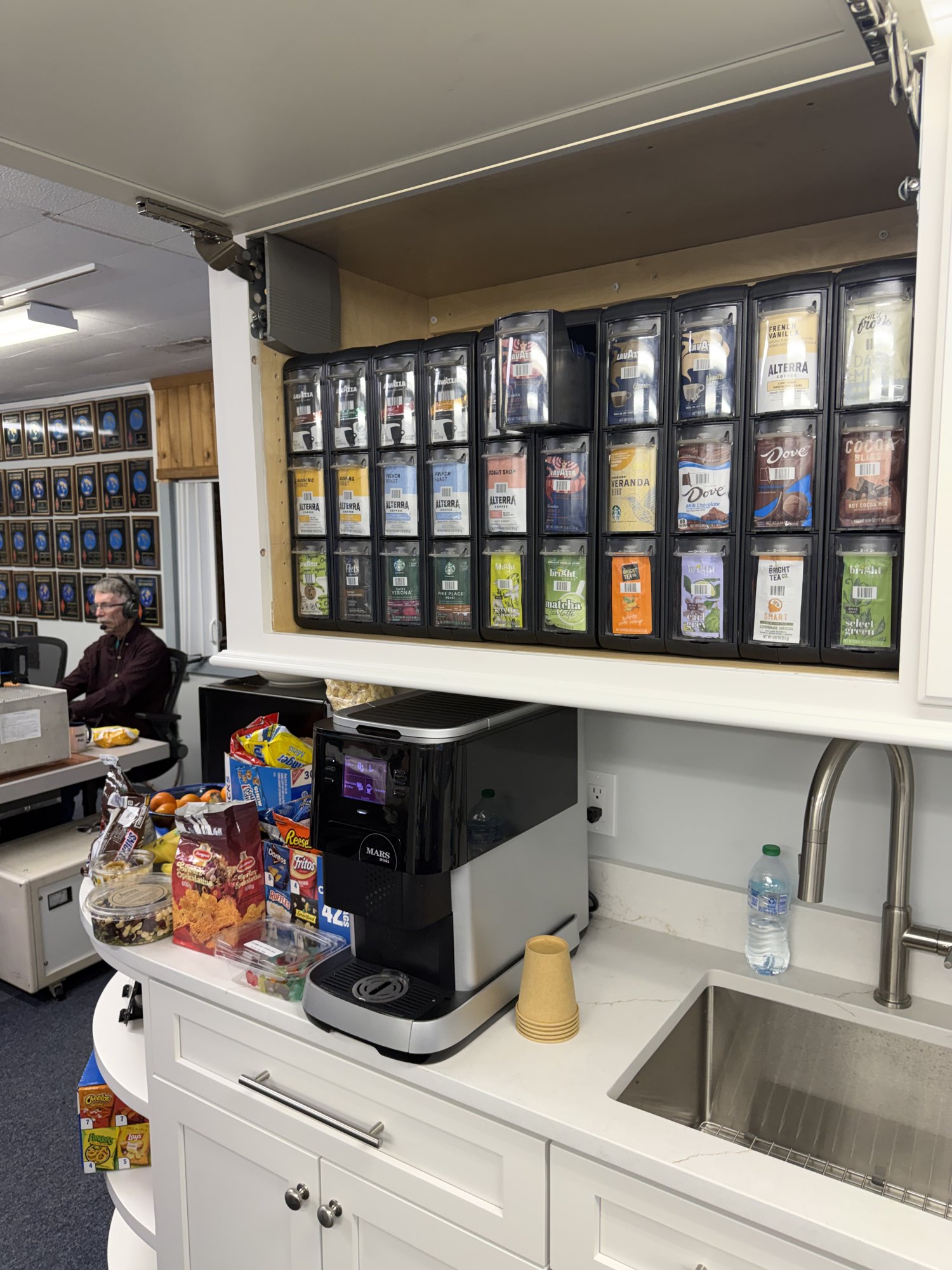
That in-between is why Tim put a kitchenette right in the shack, with a coffee machine and two brand new crock pots. Now an operator can eat without ever leaving the shack. I filled those crock pots with two recipes from my wife, Lisa. One was her beef stew, which we eat at our house all the time. The other was her chicken with salsa and beans and cheese on top. Both are hearty, both are filling, and both are right for hungry people working a radio in the middle of the night. Lisa has now fed a world-class contest team without leaving New Jersey.
The elevator doubles as a dumbwaiter. Bowls and silverware get ushered back up to the kitchen on a bus cart. I cook. I don’t do dishes. Much.
Friday was seafood. Shrimp scampi, New Orleans barbecue shrimp, king crab legs with butter. There was also pizza, and nobody touched the white one. This is a meat-and-red-sauce crowd. Noted.
Saturday was Wellington night. For the salmon, the fishmonger cut the fish to my specifications. I wrapped it in puff pastry with spinach cooked down with cheese and some good spices. It was a huge success. Next to it went Alton Brown’s pork tenderloin Wellington, with prosciutto, dried apple, thyme, and mustard.
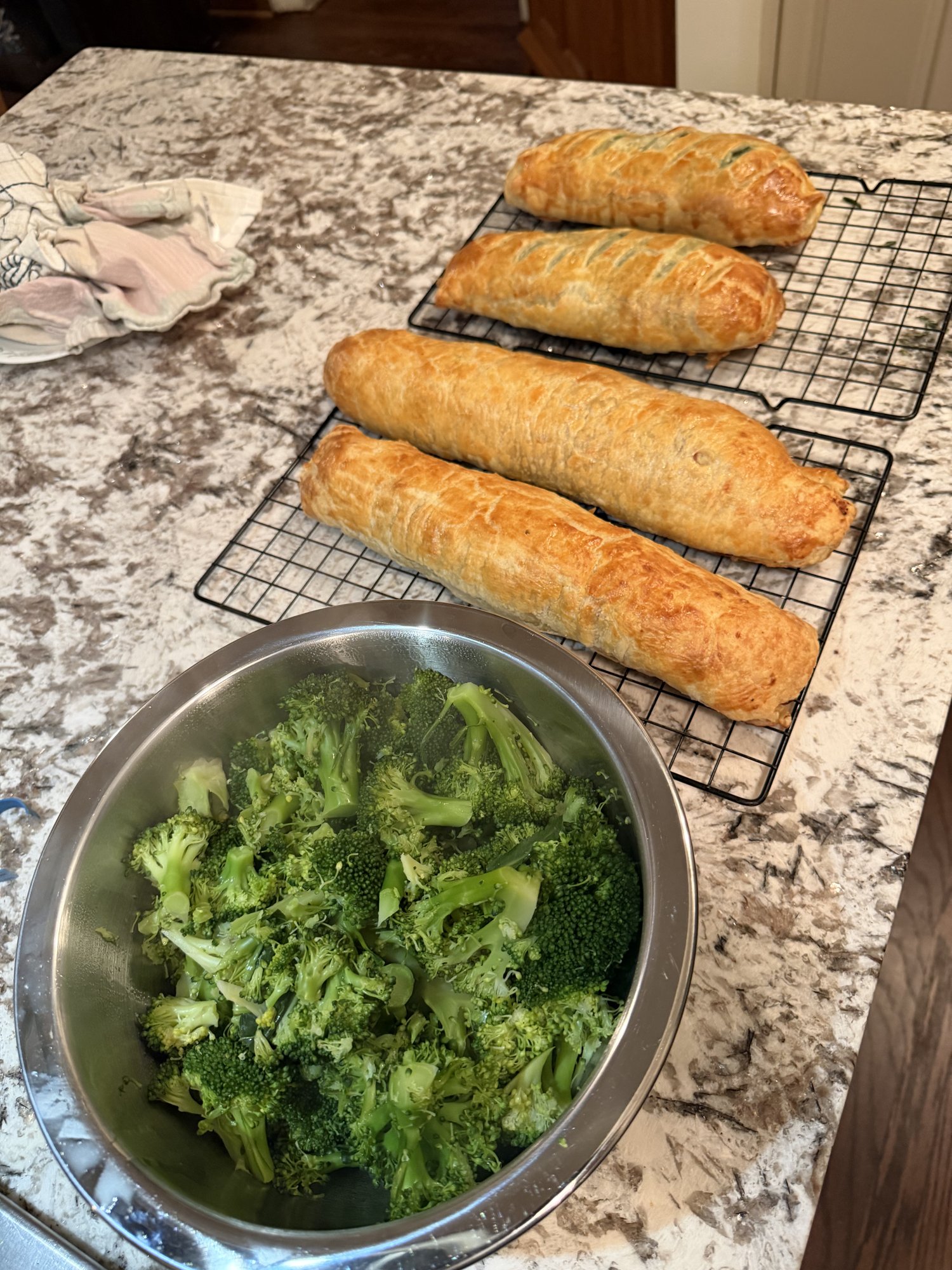
Breakfast starts at five in the morning. This year it was pork roll, egg, and cheese on a Kaiser roll, with scrambled eggs for the occasional holdout. The Jersey sandwich won.
The lunchmeat sandwiches were another story. In March the Italian hoagies were labeled in Morse code. This time there were no labels at all, and quality control slipped. I picked up an Italian and it had Swiss cheese on it. Must have been made by an Irish guy. Or a Swiss guy.
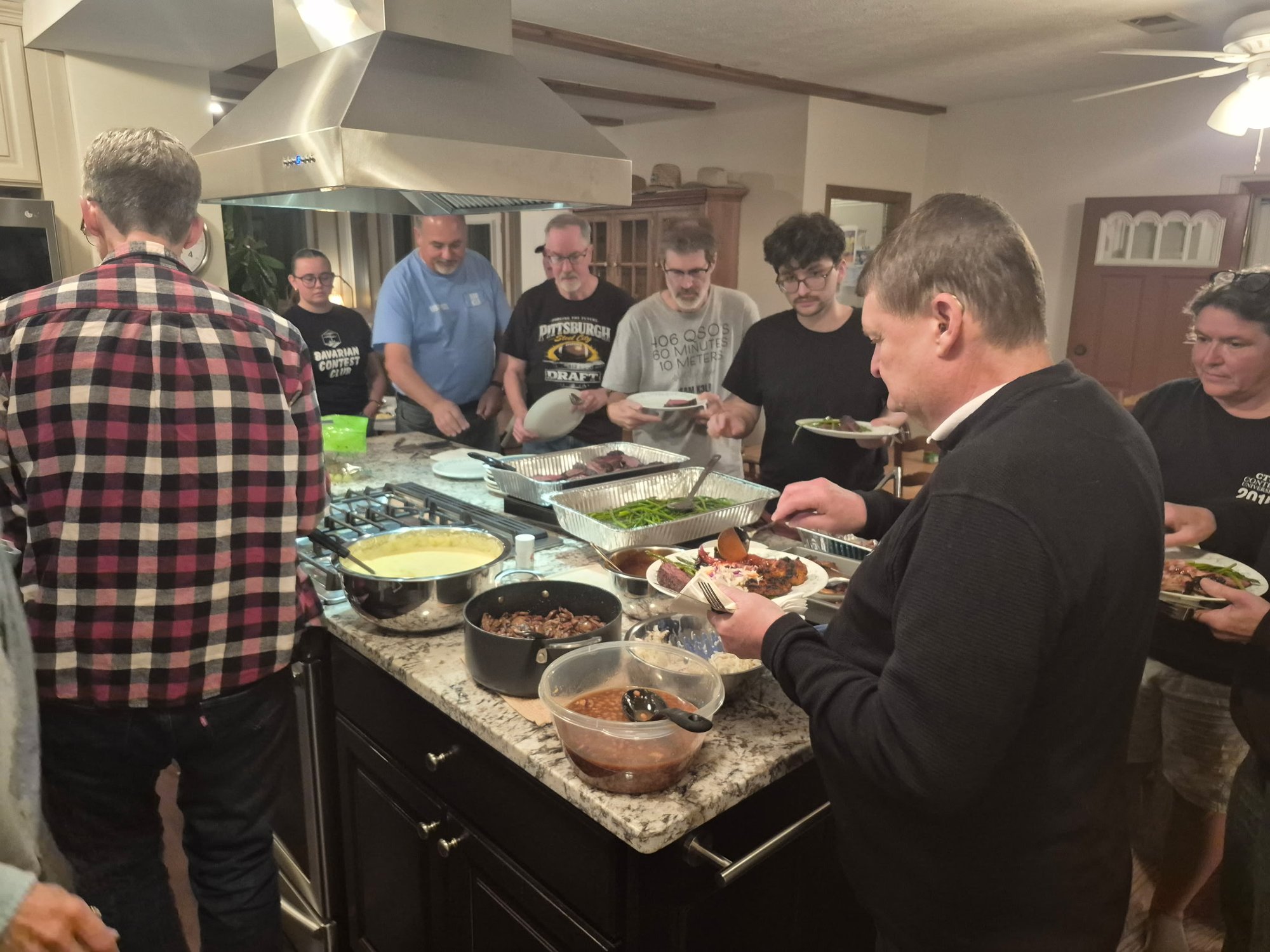
Sunday was the barbecue. Pork spare ribs sat on the smoker all day. Smoked filet mignon. Chicken wings on the new grill, charred on the outside and moist on the inside, with a little butter and just a touch of hot sauce. Mashed potatoes, grilled asparagus, baked beans, steakhouse mushrooms. And Sal made chocolate mousse from scratch, melting down the chocolate and whipping the cream himself.
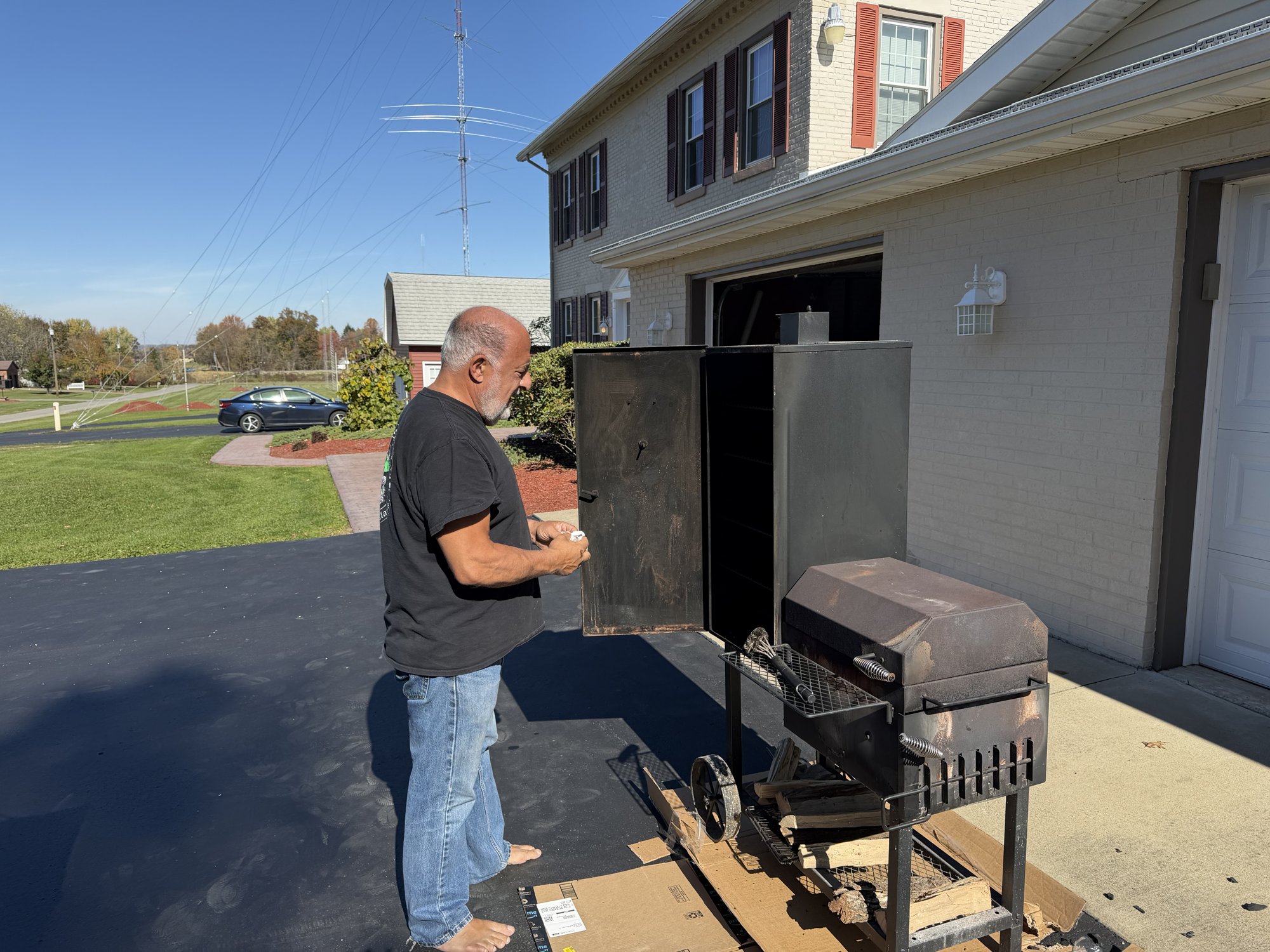
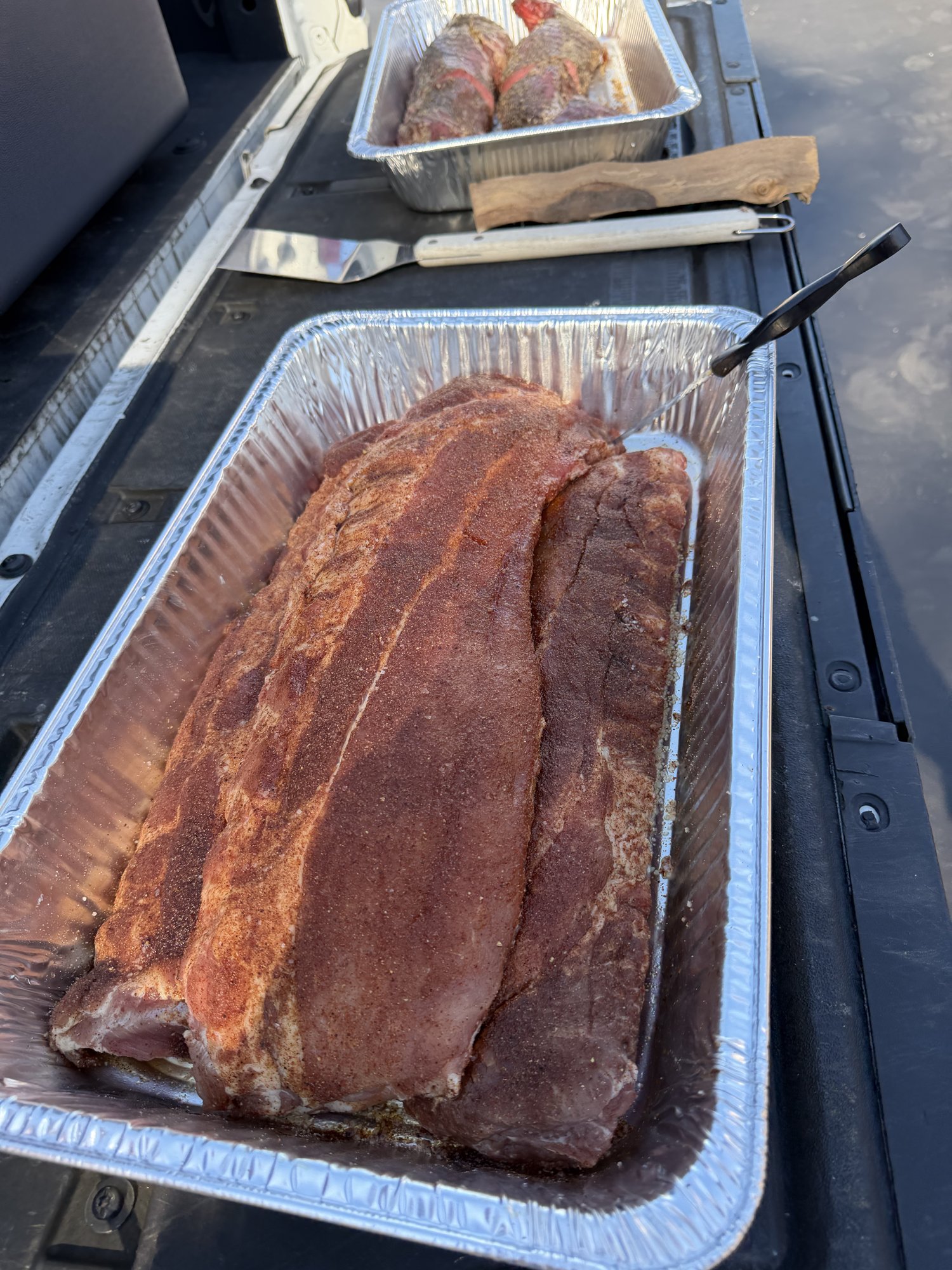
One more thing went into those ribs.
I keep bees, and this year I had a lot of honey. So I bottled some for the team and made up a label. I called it Pinelands Pileup. The front says it was bottled at grid FM29PT, where thousands of bees called and one queen worked them all. The back says: approximately 2 S-units. Does not count as a multiplier. No dupes. One bottle per callsign.
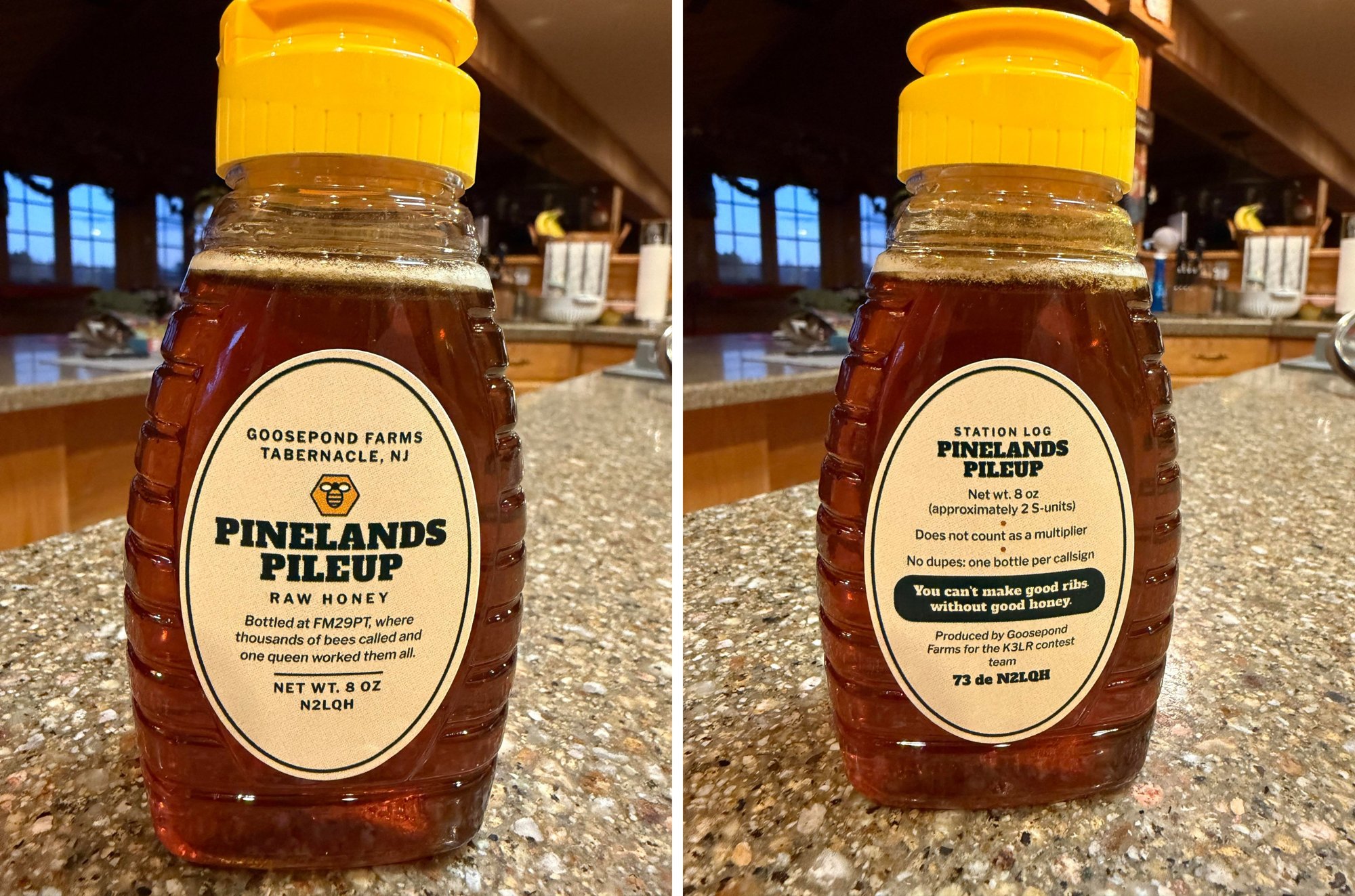
It also says you can’t make good ribs without good honey, so the honey went into the barbecue sauce. Five racks of ribs went out. An empty pan came back.
What I did not think about was the TSA. An eight-ounce jar is a little too big for a carry-on, and plenty of these guys fly. I hope Tim has some left for next time. If you were there and went home without yours, tell me. I’ll ship it.
The Team
Sixteen callsigns went on the score sheet this time. I’m going to introduce everyone properly in a separate post, because they deserve more than a line each. For now, a few.
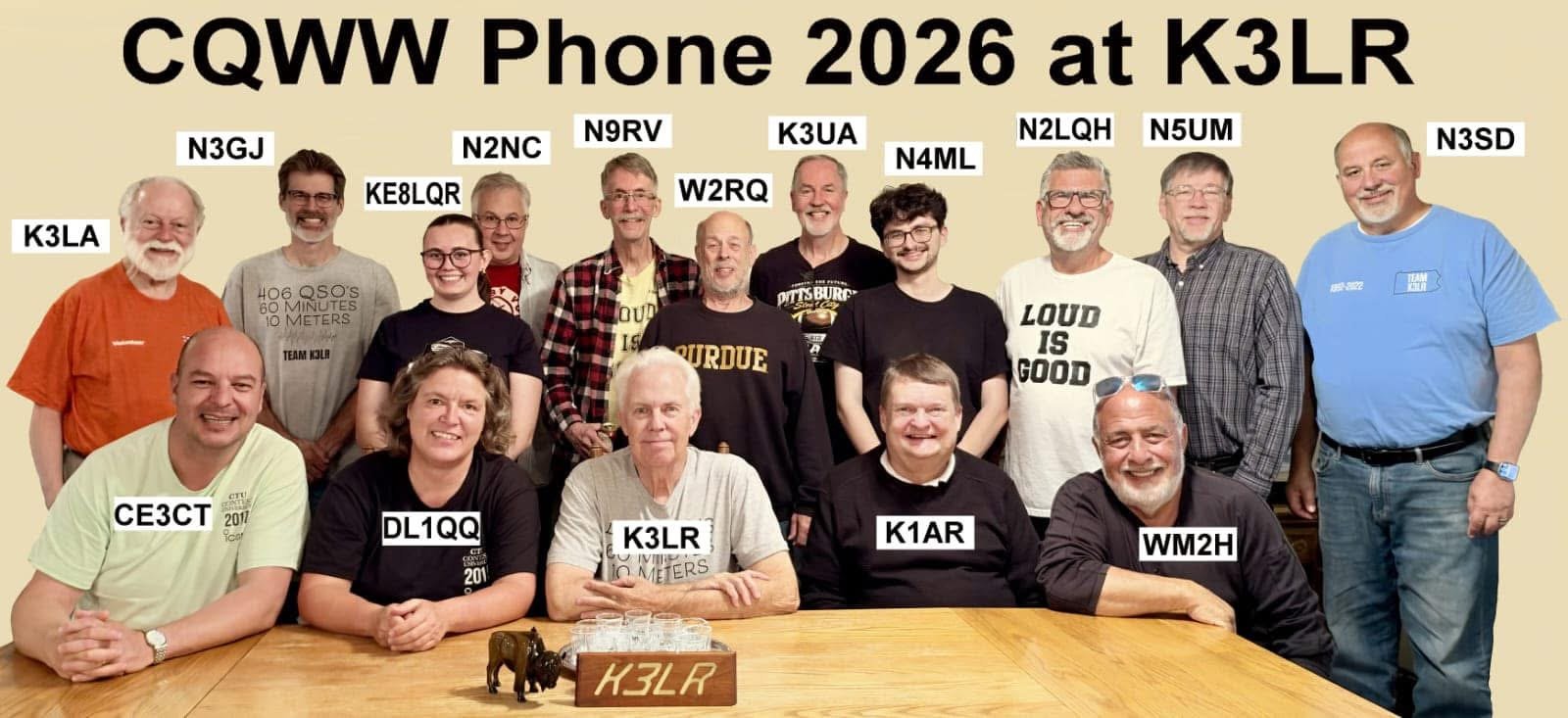
It is always great to see K1AR, a legend in this community. Same for John, N2NC, and Bill, W2RQ, another Jersey guy I can relate to. Phil, K3UA, is a longtime contester and a DX Engineering associate to boot. He’s the kind of operator everyone wants to meet on the radio. If you’re lucky, you get to meet him in person.
Greg, N3SD, is the overnight guy. He rolls in at night, sits down in the chair, works it until morning, and leaves when breakfast is being served. Remember Greg. He comes back too.
Then there were the new faces. Roberto, CE3CT, came up from Chile. He’s super competitive and super nice, and I got to like him a lot. Tim tells the story that he received three emails over the weekend warning him that somebody speaking Spanish was pirating his callsign. The pirate was downstairs in the shack.
Katie, KE8LQR, is a young operator Tim has taken under his wing. She worked 15 meters alongside Sandy, DL1QQ, and she killed it. Max, N4ML, works in education at the ARRL, and earlier this year he went to Bouvet Island as the youngest member of the 3Y0K DXpedition. He’s a serious operator and a really nice young man. He’s what the future of ham radio looks like.
And then there was 40 meters, which had two of my favorite people on it.
Pat, N9RV, is a diehard contester. He makes every minute count and he does not take no for an answer. If you want to see a guy doing everything he can to win, that’s Pat.
Barney, K3LA, is one of Tim’s longtime friends. Barney didn’t work 40 like a contest. He worked it like a ragchew. He cared about meeting people and making friends, and I absolutely loved it. His wife, Cookie, joined us for the Sunday dinner, and she’s a sweetheart.
Same band. Same station. Two completely different ways to love radio. K3LR has room for both.
The claimed numbers: 10,131 contacts, 184 zones, 666 countries, and 21,990,350 points. Final results aren’t out yet. Conditions were good, but it wasn’t the kind of weekend where records fall, and records are what Tim is hunting these days.
One postscript. George, N3GJ, met a deer head-on during his drive home. George is okay. His car, not so much.
Chef Sal
In my first article, Sal was mostly the punchline. He was the guy who stretched the truth about my cooking to get me in the door. He deserves better than that.
Sal was a big-time contester. His call shows up in the N2RM logs as far back as 1988, and he was still in the lineup for that 24-million-point weekend in 1999. As I understand it, he operated at K3LR for a good while too, before the kitchen took over.
Here’s the strange part. Sal doesn’t have a radio at home. No HF station. Not even a handheld. He is totally off the air.
Except at K3LR. He’ll slip down to the shack, work the Europeans on 15, catch the VK6s long path on 80, and come back upstairs bragging about his multipliers. He will tell you about every one of them.
Then he goes back to work. This is a man who got to the hotel at one in the morning and was pushing a shopping cart at eight. Who has slept on a couch for twenty years by choice. Who makes chocolate mousse from scratch for the whole team after cooking all day.
Chef Sal has been an integral part of the K3LR team for many, many years. Without him it just wouldn’t be the same.
He drove me to high school. He got me through the door at K3LR. And on Saturday night, he sat down next to me at the radio.
The Chair
Let me say something about contesting first. It is not for the faint of heart, the faint of body, or the faint of throat. Forty-eight hours on a microphone or a CW key, or any real portion of it, is hard.
And this station is not simple. Every position has multiple antennas, multiple switching arrays, and multiple receiving arrays. Now picture twelve people in one room, all operating phone at the same time.
I’ll tell you the truth. Once the contest started and I watched these world-class operators work, I got scared. I didn’t want to screw up. I didn’t understand how the station worked. I didn’t understand the nuances of a multi-multi operation.
But Tim had promised to get me in the chair, and I knew I had to get my feet wet.
So on Saturday night, somewhere around 10:30 or 11, I sat down on 15 meters with Sal beside me.
The band was dead.
I tuned. I listened. I looked for signals. There weren’t any. We didn’t make a single contact.
At the end of my first article I wrote that if Tim ever needed someone in the chair on 15 meters at 3 AM when the band goes quiet, N2LQH was already packed. Be careful what you put in print. I got the band right. I got the quiet right. I was only off by about four hours.
My contribution to a nearly 22-million-point effort: zero.
Afterward I went to Tim. I told him I’d really like to come back on a weekend when he isn’t locked into a contest, so the two of us could spend a little time together. He could walk me through the shack and teach me how to be part of this team.
He graciously agreed. We’re doing it in early 2027.
I’ve always believed that if you want to prove your value, you give results in advance. Show it, don’t talk about it. In the kitchen I can do that. In the chair, I can’t yet. The only thing I had to offer down there was being willing to learn, and saying so out loud.
Tim made that easy. He’s a gracious host who makes you feel like you matter, whatever your role is and however well you do. He teaches contesting, and he teaches sportsmanship. He has given his life to what he calls the best hobby in the world.
I tend to agree with him.
What It Takes
Working this contest is exhausting, whether you’re an operator or a cook. Breakfast starts at five in the morning. Dinner wraps up around ten at night. Those are long days on your feet, and for the operators, long days on the mic. It takes a lot out of you.
When it was over on Sunday night, we all sat down to the ribs, the wings, and the filet. Tim gave the celebratory toast. Then the bottle of Maker’s Mark went around, and the operators and guests signed it, one callsign at a time, the same way we did in March.
I signed mine again. N2LQH.
Being there is an incredible blessing. You’re part of an elite crew, even if you’re like me: a newcomer, mostly on the sidelines. I’m on two bottles now. I haven’t logged a single contact for the team. Both of those things are true.
John, N2NC, who I hear all the time in the VHF and UHF contests, invited me to join him for the January VHF contest. I may not take him up on it, only because I’m building a station of my own and I’d like to operate it. But I appreciate the offer, and John’s hospitality and mentorship, more than he knows.
Monday morning at six o’clock I drove Max to the airport. I’d love to report what we talked about. It was six in the morning after a contest weekend, and neither of us had much left.
Then I pointed the Lightning east and drove nine hours home on the Pennsylvania Turnpike.
Two Weeks Later
About two weeks after the contest I was trying my hand at a CW ops contest from my own shack. I worked a station. Just another call in the log.
A little later I got a note. “Hey, your honey is great.”
Who is this? I looked the call up on QRZ.
It was Greg, N3SD. The overnight guy.
So here’s where things stand. I sat in the chair at the greatest contest station in the world and worked nobody. Two weeks later I worked one of its operators from my own station, on CW, without even knowing it. And what he remembered was the honey.
I still drive through the pines looking up.
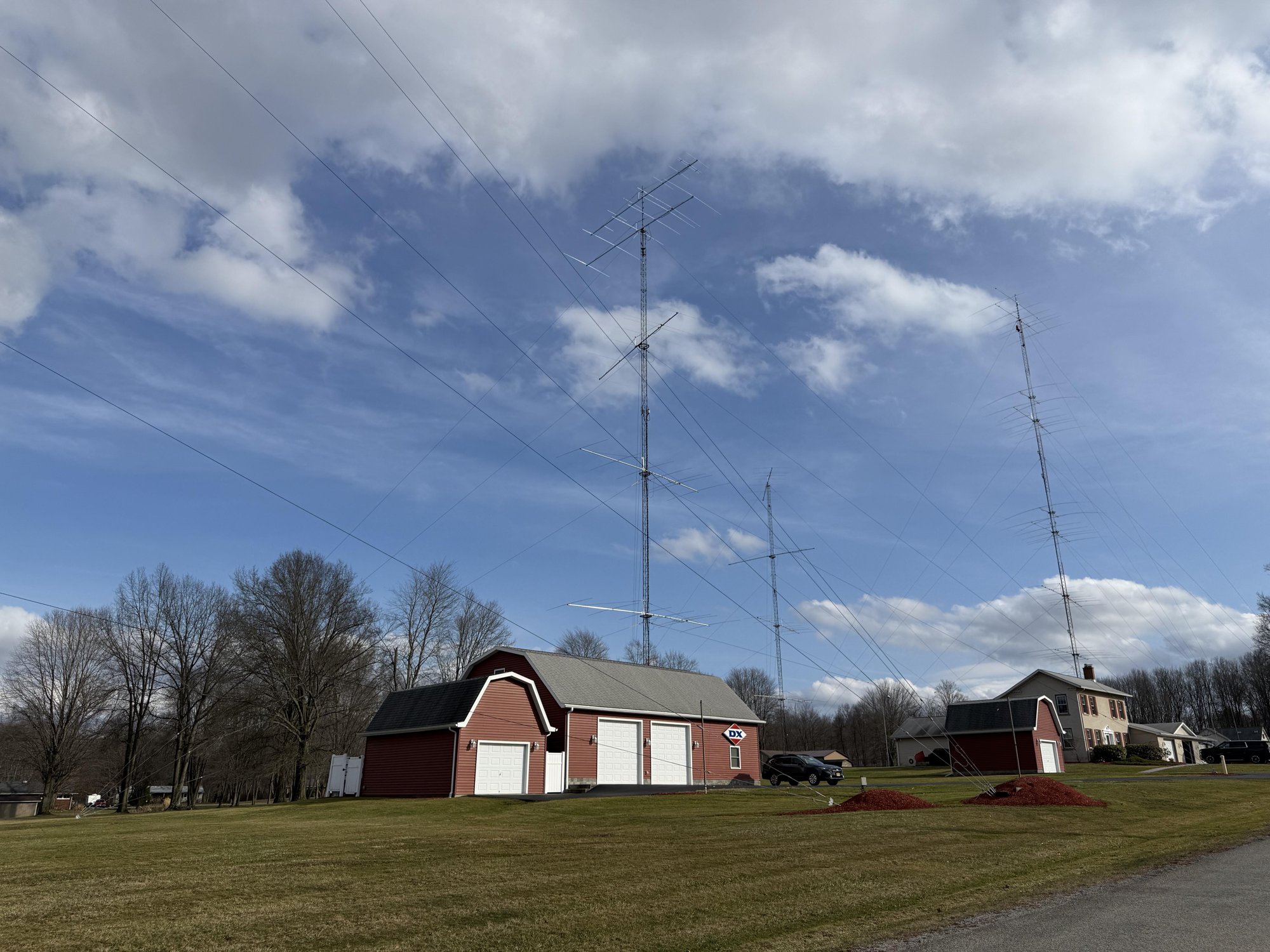
The towers at N2RM are still standing, and I understand a little better now what I’m looking at. A station isn’t the aluminum. It’s the people who show up. When the people stopped coming to Mays Landing, a 24-million-point station turned into steel in the woods. The people didn’t stop, though. They went west, to a place where the owner just doubled the size of the shack and put in an elevator so they can keep coming.
And he’s saving a chair for a backyard cook who hasn’t earned it yet.
I go back in early 2027 to learn how to sit in it.
This time I’m bringing smaller jars.
73 de N2LQH · Terry Rossi · South Jersey
Terry Rossi, N2LQH, is an Amateur Extra class operator and beekeeper based in South Jersey, and a member of the ARRL, the South Jersey Radio Association, the Gloucester County Amateur Radio Club, and several others. First licensed in the early nineties, he returned to the hobby in 2025 and has been making up for lost time ever since, most recently in the kitchen at K3LR and, briefly, in the chair.