I don’t talk much about being a ham radio operator. Truth be told, I was off the air for a long time — years where the HT sat in a drawer and the callsign just sat there, unused, waiting. But before all of that, before the towers and the amps and the hex beams, there was a kid on the side of the White Horse Pike in Somerdale, New Jersey, with a 2 meter/440 handheld and a signal that shouldn’t have been possible.
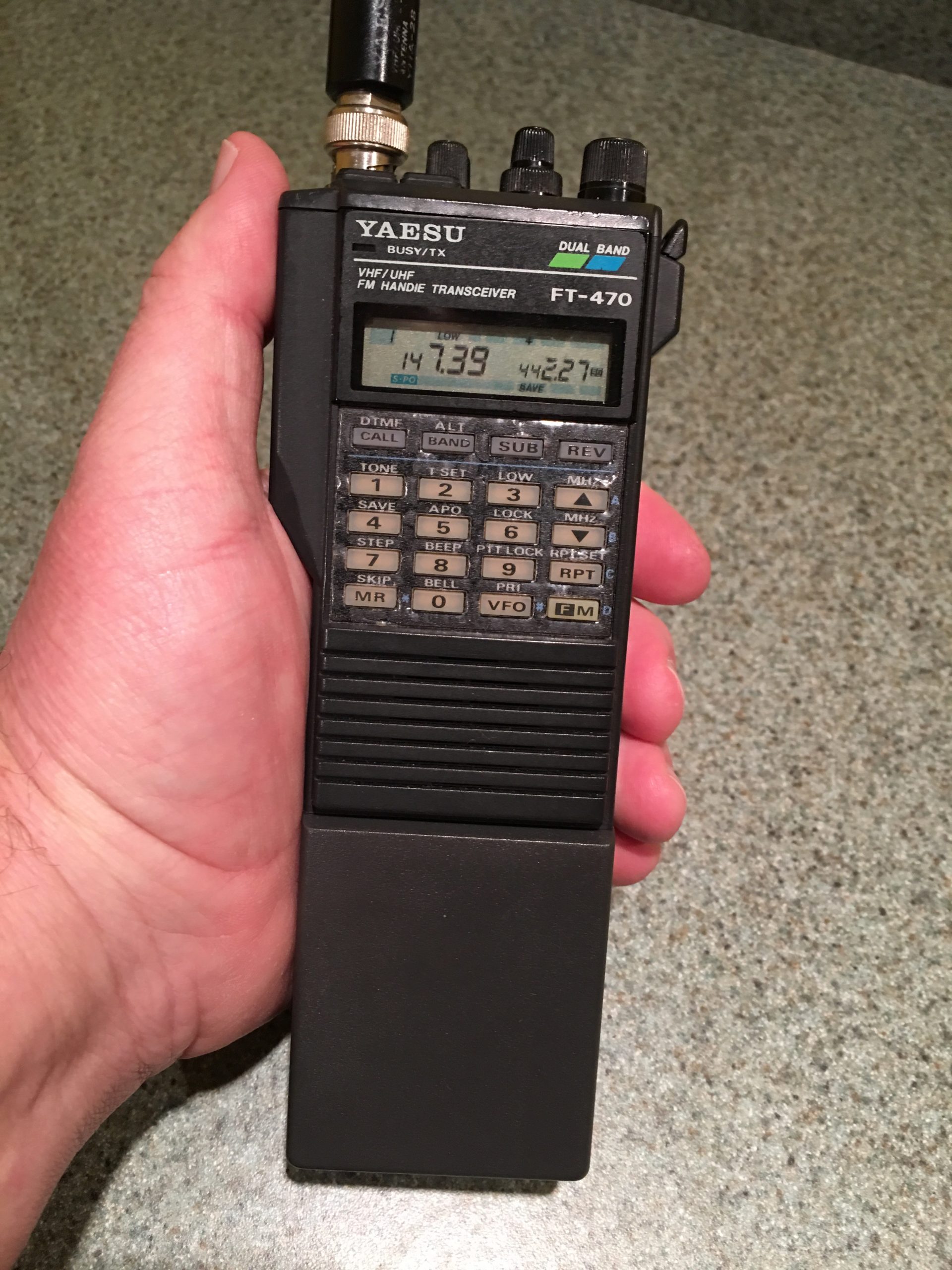
It was early 1992, not long after I’d earned my ticket as N2LQH. Krikalev had been up on Mir since May of the previous year and wasn’t due back down until that March, so the timing lined up — I was a brand new, barely-licensed ham, and he was still in orbit. I didn’t have a station. I didn’t have a tower. I had a Yaesu FT-470 dual-band handheld, a callsign I’d held for maybe a few months, and no idea what I was doing.
Static, Then a Callsign That Wasn’t From Around Here
I was pulled over on the shoulder of the White Horse Pike, engine running, doing what every new ham does — working the local repeaters, scanning around, seeing what was out there. And then, through the static, came a callsign that stopped me cold:
U5MIR
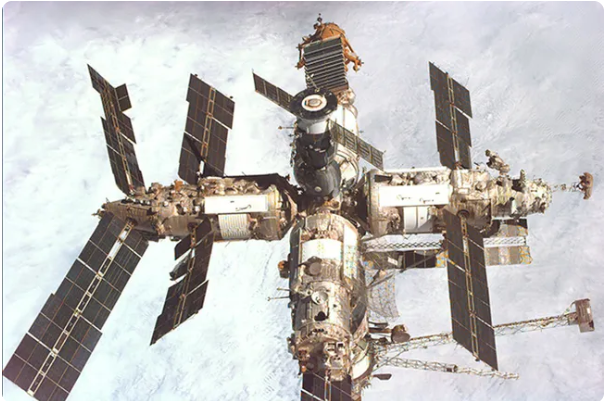
That’s not a callsign you hear on a 2 meter simplex frequency in South Jersey. That’s not a callsign you hear anywhere, unless you know exactly what you’re listening for. U5MIR was the callsign being used aboard the Mir Space Station — and the voice on the other end belonged to cosmonaut Sergei Krikalev, orbiting roughly 250 miles over my head.
I keyed up. Heart pounding, hands not entirely steady, holding a mic instead of a steering wheel. I don’t remember exactly what I said first — probably something like every other ham who’s ever worked a rare one, half a callsign and half disbelief. But he came back to me. We were in direct contact. Not through a repeater, not through a satellite pass predicted three days in advance and tracked with software — just two people, a straight RF path, and the curvature of the Earth doing nothing to stop it.
I asked him the only question that felt like it mattered in the moment: what did he miss most from Earth?
“Cheeseburgers.”
That was it. One word, through a language barrier and a few hundred miles of vacuum, and it landed like the most human thing anyone could have said.
The Man Who Landed in a Country That No Longer Existed
Here’s the part I didn’t understand at the time, because nobody could have. Krikalev launched to Mir while the Soviet Union still existed. Somewhere during his mission, the country he launched from came apart — the USSR dissolved, republics became nations, Leningrad became St. Petersburg again, and the spaceport he’d need to land near was suddenly inside a different country altogether. He stayed in orbit far longer than planned, in part because there was no longer a clear, funded way to bring him home.
When he finally landed in March of 1992, he came back down to a country that didn’t exist when he left. That’s the origin of the title people gave him afterward: the last citizen of the USSR. Not a metaphor. A literal fact of orbital mechanics colliding with the end of an empire.
I didn’t know any of that geopolitics while I was parked on the White Horse Pike. I just knew I’d talked to a man in space, and that he wanted a cheeseburger. It wasn’t until years later, going back through what happened to him, that I understood how strange and singular that moment in time actually was — a brand-new ham, a few months into the hobby, catching a legitimately historic figure at a legitimately historic moment, entirely by accident, on a $200 handheld.
What That Moment Still Means
I’ve built a real station since then — HF, VHF, UHF, satellite, digital, all of it. I’ve chased DX, run contests, put up a tower, learned more about RF than I ever expected to. But nothing in the shack has replaced the feeling of that afternoon on the side of the road, because that contact wasn’t about equipment. It was about the fact that this hobby lets an ordinary person reach out and, for a few seconds, touch something extraordinary.
I was off the air for a long stretch after that. Life happens. But I never stopped being the guy who talked to a cosmonaut from a parking spot in Somerdale, and when I came back to the hobby, that memory is part of what pulled me back in. Every time I hear a new ham get excited about their first DX contact, I think about a scared kid with shaking hands, hearing “U5MIR” come out of the static, and I get it completely.
Sergei Krikalev got his cheeseburger eventually. I got a story I still can’t quite believe happened — and a reason to keep coming back to this hobby more than three decades later.
73 de N2LQH