On pulled pork, a lavender farmer, 240 pounds of ice, and why hospitality is the most underrated part of Amateur Radio.
By Terry Rossi, N2LQH
It’s 7:30 Saturday morning and I’m standing outside in the rain, alone, cooking eggs on a Blackstone griddle I’d pre-cracked and whisked the night before in the comfort of my RV at the field day site. Thirty-six of them. I have a 42-cup coffee urn running, and somewhere in the commissary there’s a pork butt that’s been on the smoker since Thursday afternoon. The three club tents are already full — guests, operators coming off shift, visitors who wandered in out of the weather — and I am the only thing standing between approximately forty people and an empty table.
Nobody sees any of this part.
That’s fine. That’s the job.
How I Got Here
About a month before Field Day, I was sitting in my La-Z-Boy at around nine o’clock at night, having a cocktail, like I often do, when my phone rang. It was Joe, KC2SGV, one of the few SJRA members I know pretty well. He told me the band captains were having a meeting and had basically nominated me to be the hospitality chairperson — if I’d agree to it.
Five minutes later, I was on a Zoom call, and ten guys were working me over to take the position 🙂
I did it. I want to be clear about that — I did it because I wanted to, not because I was pressured into it. But those two things are not mutually exclusive, and those ten guys were very persuasive.
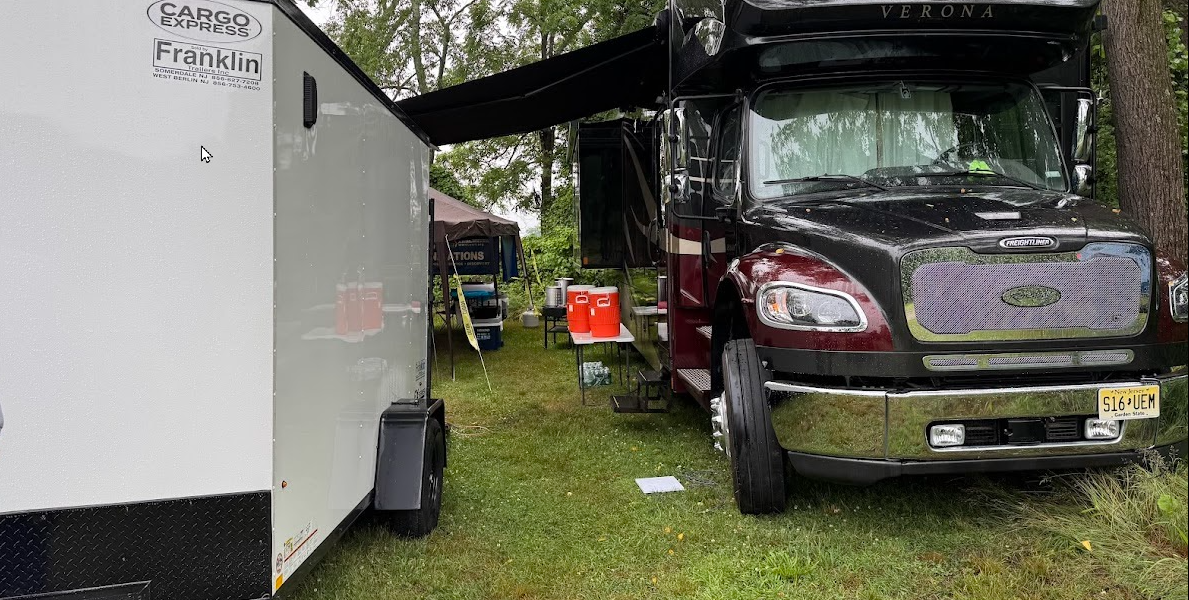
Then began the planning part. And I quickly realized that what I wanted to do wasn’t possible with what I had. I needed a couple of things. The big thing I needed was an enclosed trailer. I tried to borrow one from a few friends. They all had gigantic ones, or ones that were packed full of stuff. I looked into renting one, but it would have been a logistical headache on top of everything else Field Day already demands. So I bought one. A nice shiny white 6×10 enclosed trailer with a ramp door so I could roll the coolers down on a handcart, slide the chest freezer in on a floor dolly, and strap everything to the walls — the grills, the coolers, the Ninja, the fans, all of it.
The chest freezer was its own story. Previous years had been brutal heat — over a hundred degrees — and everyone kept telling me the same thing: you need more ice, you’ll be sending people out for ice all day. The chest freezer was my answer to that. I found one on Facebook Marketplace from a farmer. A lavender farmer, specifically. Not every day you meet someone who grows lavender for a living, but there he was, and the freezer was in great shape, and that was that.
“The RV became the commissary. The enclosed trailer became the warehouse. Together they made the entire hospitality operation possible.”
I also brought my 40-foot Renegade RV and parked it next to the tent — residential refrigerator, residential freezer, food prep area, hot and cold running water, 150 gallons of fresh water, 75 gallons of wastewater capacity, and the onboard generator to power equipment that draws serious current. Was that overkill? Maybe. Was the food safe all weekend? Yes. Did I sleep in my own bed on site from Friday to Sunday? Also yes. I am not going to apologize for that last one.
The People Who Made It Possible
Before I get into the food, I want to talk about some people who deserve more than a footnote – true legends in the South Jersey Radio Association.
Dominic Sacca Jr., KD2EPM. For many years, the SJRA hospitality area was known around the club as “Dominic’s on the Green.” Dom ran it with the kind of quiet dedication that makes everyone else’s job look easy, and he built a tradition that people still talk about. But Dom’s generosity doesn’t stop at Field Day. He’s a driving force behind an organization called Rehab 13 — a group that rolls out to support firefighters and first responders at active scenes. We’re talking breakfast sandwiches, coffee, cold water, and basic medical support for the people who are already helping everyone else. Dom shows up with food when people need it most, whether that’s Field Day or a structure fire at 2 AM. That’s not a hobby. That’s a calling. Dom is a true hero and I’m proud to know him.
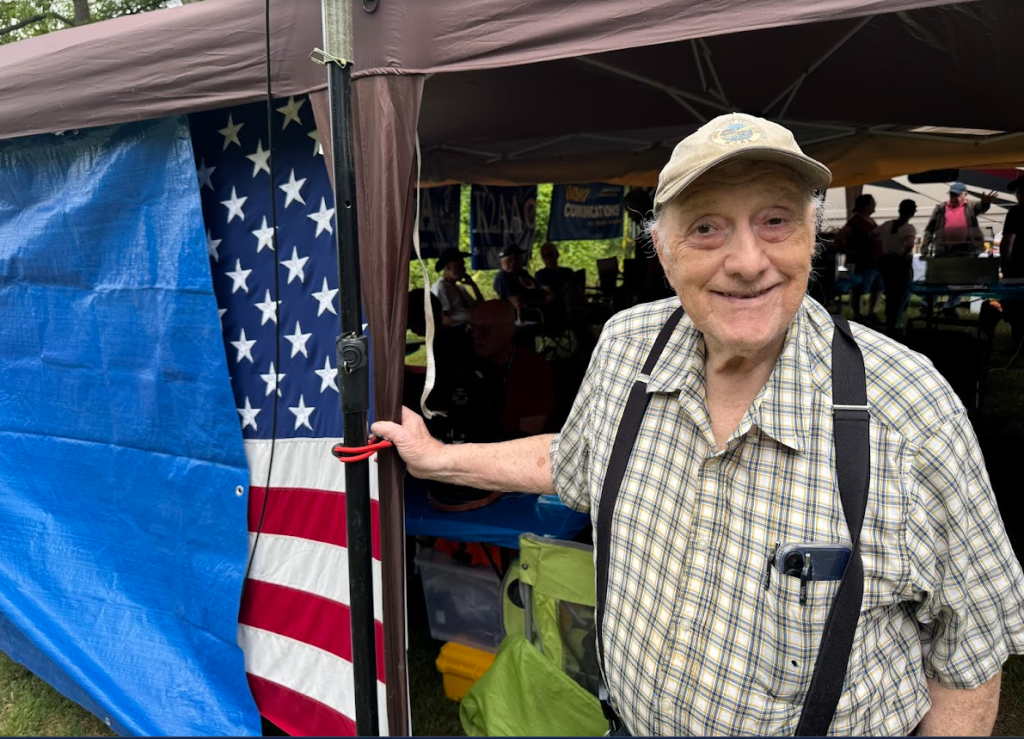
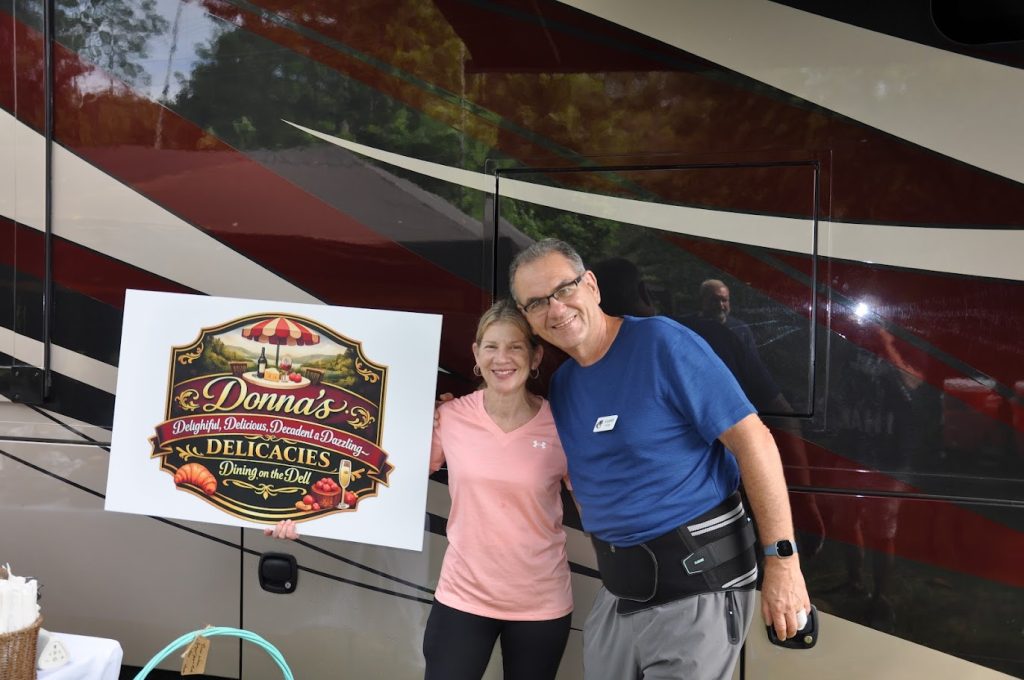
Ken Botterbrodt, K2WB. Ken has been running the SJRA Field Day operation for twenty-five years. Twenty-five. Let that sit for a moment. He doesn’t just show up and coordinate — he rolls out with massive antenna systems, complicated operating trailers that four or more people can work out of simultaneously, dual generators, and multiple 50-foot towers to support the whole operation. He handles the band captain meetings, the strategy, the publicity, the permitting, and countless other things most members never see or think about. We are usually first place in the 7A category. That is not an accident. That is Ken. He also created the “Terry’s Under the Tent” concept — complete with a logo and a banner he designed himself — and the “Donna’s Delicacies” branding for Sunday breakfast. The man runs a world-class Field Day and still found time to brand my food operation. Ken is a true hero, and the hobby is better because of him.
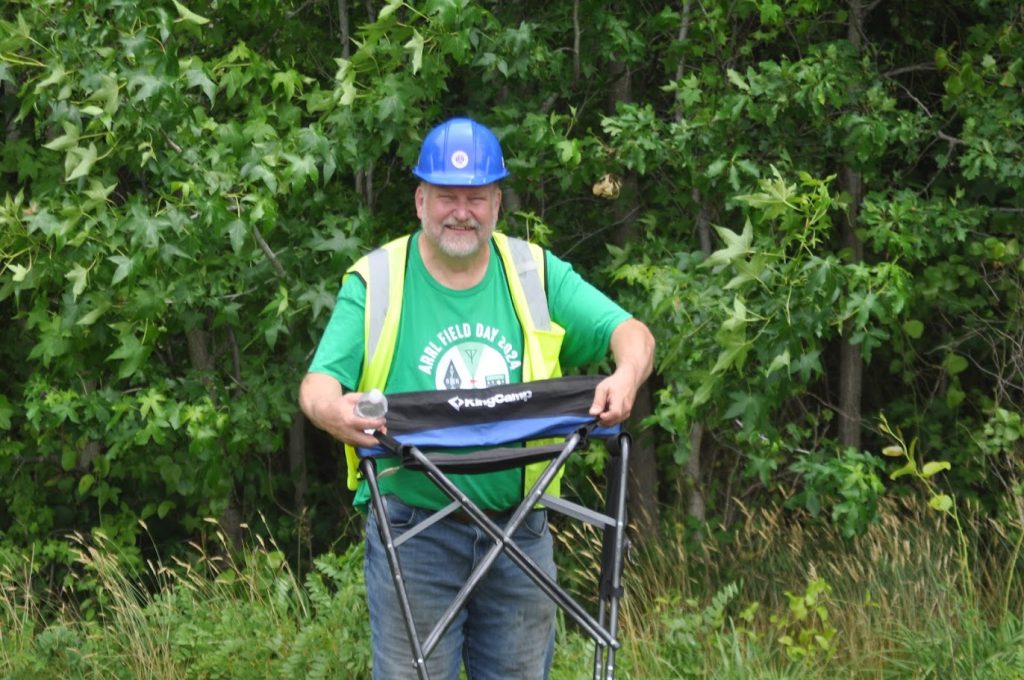
Scott Dantis, AA2SD. Scott is our membership director and one of those people who is genuinely everywhere at once — taking photos, posting to Facebook, promoting the club, helping fellow members, and generally making himself useful in whatever direction he’s pointed. He’s only been a ham for three years, but you’d never know it. He’s fully embraced the hobby and the spirit behind it, serving as an Elmer for newer operators, and digging deep into some of the more technical corners of the hobby — VHF, UHF, microwave, roving, which he does at least four times a year. And then there’s his wife Donna, who I’ll get to in a moment, because Donna deserves her own paragraph. Actually, she deserves her own section.
Saturday
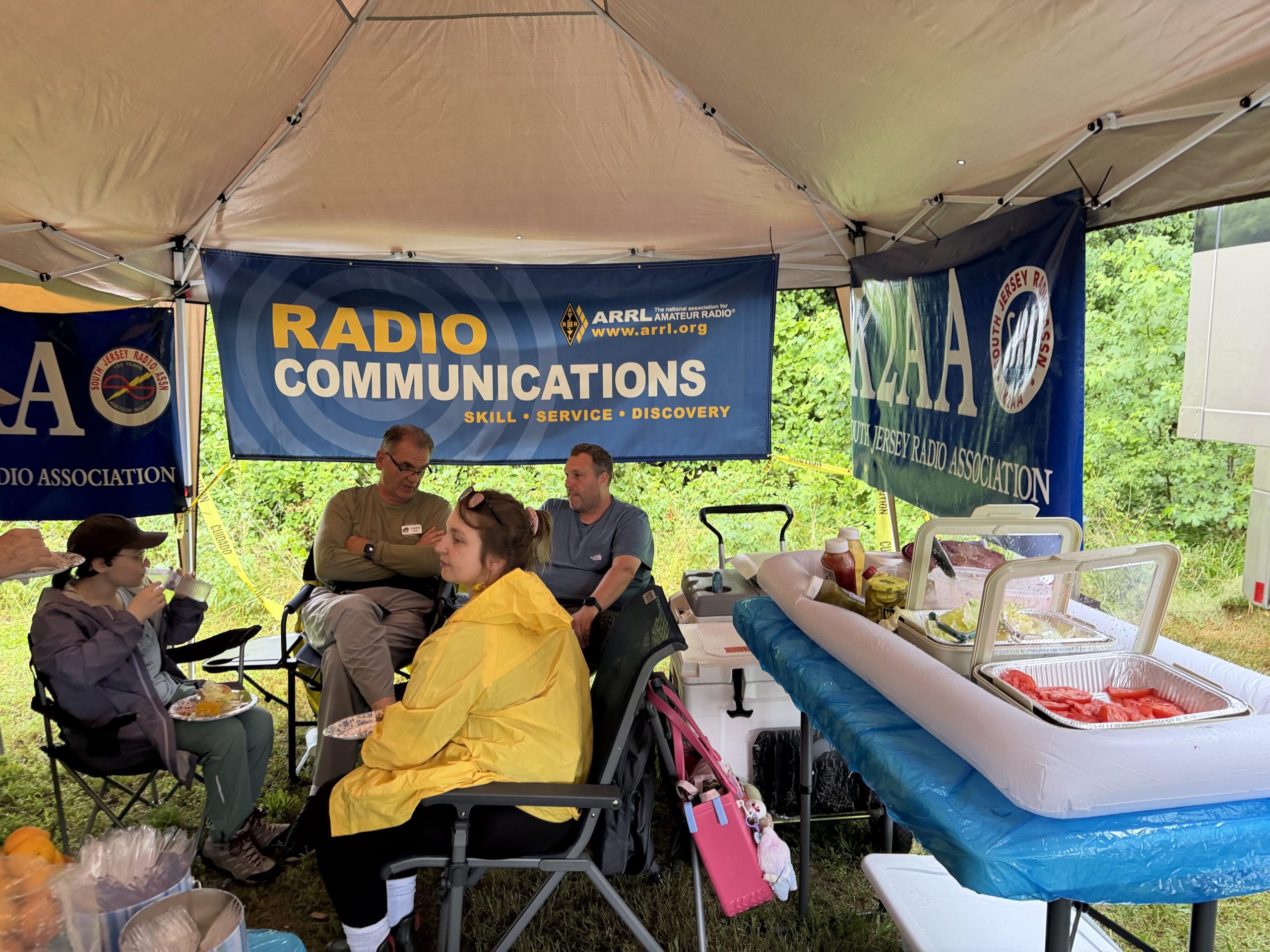
Saturday brought the kind of rain that politely ignores everything you planned. The three 10×20 club tents were at capacity — operators cycling off shifts, guests, a couple of folks from the township, visitors who’d wandered in off the road. There was no room left under the tent for cooking. So I cooked in the rain. There is no dramatic lesson here. You get wet. The food stays dry. You keep going.
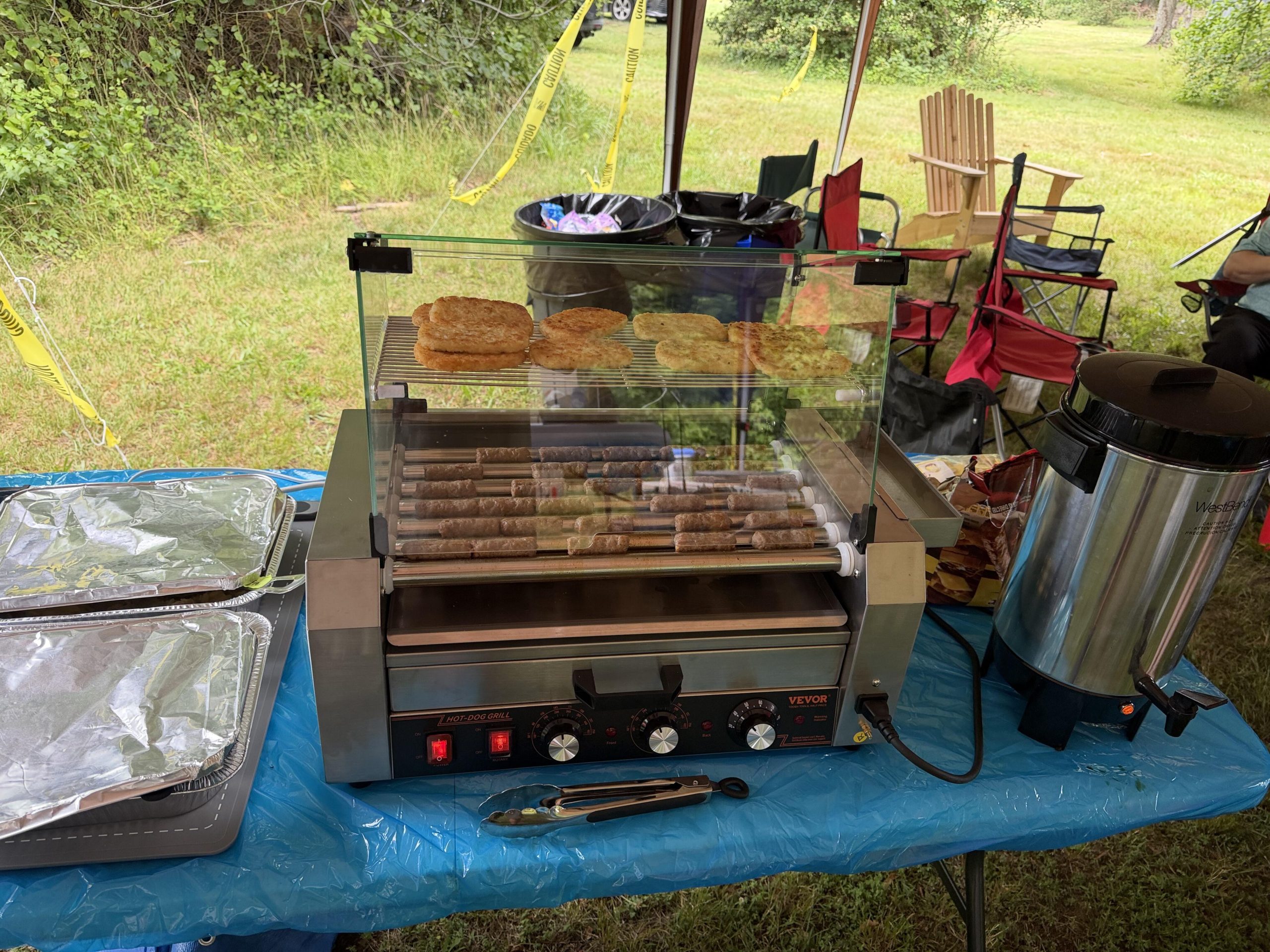
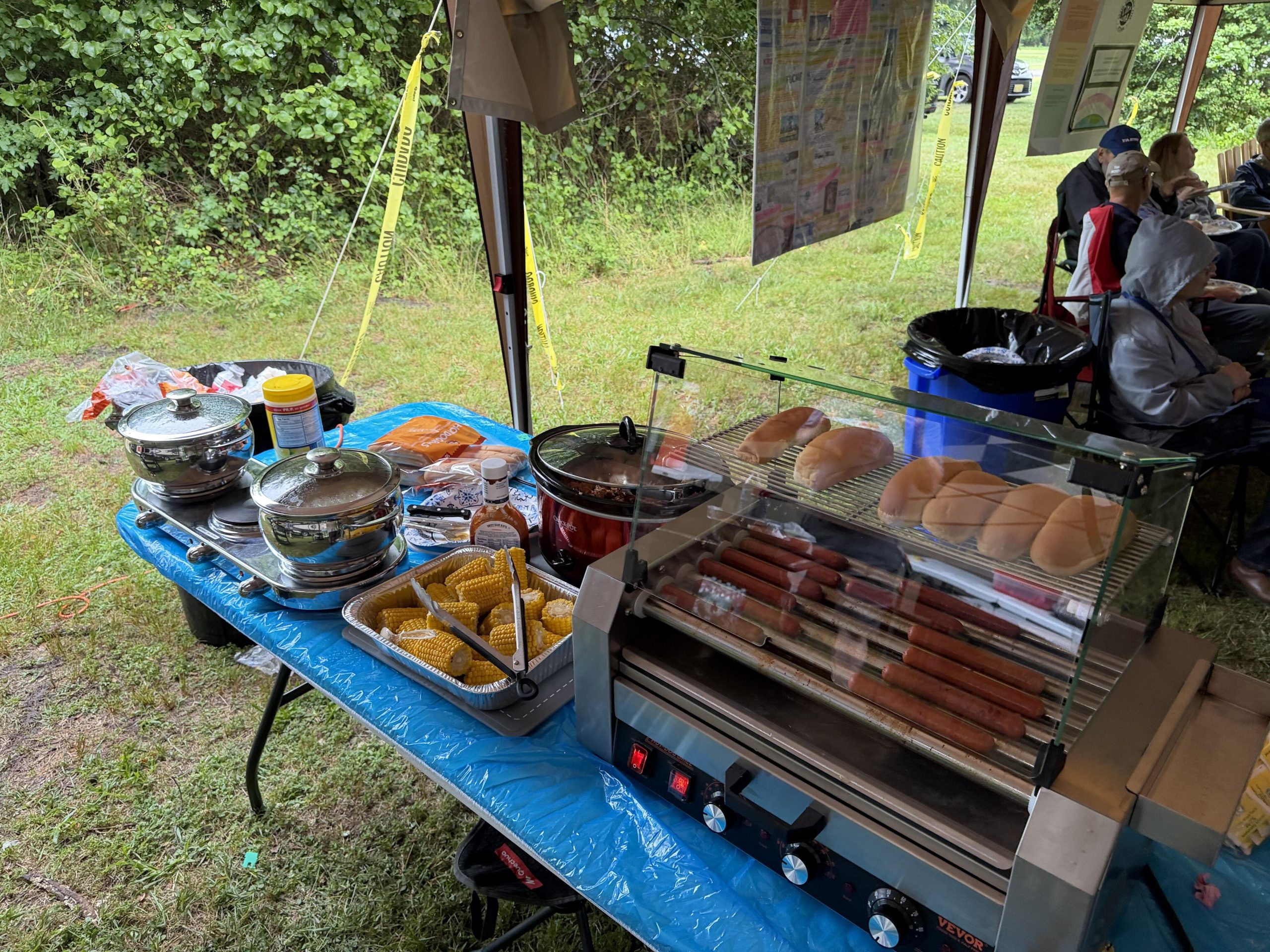
What made Saturday work was the hot dog roller. I cannot say enough about the hot dog roller. It’s a commercial unit — two temperature zones, a glass warming case above the rollers to keep the heat in and the bugs out — and once you load it in the morning, it essentially runs itself. Brown-and-serve sausage links for breakfast on the lower rollers, frozen hash brown patties cooked on the griddle, warming on the upper rack. Hot dogs for the afternoon with sourkraut and all the fixings. The thing never stopped. You could walk up at any point during the daylight hours and pull something hot off that machine without asking anyone for anything. In a rain event where you don’t want people standing at a serving table waiting, that machine was worth every penny.
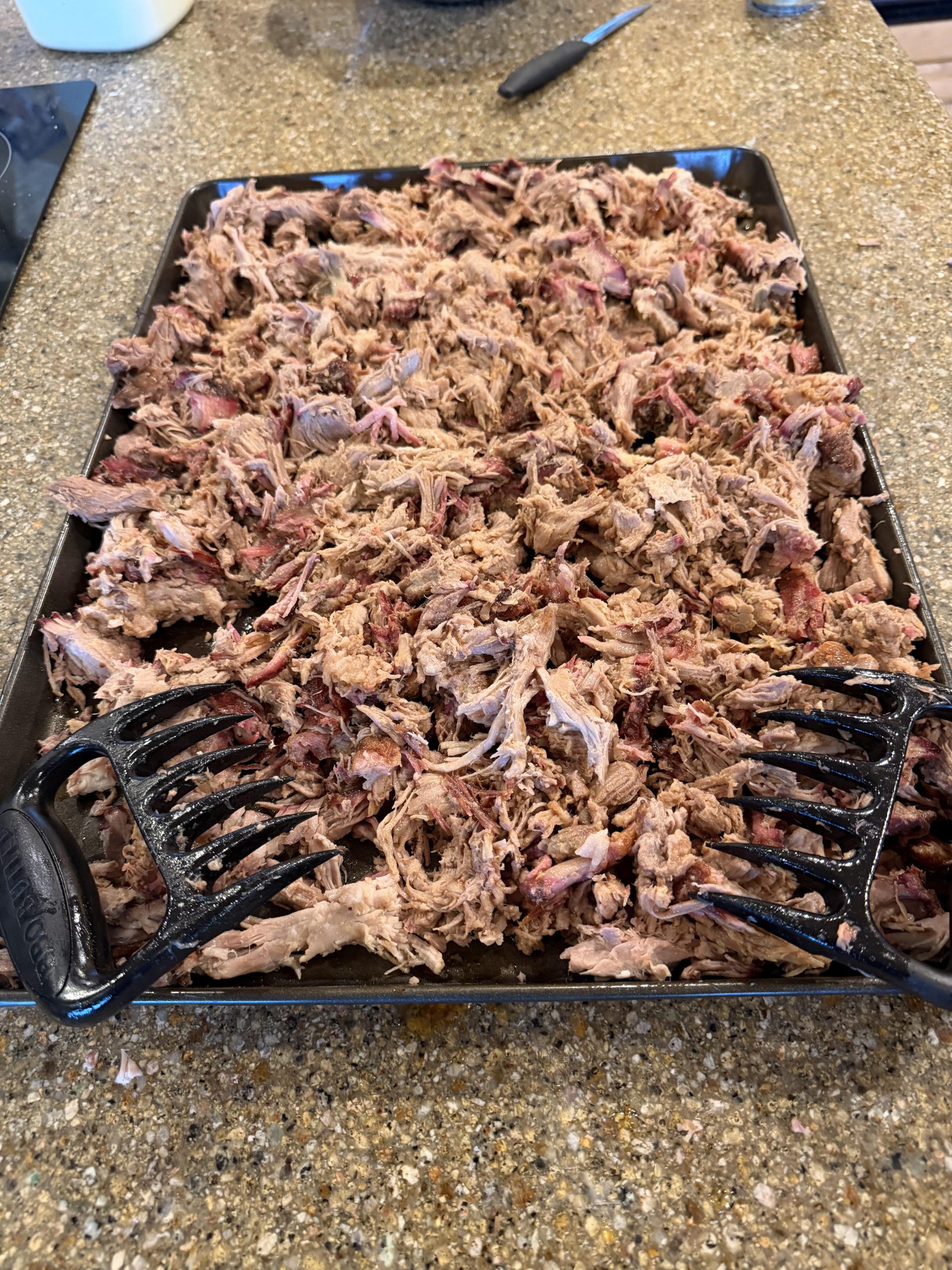
The pulled pork had been on the smoker since Thursday — twelve to fifteen hours at 225 degrees, refrigerated overnight, then reheated in the crockpot Saturday morning. By the time lunch came around, it had been developing flavor for about 36 hours. I mixed back in some of the au jus and a little Sweet Baby Ray’s. People were making sandwiches on hamburger buns, hot dog rolls, whatever was closest. For some, I even brought it back on the black stone and crisped it up a little. We paired it with homemade creamy coleslaw — about 2 quarts of a KFC-style dressing scaled up for the crowd — and the combination went fast. That’s the benchmark I use: when something disappears, make more of it next year.
Saturday breakfast started on the Blackstone. ( It’s really a camp chef ) Thirty-six eggs were cracked and whisked the night before, divided into two containers, and refrigerated overnight. Saturday morning: two batches in disposable half-sheet pans over low heat with constant stirring, milk and seasoning added right before cooking. Hash browns on the flat-top alongside. Done before most people had their first cup of coffee. I could have used another dozen. Next year I’ll make 48.
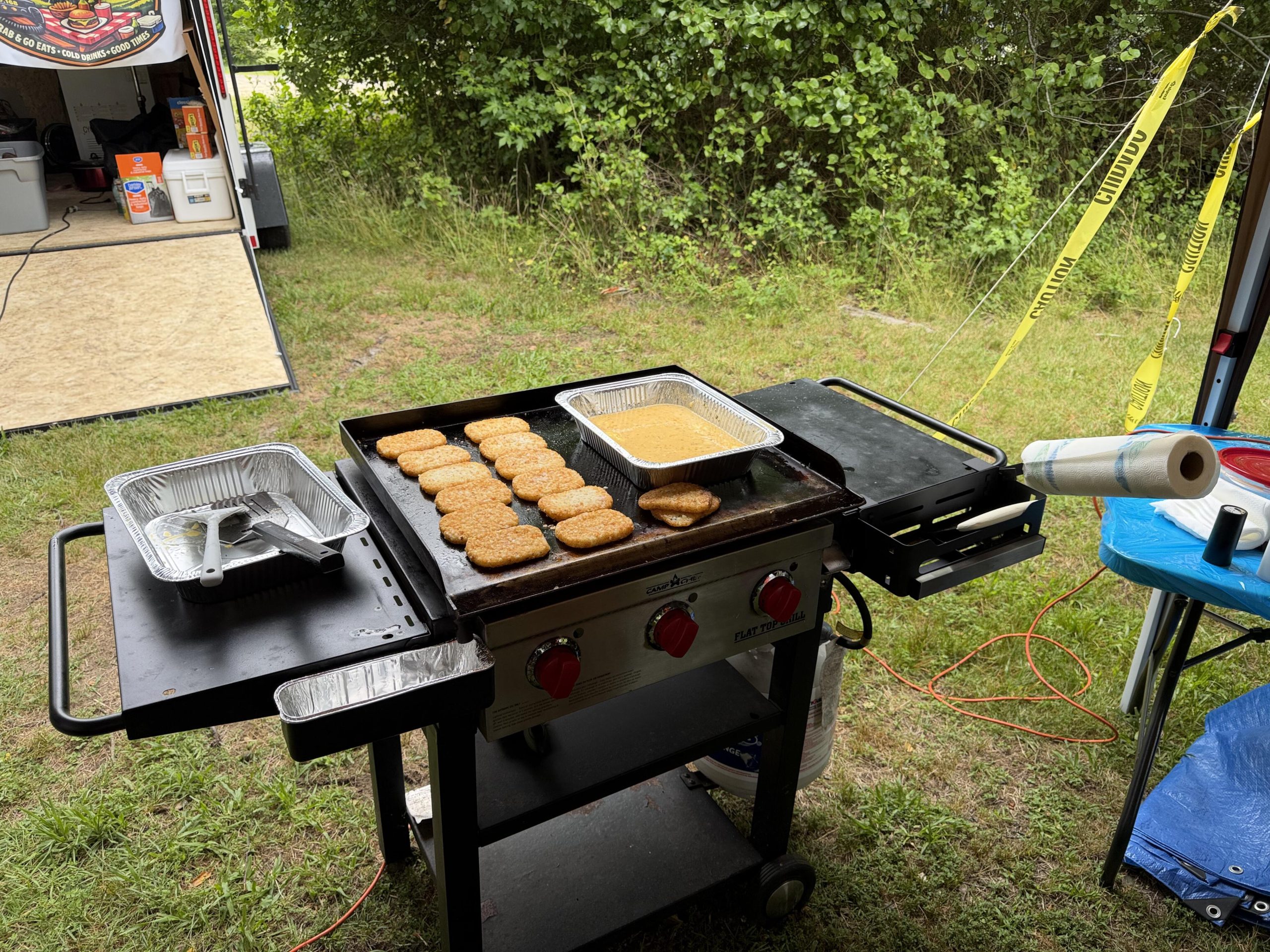
By lunch, the full service line was running — three-position electric hot plate with baked beans and sides, the crockpot holding the pulled pork, corn on the cob, and the roller loaded with Hebrew National beef franks.
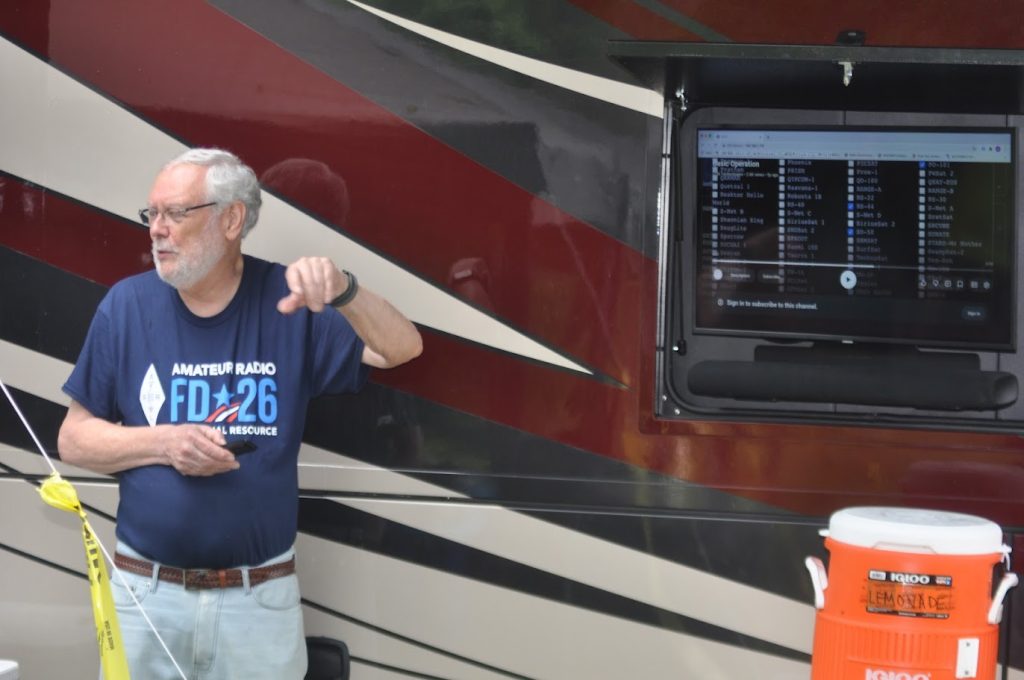
Rick Lawn, W2JAZ, our club president, was supposed to do an outdoor educational satellite presentation at the satellite trailer, or more specifically, the Jersey Devil Research Station. The rain had other ideas. He pivoted in about ten minutes, moved the whole thing into the tent, pulled up YouTube on the Starlink connection running off the RV, and ran the presentation off the outdoor TV mounted on the side of the motorhome. Educational bonus points for the club, zero disruption to the meal service. That’s what a good president does.
A Visit from the ARRL
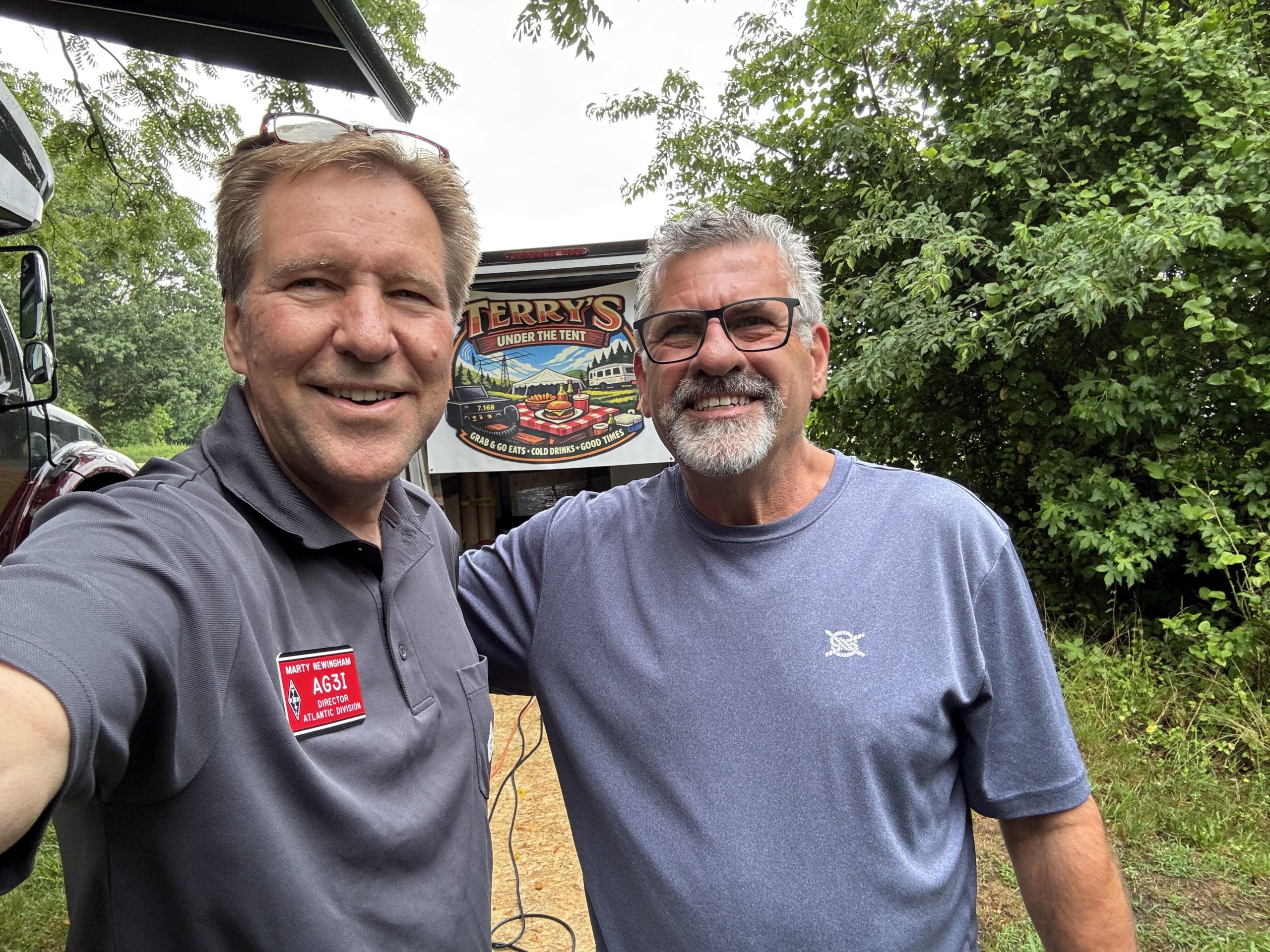
Marty Newingham, AG3I, ARRL Atlantic Division Director, stopped by Saturday afternoon. I’d actually first met Marty a few months earlier at a Pack Rats meeting in Warminster, Pennsylvania. The moment I introduced myself and gave him my callsign, he recognized me as the writer who’d cooked for the K3LR contest team and written about it. Turns out he and Tim Duffy are old friends. Small world. Ham radio world.
Marty is new to the Division Director role, and based on what I’ve seen, the League made a good choice. After leaving us he crossed the Delaware into Eastern Pennsylvania, made his way up to Birmingham, then back down through Western Pennsylvania, getting home at 5:30 the following evening. He’d already visited multiple Field Day sites before ours. That’s a genuine commitment to the membership, not a photo opportunity, and I think it says a lot about the kind of leader he intends to be.
Sunday Morning
Sunday morning belongs to Scott and Donna Dantis. Full stop.
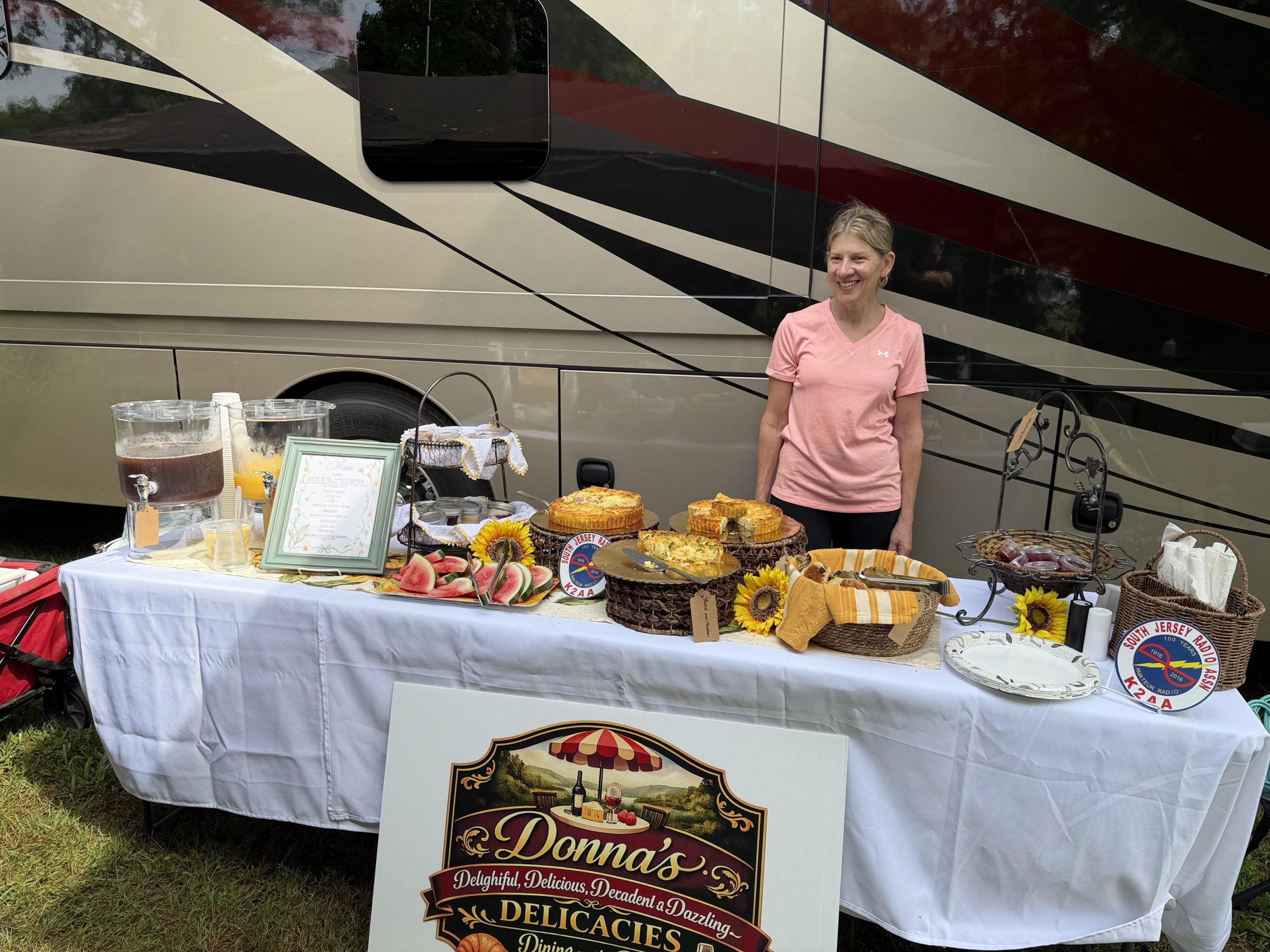
Ken had created a second brand for the Sunday breakfast — “Donna’s Delicacies,” with its own logo and sign — and Donna took that brief and ran with it in a direction none of us were entirely prepared for. Three varieties of homemade quiche: Ham and Gruyere with a rosemary herb crust, Broccoli and Cheddar with a thyme herb crust, and Sausage, Roasted Red Pepper, Parmesan, and Asiago with a basil herb crust. Fresh yogurt parfaits with lemon curd, cherry, and homemade granola. Croissants with homemade strawberry jam. Fresh sliced melon. Home-brewed sweet blackberry-sage iced tea. The table was set with sunflowers.
This was Sunday morning at an outdoor radio event.
People walked up and stopped. Actually stopped — that moment before they reached for a plate, where they just took it all in. I know that feeling from the other side of a serving table. When that happens, you got it right. Everything was delicious.
What It Costs — and What It Doesn’t
The approved budget was $600. I spent a little more. I made a 2nd round of purchasing once it became clear that Friday attendance ran higher than expected, and food costs in 2026 are what they are.
Here’s what the budget buys for three days and about 115 meals: roughly $7.93 per person per meal. Three Murphy’s Market hoagie platters ordered fresh and dry, Steakhouse burgers, Hebrew National beef franks, pulled pork, homemade coleslaw, potato salad, baked beans, corn on the cob, 240 pounds of ice, OJ, 36 eggs, 70 sausage links, 42 cups worth of Donut Shop coffee, lemonade and iced tea for three days, chips, cereal bars, peanuts, candy, PB&J, and all the paper goods.
What budget doesn’t cover: the RV, the trailer I bought, the chest freezer from the lavender farmer, the generator, the Blackstone, the VEVOR roller, the coffee urn, the crockpot, the food warming mat, the five-gallon drink dispensers, the weeks of planning, the Thursday smoke, the Friday drive out, or the post-event cleanup. I’m not mentioning any of that to complain. I’m mentioning it because whoever does this next should understand what the real scope of the job is. The grocery bill is the easy part to document.
What I’d Tell the Next Person
A few things I learned that aren’t obvious until you’ve done it:
Hoagie trays are worth every dollar. Order them dry — they bring the oil, vinegar, mayo, peppers, and pickles on the side. Pick up the first platter on Friday morning and the second one on Saturday night for Sunday if needed. Fresh both times, and people will comment on them. Check with your proveyer to make sure you can get them with 24 hours notice.
The hot dog roller is not optional. If you’re running hospitality for 40 people over a full weekend, you need something that cooks and holds and requires no attention. That machine is it.
Buy ice the day you need it. 120 pounds Friday, 120 pounds Saturday. Don’t try to stretch it with watery ice.
Make more scrambled eggs, then you think you’ll need. Crack and whisk the night before and add them to an air tight container. Add the milk and seasoning right before you cook, not earlier.
Drop the corn. Corn on the cob requires a massive pot, a propane burner, ten gallons of water, and 45 minutes you don’t have during the busiest part of Saturday. Put something simpler on the electric hot plate. Nobody is coming to Field Day for corn.
Round tables. The one thing I’d change above everything else. We had plenty of chairs — most operators bring their own — but nowhere comfortable to set a plate down and have a real conversation. Eight or ten person round tables change the whole dynamic of a space. They turn a serving area into a gathering place.
And start recruiting volunteers in April. Not June.
UAFBAF – Up as Friends, Back as Friends.
There’s a saying I heard from the South Jersey Mountain Toppers. It stuck with me. They make a pilgrimage up to a mountain once a year and spend 4 days primitive camping. “Up as Friends, Back as Friends” Sometimes that’s hard to live up to when the temperature is over a hundred degrees, the rain is coming sideways, the workload is relentless, and everyone is tired and a little hungry. But I think we genuinely embraced it during this Field Day. Everyone pulled their fair share — setting up and tearing down antennas, filling trailers, operating around the clock. Nobody was keeping score of who did what. People just did what needed doing.
I was a small part of it, and I was happy to do it.
On the Tradition of the Thing
For many years the person running hospitality at SJRA Field Day was Dom Sacca, KD2EPM. Before me it was John Jones, KD2RKA, and Mark Walters, KD2JPW, both of whom kept notes that made my job easier in ways I’m still grateful for. That chain of institutional knowledge — one person writing down what they learned and leaving it for the next — is how a club with 110 years of history actually stays good at what it does.
I made some food, stayed dry when I could, got wet when I couldn’t, and tried to create a place where people would want to spend time. That’s the whole job. The knowledge of how to do it well shouldn’t have to be rebuilt from scratch every few years, and I’ve tried to make sure it won’t be.
“Hospitality isn’t just about feeding people. It’s about creating a place where operators, visitors, and families can gather, recharge, and enjoy the fellowship that makes Field Day special.”
I can’t guarantee I will sign up to do it again next year, but if I do, the pulled pork will be even better. I already know what I’m changing.
73 – Terry
Terry Rossi, N2LQH, is a Amatuer Extra class operator based in South Jersey and a member of the ARRL, South Jersey Radio Association, and several other clubs. He served as Hospitality Chairman for the 2026 SJRA Field Day and is the author of the 2026 SJRA Field Day Hospitality Operations Report. First licensed in the early nineties, Terry returned to the hobby in 2025 and has been making up for lost time ever since — most recently behind a Blackstone griddle in the rain.
This was also published in SWR’s August 2026 issue at https://online.fliphtml5.com/kqkyd/SWR-August-2026-English-Edition/#p=59