How a year of feeding contesters led to my first weekend as one
By Terry Rossi, N2LQH
It’s 2100 Zulu on a Saturday, and I’m sitting down at my first Field Day operating position, already exhausted.
Not from radio. Several months earlier I’d published a piece — “How Hot Tuna, a YouTube Video, and a Backyard Cook from South Jersey Ended Up at the World’s Greatest Contest Station” (n2lqh.com/k3lr-visit) — about how a coincidence landed me in the kitchen at K3LR, cooking for the best contest team in the world. More on that in a minute.
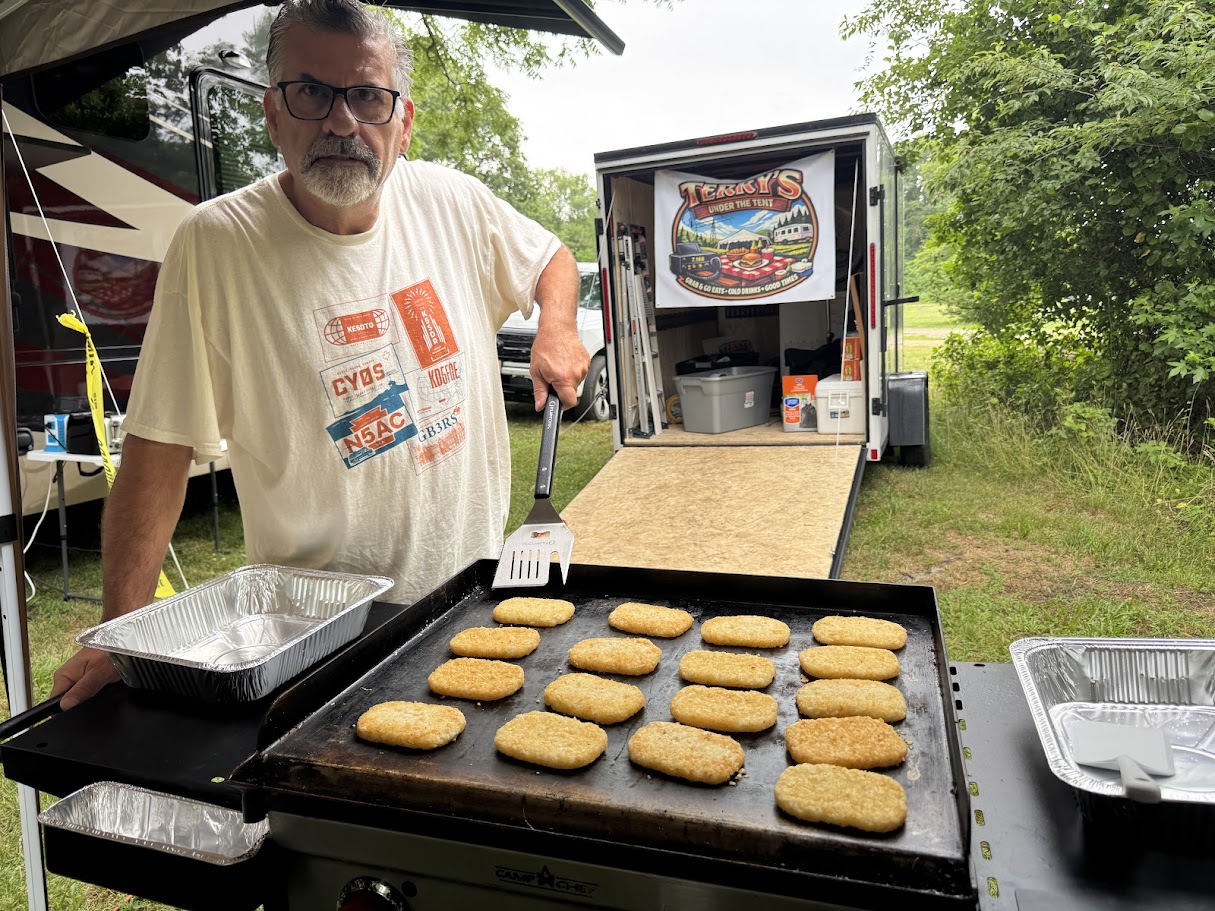
Somebody on the SJRA board read it. Next thing I knew, I wasn’t just showing up to Field Day — I’d been named hospitality chairman. So I’d spent the day cooking breakfast and lunch for forty people.
Now I was peeling off an apron instead of a headset, walking toward a trailer full of people calling “CQ Field Day, CQ Field Day, K2AA standing by” on repeat. There were three things sitting on my chest at once. I’d just spent the day feeding forty people and needed to feed them again by dinner. The K3LR piece had made me a little bit known in circles I didn’t expect, and now people were watching to see if the guy who wrote it could actually operate. And underneath both of those was the plainer thing — I wanted to do right by this club, on their equipment, in their trailer, on my first try. My stomach was doing something I hadn’t felt since my Extra class study sessions, and I hadn’t even sat down yet.
I’d been told every radio in that trailer ran Heil headsets. Naturally, I showed up with a RadioSport — plus a Heil BM-17 as backup, just in case. The RadioSport didn’t work; wrong foot pedal integration. So I was on the BM-17, which meant no ear cups and every bit of the room’s noise coming straight at me. A $150 headset is standing in for a $400 one.
I watched the operator ahead of me for ten minutes before taking the chair. Joe, KC2SGV — a friend from the club, and band captain for 20 meters, which means he’s the one filling chairs during contest hours. Watching him work, I could feel how much he wanted this to go well — not just for the score, for me too. There was something steadying about that.
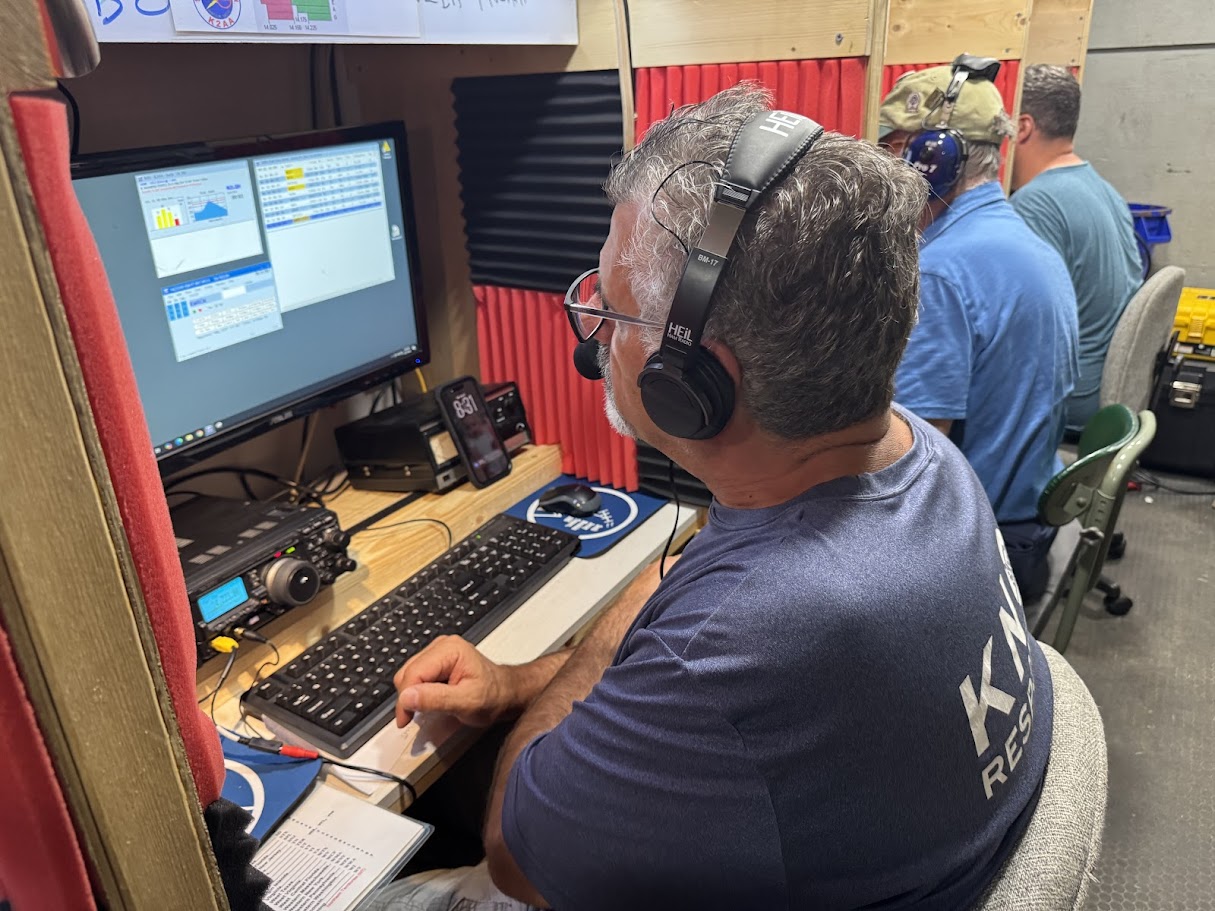
Then it was my turn. Twenty meters. First time in any chair. First time touching N1MM. First time on a radio I’d never laid hands on — an older Yaesu, one of a couple scattered across the trailer alongside an IC-7300.
It doesn’t get easier right away. Four operators, two on one side of me and one on the other, all wearing noise-canceling headphones, which meant all of them were speaking loudly. I had no ear cups, so I caught all of it while trying to concentrate on my own exchange, quietly wondering if everyone could tell how green I was. My hands weren’t quite steady on the keyboard. I could feel my own pulse a little more than I wanted to.
A foot pedal I’d never used — at first I couldn’t even get my foot into the protective cover on it. A rate meter I didn’t understand yet. Somewhere under all of it I was supposed to be making contacts, in front of people who’d either read my name in a magazine or handed me their kitchen for the weekend — sometimes both.
Here’s the thing nobody tells you about Field Day: it sneaks up on you. One minute you’re drowning. The next, you’re not.
Where I Actually Learned to Love Radio
I should back up, because the real gateway to that chair started three months earlier, someplace most contesters only see on YouTube.
I came back to this hobby in 2025 after a long time away — sold my business, upgraded to General, fell into HF and digital modes the way you fall into anything when you finally have time again. I’m still General as I write this, working toward Extra.
Somewhere in that process I went down a rabbit hole on the ARRL Worldwide DX SSB contest and landed on a 168-slide presentation from Tim Duffy, K3LR — CEO of DX Engineering, owner of one of the most decorated contest stations on the planet. Fourteen towers. Eleven operating positions. A barn that sleeps eight. I watched the whole thing from my couch, thoroughly starstruck.
Then I hit a slide about who feeds the K3LR team through a 48-hour weekend, and there was a face I hadn’t seen in forty years: “Chef Sal, WM2H.” I knew him as Sal Anastasio — my childhood friend’s older brother, the guy who used to drive a carload of us to Catholic high school with Hot Tuna blasting on an 8-track. I had no idea he was a ham.
I sent him a screenshot and a one-liner: you never know who you’re going to see in a YouTube video. We caught up. I figured that was the whole story.
A few weeks later, I got what looked like a routine customer satisfaction email from DX Engineering — signed by Tim Duffy himself. Most people write back two polite lines. I sent Tim the whole tale — the video, the slides, the 8-track, the coincidence of it all.
He loved it enough to share it with his team, and with Sal, who vouched for me as “a great chef” to a man scouting, apparently, for a co-chef who could handle Pork Roll. I can’t prove that endorsement came from a place of complete honesty. Either way, it worked, and I found myself on the support team for the 2026 ARRL DX Phone Contest.
Thursday through Sunday, I was in the K3LR kitchen with Sal, cooking for sixteen while eleven of the best contest operators on Earth ran the bands around the clock. I watched the choreography up close — everyone knowing their role, their window, when the team needed food at the position versus food in the kitchen, when to sleep, when to operate.
K3LR finished first in the world that weekend, Multi-Multi — 11,829,195 points, over 6,600 contacts — and I signed my callsign on the team’s Maker’s Mark bottle alongside legends I’d only known by call sign.
I wrote up the story afterward mostly because I couldn’t believe it had happened to me. I didn’t know yet that writing it down was what would get me named hospitality chairman for my own club’s Field Day a few weeks later. It also got picked up by CrossTalk, the newsletter for the Gloucester County Amateur Radio Club — and before long I was cooking for members at their annual picnic too. Apparently writing about feeding contesters is its own kind of gateway drug.
I hadn’t operated a single minute of that contest. But I’d watched elite execution from six feet away, and for the first time I felt a real pull toward wanting to be the one in the chair instead of the one at the stove. That’s the itch I carried into my own first Field Day three months later.
I want to be clear about what that itch was, though: I didn’t walk away from K3LR thinking Field Day would feel anything like it. Nothing does. K3LR is eleven operating positions built and run by some of the best contesters alive, refined over decades. SJRA is a volunteer club that shows up once a year and runs a genuinely tight operation anyway. Different sport, same field.
The Club, the Chair
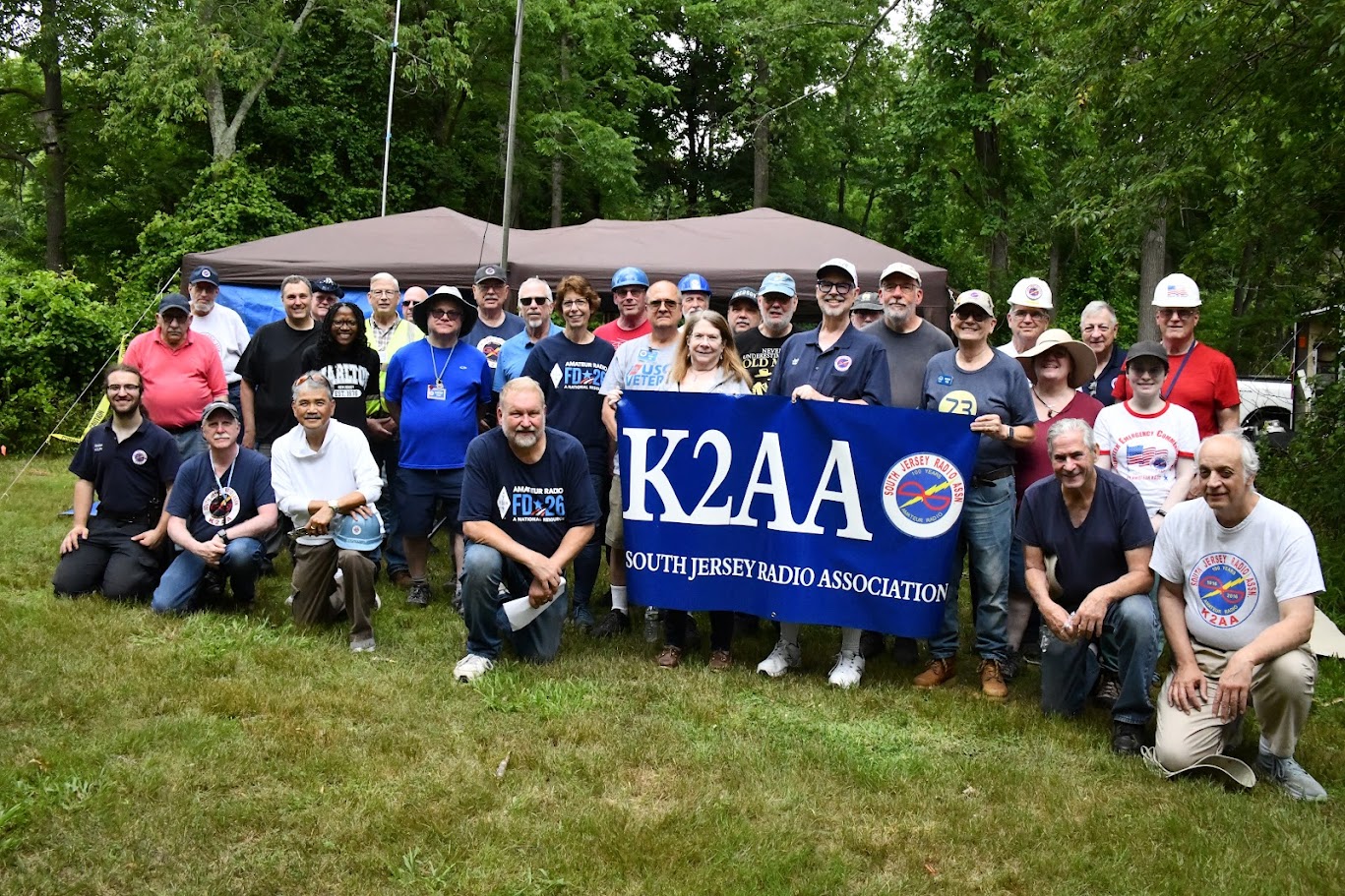
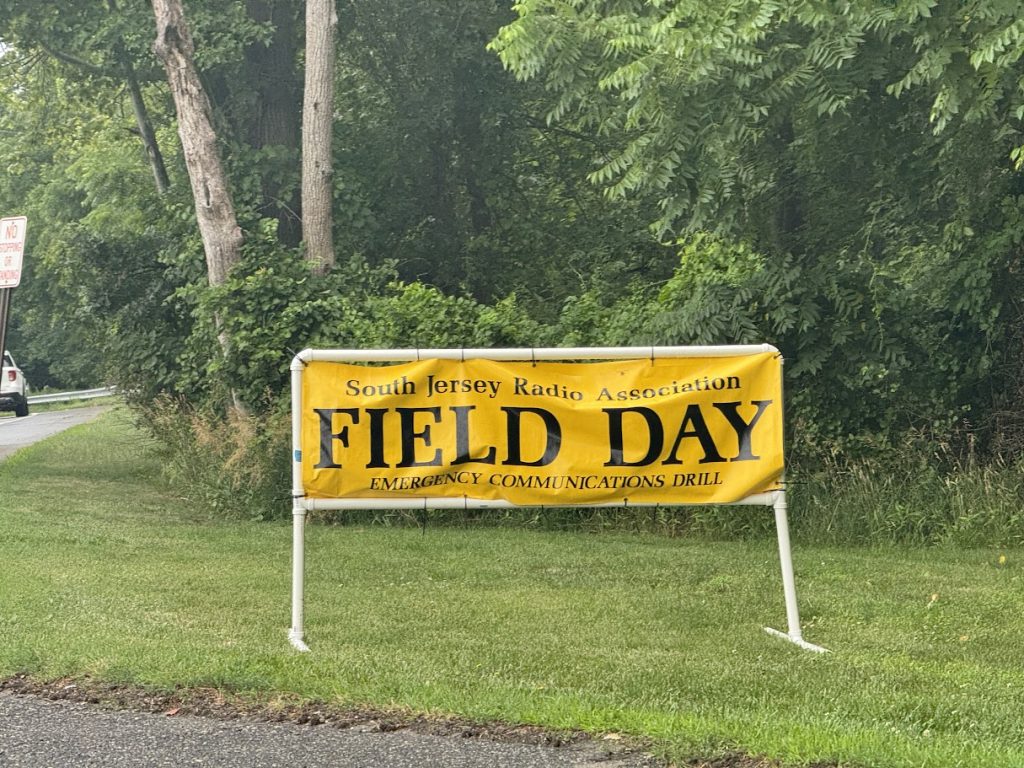
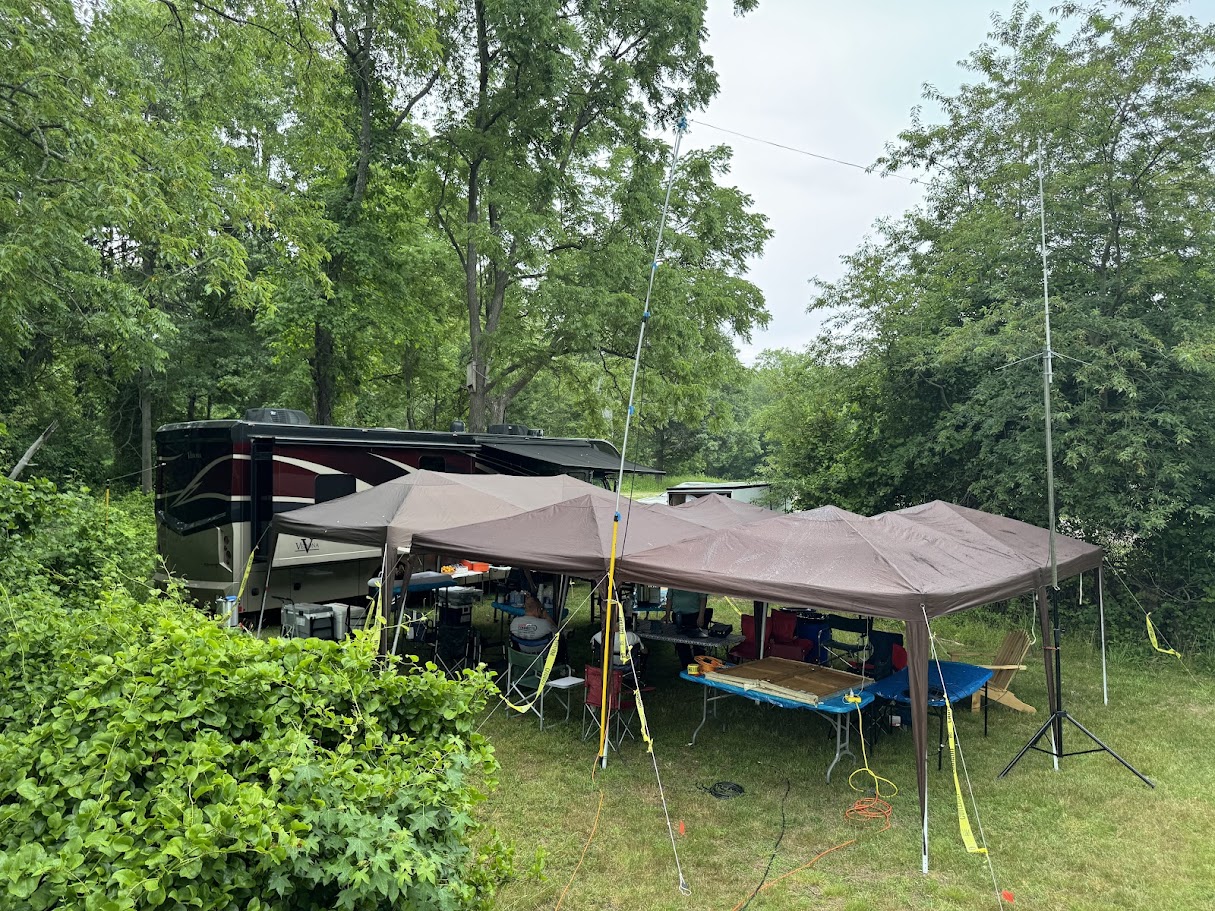
That Field Day was with the South Jersey Radio Association — SJRA, callsign K2AA — a club that runs its operation like a real multi-multi effort, not a picnic with radios.
We operate out of Savage Field in Marlton, New Jersey — the same field the township has used for its Fourth of July fireworks for years, probably still does. Two sports fields plus a wide-open expanse beyond them, somewhere around forty acres in all. SJRA pulls a permit from the township to hold the field from 9 AM Friday to 9 PM Sunday, which gives us plenty of room to set up and tear down without rushing. There’s generally no fee attached, because the relationship with the township runs deep — deep enough that officials and police officers will wander over for a burger and a visit more often than not.
Setup starts the moment that the permit window opens, Friday at 9 AM. The contest itself doesn’t start until Saturday at 2 PM. Teardown wraps up by around 8 PM Sunday — a full weekend of work to get 24 hours of operating.
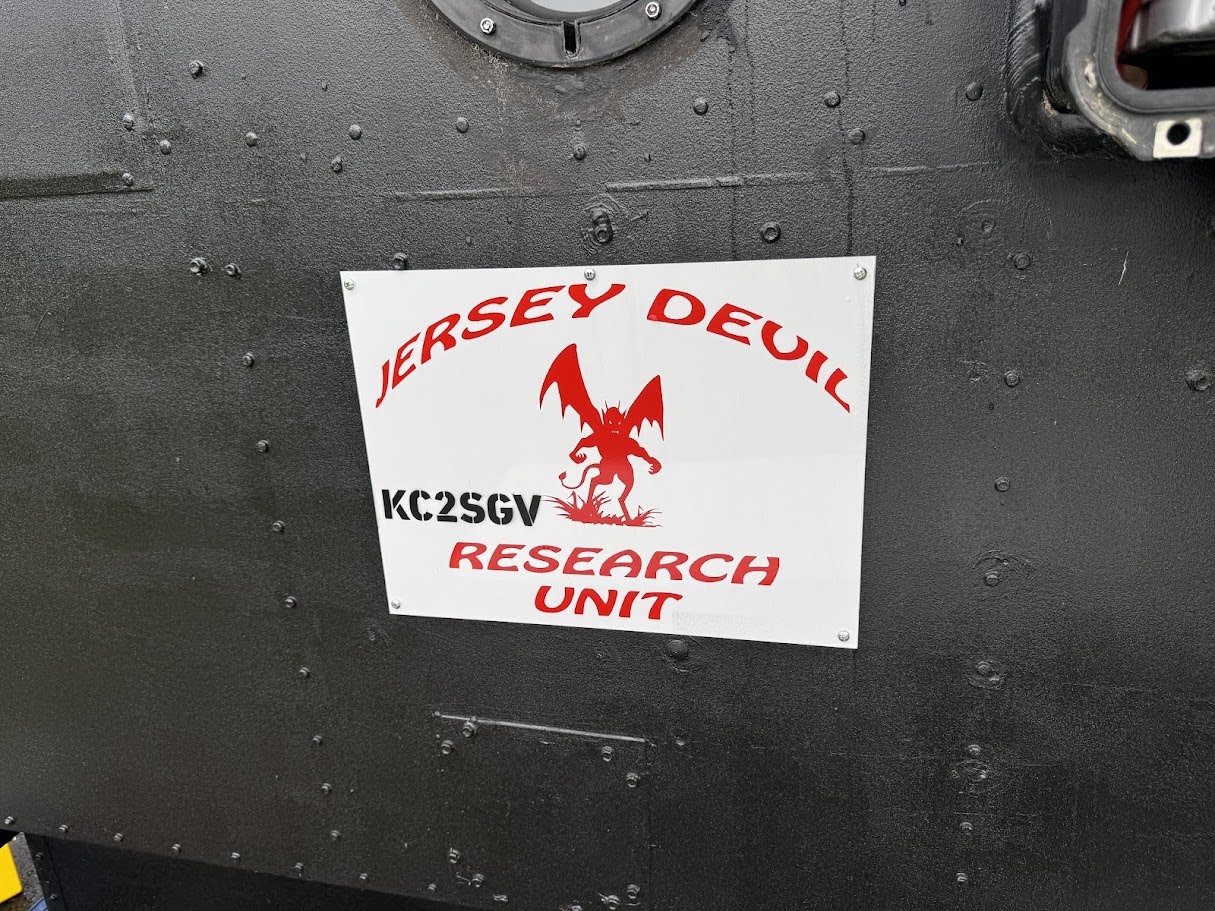
SJRA runs three large trailers out there: the CW trailer with three operating stations, the SSB and digital trailer with four, and the Jersey Devil Research Center — the satellite trailer — with one. The CW and SSB trailers each run sixteen feet, air-conditioned, lit, wired with CO2 sensors, and built out with cubicle-style operating positions. Ken built them himself. These aren’t folding tables under a pop-up tent. They’re built to get the job done.
The antenna farm behind those trailers is its own operation: multiple CW antennas, including two-element and four-element Yagis, several off-center-fed dipoles, a three-element SSB Yagi on 20 meters, a 40-meter vertical dedicated to digital, and a scattering of multiband dipoles filling in the rest. Two tri-fuel generators — a 13-kilowatt and a 10-kilowatt — keep all of it running.
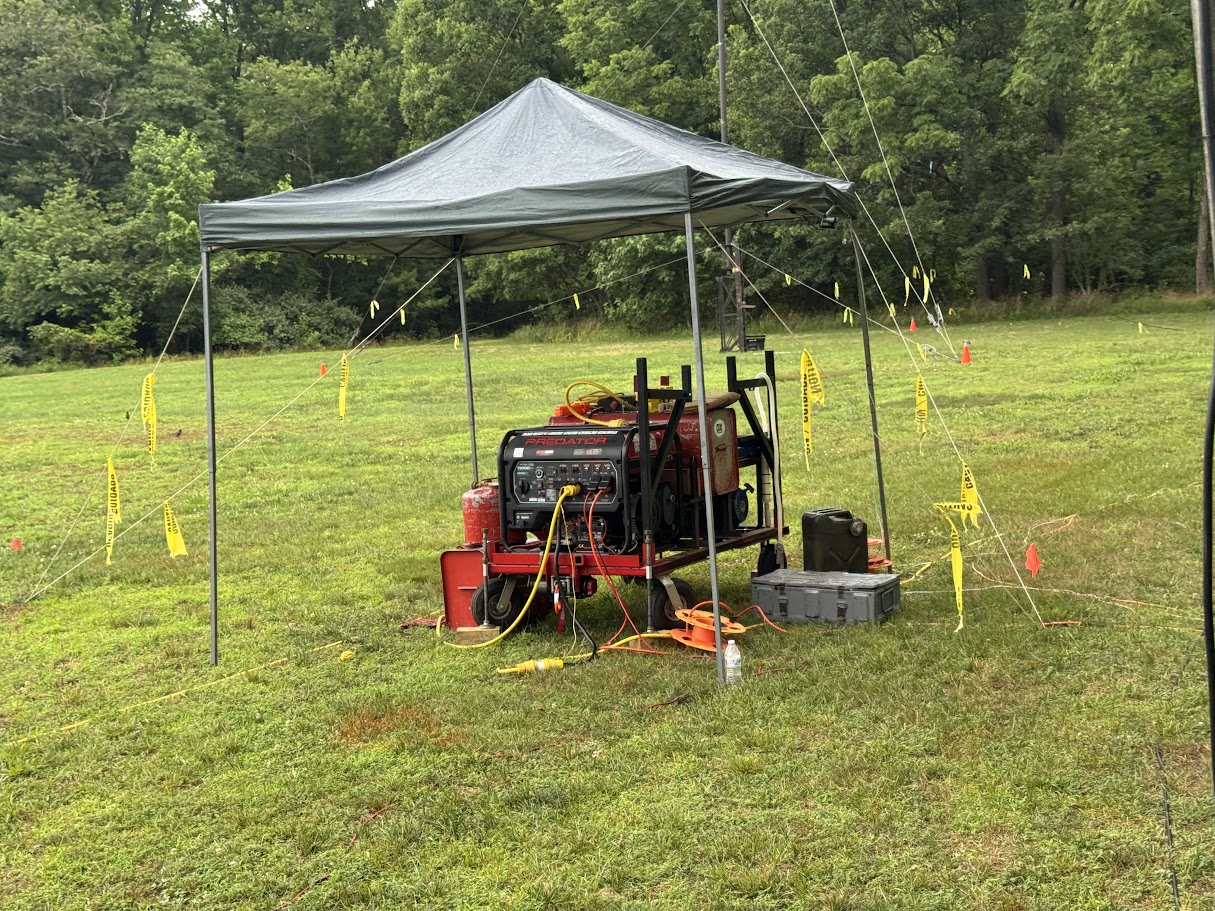
The operation runs on a real org chart, not just volunteers pitching in wherever. There’s an overall Field Day chairperson — Ken, K2WB — the club president, Rick, W2JAZ, who also runs one of the band captain slots, a hospitality chairperson (that was me), a safety officer, a safety consultant, an off-site coordinator, and a band captain for every mode.
On CW, that’s Al, N3AVT, and Bob, KE2D — veteran Morse code guys who take it seriously enough that Friday night, before the contest had even officially started, I saw them still out in their trailer close to midnight, getting everything squared away for the next day. Al and Bob run their trailer like a military operation — red lights overhead, the whole thing.
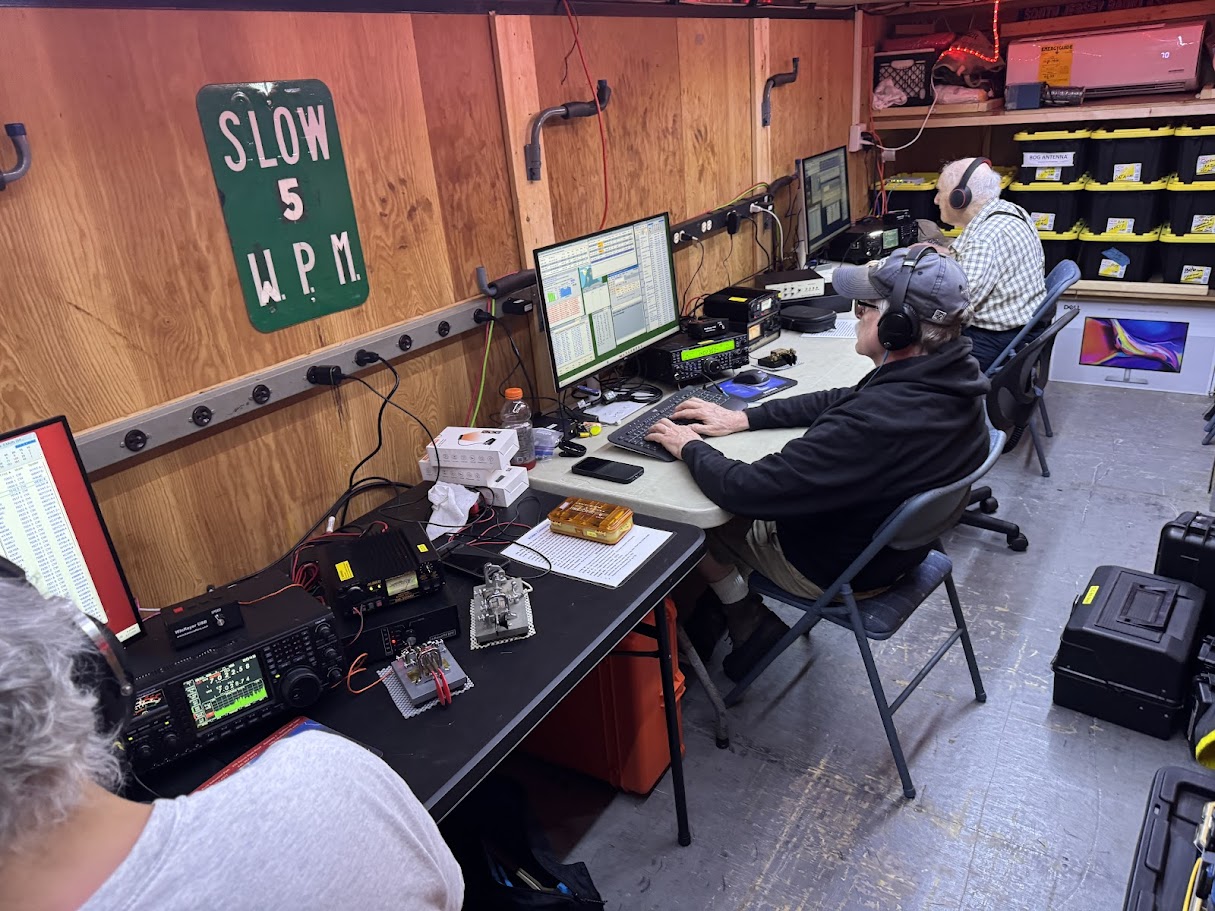
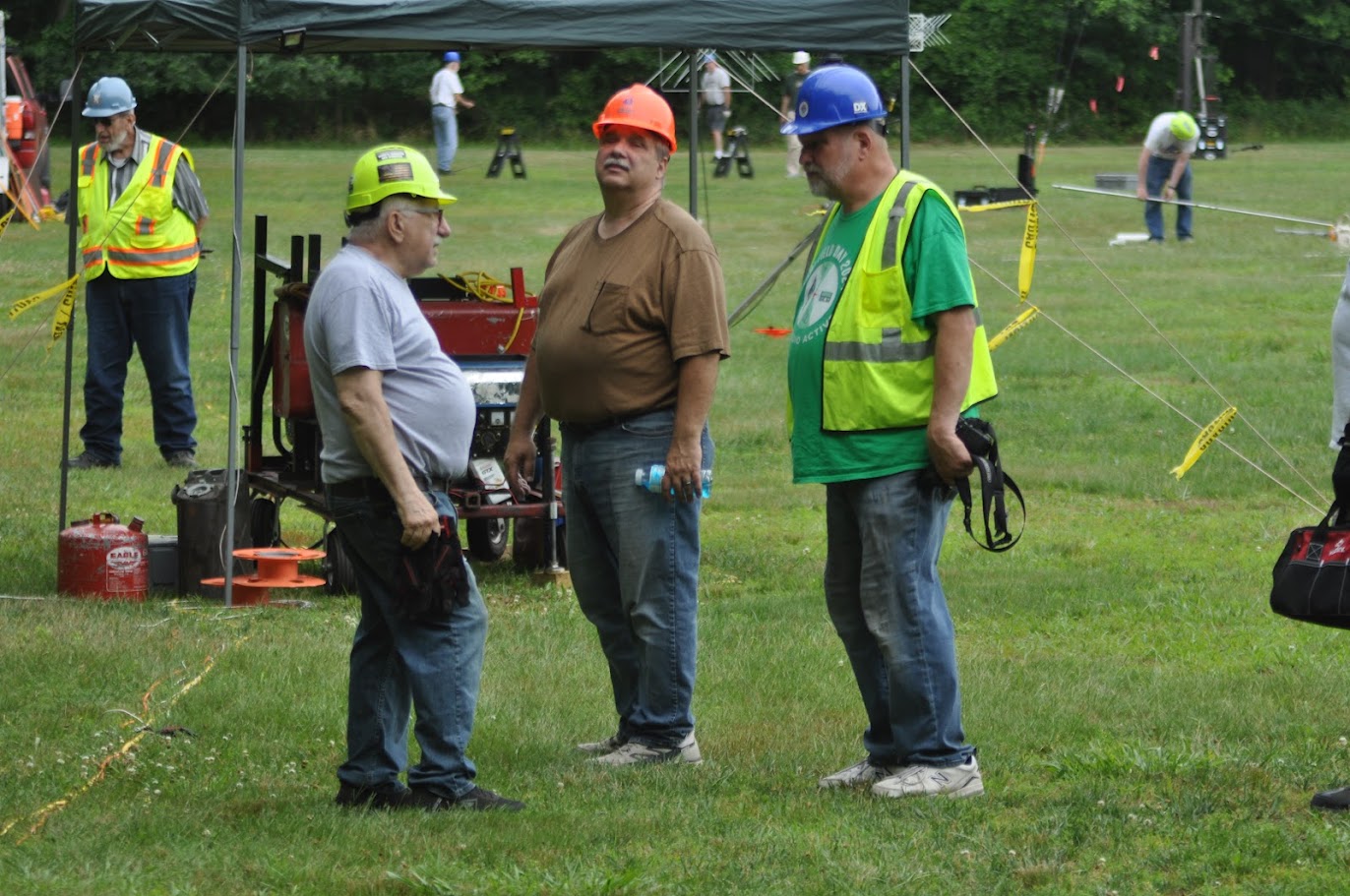
On SSB, it’s Joe, KC2SGV, Carl, W2CSH, and Ken, K2WB — serious operators with serious talent, and a lot of fun to be around besides. Joe’s a great Italian guy, always learning, always the first one to help somebody out. Carl’s been in the club a long time and has a great sense of humor. And Ken — Ken is Mister Field Day. Ken’s trailer runs brighter than the CW side, but it has its own rules just the same: no drinks, no lingering in the aisles, no small talk unless it’s necessary. Know your radio.
SJRA isn’t just old, it’s the oldest: incorporated in 1916, claiming the title of oldest continuously operating amateur radio club in the country — 110 years by the time I showed up. In years past, SJRA has landed in the national Top 10 more than once, running anywhere from 6A to 7A. This year’s numbers aren’t published yet, so I won’t guess — but the pedigree isn’t in question.
They’ll tell you Field Day isn’t a contest. Don’t believe them. Every good club treats it exactly like one — bonus points, strategy, best operators scheduled for the best openings.
Ken, K2WB, has run SJRA’s Field Day for more than twenty-five years and treats it like real competition, full stop. He also makes sure everybody has fun and the whole town knows it’s happening. Part of that is the GOTA station — Get On The Air — which isn’t about the club’s score at all. It’s about putting a mic in front of somebody who’s never used one and letting them make their first contact.
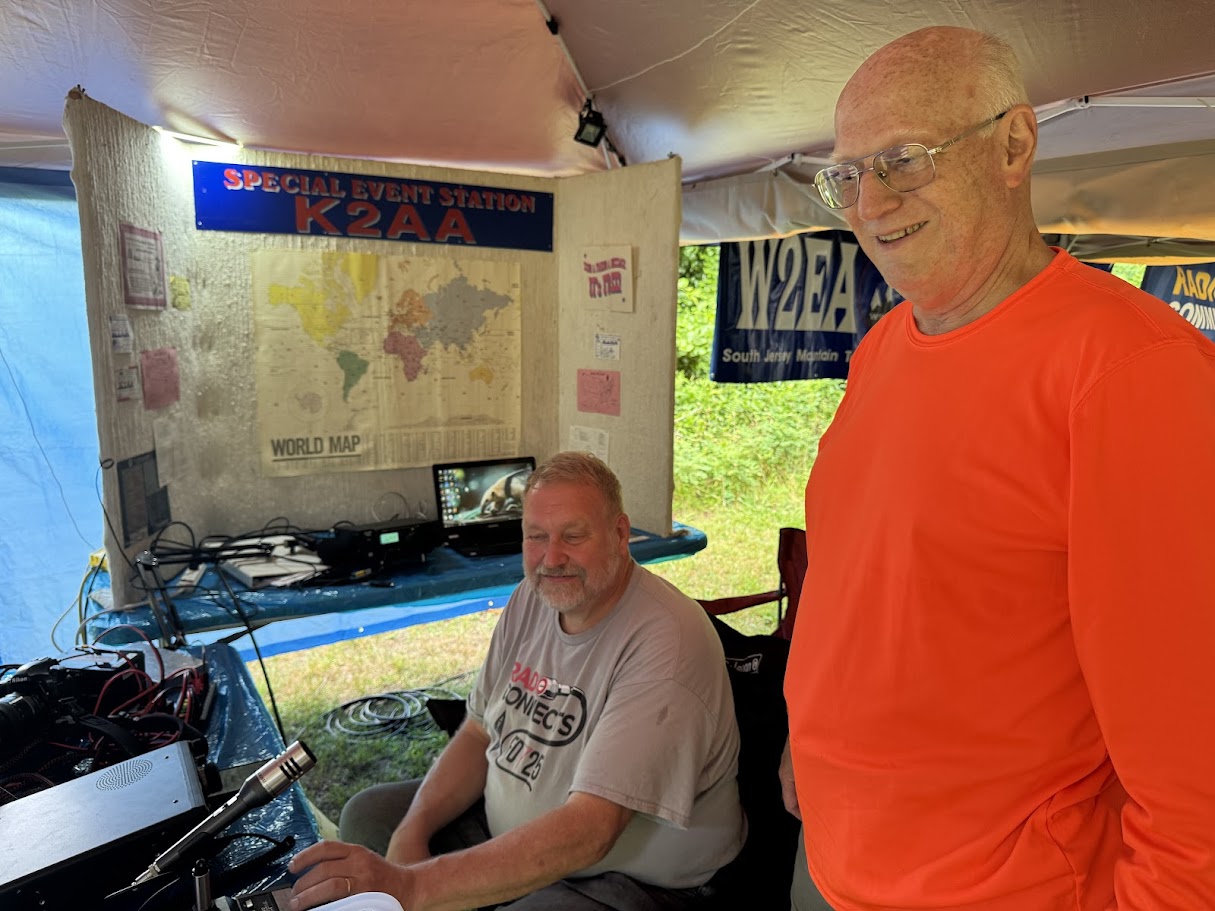
Peter, N2LVI, ran GOTA this year, and it might be one of the most important jobs on the field — introducing people to the hobby and actually getting them on the air. He set up in the hospitality tent, on the other side of the food area, quietly working VHF, UHF, and GOTA all weekend. We had roughly eighty visitors this year — township officials, ARRL members, Red Cross volunteers, neighbors who saw the antennas and got curious — and enough of them got on the air that we made the GOTA bonus, along with just about every other bonus point available. There’s real strategy in that, same as anywhere else in this hobby, and Ken has it all mapped out before Field Day even starts.
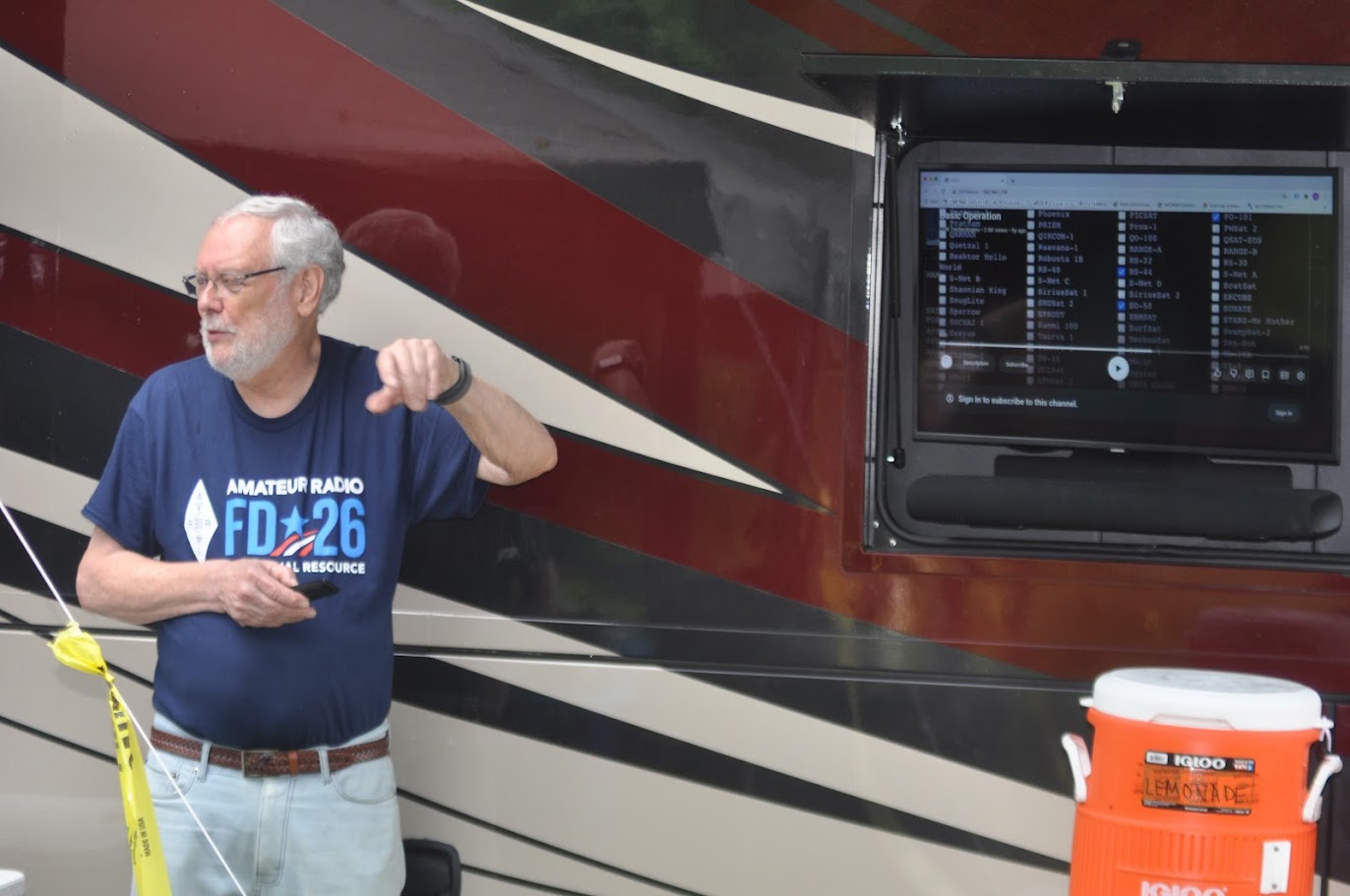
I was assigned two hours on 20 meters, two on 40, and one on digital — my first real, sustained stretch of contesting. Before that Saturday night, I’d logged maybe an hour or two of contesting in my life, total.
Back to that chair. The first few minutes on 20 meters were rough — new headset, new radio, new software, adrenaline on top of a full day of cooking. But the band cooperated. I could hear most of my early contacts clean, and that first success did something for my nerves nothing else could — my shoulders dropped an inch I hadn’t noticed I’d raised.
We parked on 14.213 and stayed there. All I had to do was work the foot pedal and the keyboard — but “all” is doing some work in that sentence. It demanded real focus, real listening, the kind where you’re not thinking about anything else.
Somewhere in there, it clicked. I found the rhythm. I watched the rate meter in N1MM climb, minute over minute. The band was hopping. I was having fun. I remember thinking that was the first time all weekend I hadn’t been thinking about the next meal.
What Actually Separates a Good Operation From a Great One
Three months between K3LR and Field Day taught me the difference between an operation that limps through 24 hours and one that runs like a machine. I’m not saying SJRA runs like K3LR — nobody’s operation runs like K3LR. I’m saying the same underlying principles show up at both, just at wildly different scales.
Know your equipment cold. Hold a frequency and call CQ, and you’ll out-rate someone dialing around search-and-pounce, every time. But holding a frequency well means knowing your radio, your software, your own habits well enough that none of it requires thought.
No built-in keyer? Use the one in your logging software. No frequency lock? Then you personally stay vigilant about staying put. Know your rotators. Know your antennas. Check your SWR. Make sure your beam is pointed where you need it.
Software matters, down to the small tricks inside it. Most clubs run N1MM Logger+ because it’s easy to pick up — but there’s a gap between knowing it and using it well.
Memorize your function keys, F1 through F8, so your hands never leave the keyboard mid-contact. Keep the screen simple: Entry Window, Bandmap, Check Partial. Use Call History and Super Check Partial to let N1MM suggest likely callsigns as you type — it cuts down busted calls more than you’d expect.
Use the built-in duplicate check to track which multipliers you still need. Trust your ear enough to know, within a call or two, whether you’re going to copy a station — and when to let it go. Politeness matters. So does your rate.
Team scheduling is its own discipline. Best operators at peak openings. Newer operators during quieter stretches. Night owls on the hours nobody else wants. Show up on time for your shift, every time — someone else’s night depends on you relieving them when you said you would. This year SJRA scheduled roughly 119 of a possible 192 operator-hours across all the stations — max Field Day hours times number of bands — leaving about 38 percent open for whoever wanted to fill in.
At K3LR, every one of eleven operators knew their window down to the minute, and the schedule bent around the ionosphere rather than the other way around — that kind of precision is what decades of running a top station buys you. SJRA can’t match that scale, and isn’t trying to. But the same logic runs underneath a much smaller operation: know who’s good when, and put them there.
SJRA also runs an incentive system that K3LR, frankly, doesn’t need — a raffle, stocked with DX Engineering gift certificates, run by our off-site coordinator, Jack, WB2TMH. Jack’s real job all weekend was talking people in on the repeater and making sure nobody showed up needing something the club couldn’t provide. But the tickets kept moving too — you could earn them by signing up to operate or help ahead of time on the SJRA website, by copying down the ARRL bulletin and sending it in to the club, by checking in with Jack on the repeater every time you left the house Friday, Saturday, or Sunday, by showing up for setup or teardown, or by taking on one of the dozen other jobs a Field Day needs filled. It’s a small thing. It also means the unglamorous jobs — the ones nobody signs up for out of love alone — actually get covered.
Comfort is a performance variable, not a luxury. A chair that doesn’t wreck your back six hours in. AC that works. Real food that nourishes you through a long shift instead of leaving you bloated halfway through. None of it shows up on a score sheet, but it keeps operators in the chair — and rate is just a function of hours logged well.
And the one people underrate most: you have to have fun. Miserable, angry operators mean lower rates, shorter tempers, and a worse experience for the people trying to work you too. Keeping the operation enjoyable isn’t a soft add-on. It’s part of what performance actually is.
Someone also has to think about the stuff that never makes an article. Safety — hard hats near antennas and towers, visible markings on guy wires, coax runs kept clear of pathways so nobody trips in the dark.
We monitored CO2 inside the operating trailers; four operators calling CQ for hours burns oxygen faster than you’d think. We ran low-voltage lighting along the pathways, specifically so it would keep working if the generator went down. Food got timed around the operating schedule, not the other way around — a lesson I’d already learned at K3LR, where breakfast went out right as the overnight team came off the bands.
Redundancy belongs here too. K3LR keeps two spare radios ready — not because they expect a failure, but because a station built at that level plans for one anyway. SJRA doesn’t have spare radios sitting around, and doesn’t need them to apply the same thinking at a club level: extra jacks, extra extension cords, extra coax, a crimping tool. The small stuff you’d never think to pack until you’re standing in a field at midnight needing exactly one of them.
None of it is glamorous. All of it is why some operations run clean for 24 hours and others don’t — whether that operation has eleven towers behind it or four guys and a folding table.
The Human Comedy
Not every lesson was solemn. A few were flat-out funny, and worth sharing, because even good operators trip on the basics.
I sat near an operator working 10, 15, and 80 meters who couldn’t buy a contact all afternoon. Turned out he was in CW mode while calling SSB. Perfect band conditions, wrong mode — same principle as before: knowing your equipment is everything. Watching his frustration build for twenty minutes before someone caught it was its own small lesson in staying humble.
Twice, in two different ways, I watched the same mistake happen: contacts logged under the wrong callsign. Once it happened to me — I was running FT8 through N1MM and WSJT-X, and the two operators who followed me forgot to close WSJT-X before switching operators. Every contact they made that session logged under my call. The fix is simple — close WSJT-X, then change operators — but simple doesn’t mean anyone remembers it at hour eighteen.
The other version had more heart. Two experienced operators were working together — one having real trouble hearing incoming callsigns, the other growing frustrated and saying something about it. The twist: the frustrated operator’s own contacts had been logging under the other’s call the entire time.
In N1MM, switching who you’re logged in as is one keystroke — Ctrl+O — worth checking more than once a shift in a busy trailer where operators rotate constantly.
That story stuck with me for another reason. In a multi-multi environment you’re shoulder to shoulder with operators of every skill level and every personality — good, great, brand new, occasionally difficult. Part of the job, alongside working the radio, is keeping your head about you no matter who’s next to you, because the goal never changes: make contacts, keep the rate up, stay in the game.
One more thing, offered gently: some hams treat Field Day as serious competition, and some show up mostly to spend a weekend with people they like. Both are legitimate reasons to be there, and a good operation makes room for both.
Hams, as a group, will give you a genuinely long answer to a simple question — my theory is a lot of us just don’t get enough of this kind of conversation the rest of the year. Radio fills something in.
Saturday Night, Sunday Morning
After putting away the leftovers that served as dinner Saturday night, I worked 40 meters until 11 PM. Once that shift wrapped, I walked back to the motorhome.
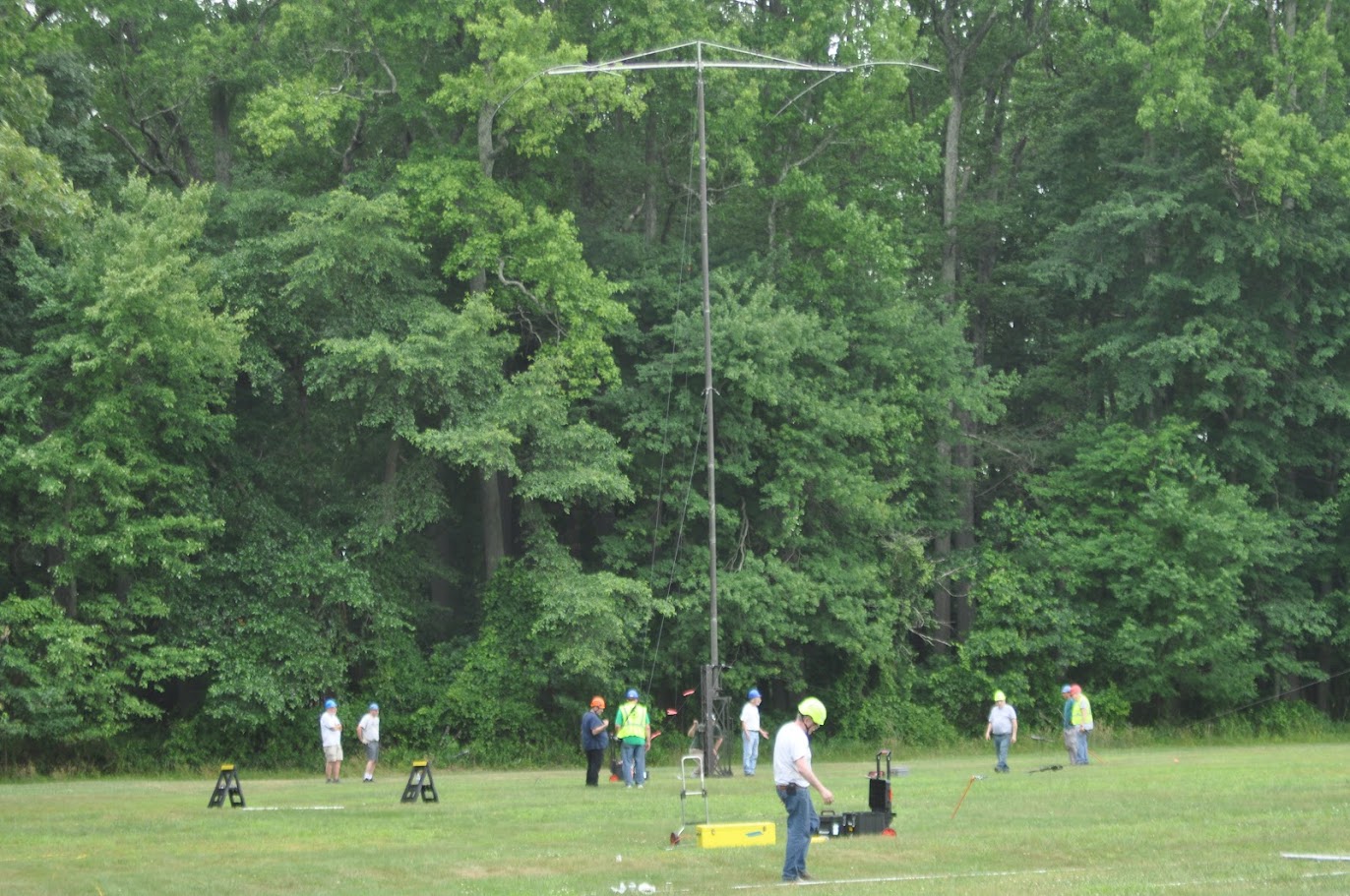
The three AB-577 towers stood out against the night sky — surplus military aluminum masts, about 310 pounds apiece, the kind hams and emergency response teams love because you can get a serious antenna up fast and know it’ll hold. Beyond them, three more aluminum towers held up dipoles scattered across the rest of the field, dark shapes I’d walked past all weekend without really looking at. It was a perfect night — around eighty degrees, nothing like the hundred-degree Field Days of the last couple of years — and I walked the pathways lit by that same low-voltage lighting we’d rigged in case the generator failed. The only sound out there was deer rustling in the woods behind me.
After hours of voices and CQs stacked three deep in a trailer, that quiet felt like its own kind of reward.
By the time I got to bed it was close to 1 AM, and I needed to be back at the digital station by 6.
I’m not a vain guy, but I wasn’t walking into a trailer full of people unshowered either — and when I wake up, I look like Doc Brown from Back to the Future. Up around five, coffee, a quick shower in the motorhome, out across the field in the pitch dark. A few SSB operators were still going when I got there, and next door the CW trailer had operators who’d been at it since sometime the night before — I felt a little in awe of them, still sharp, still working stations like it was the first hour instead of the last.
I sat down to run FT8 on 20 meters. The band was quiet. I stuck with it anyway.
At some point Ken came by and we got talking about how the weekend had gone. Ken’s a charter member of the Mountain Toppers, and he wasn’t just making conversation — he was recruiting. The South Jersey Mountain Toppers are serious people, and being new to it all left me a little unsure of myself around them. Everyone’s new at some point — most people in this hobby understand that instinctively, though not everybody does.
But I sat there and took stock of what I’d actually done in the last nine months: satellite work underway, VHF, UHF, and microwave in progress, an SO2R HF station at home, two or three contests under my belt, and now my first Field Day. That’s not nothing. For a minute, half-asleep on a quiet band, I let myself feel a little proud of it.
Ken asked if I’d join the club for the South Jersey Mountain Toppers VHF contest in September. It’s not a casual invitation — the Mountain Toppers, callsign W2EA, have been climbing a mountain in the Poconos for the ARRL September VHF contest since 2000, running it in memory of the late Walter Schmidt, W2EA, whose tradition they’ve kept alive for twenty-five years now. Their unofficial motto is UAFBAF — Up As Friends, Back As Friends — because four days of primitive camping with the same dozen people will test that friendship either way. Joe, KC2SGV, and Ray, N3RG, are both already on the roster. What Ken was describing was four days of primitive camping, roughly two hours of actual operating time, about six hours of sleep, fourteen guys on top of a mountain with no showers, no hotel, just a porta-potty and a trailer to operate from.
I told him I needed to think about it. I did. In the end, I’m probably passing this year — I’ve got the ARRL National Convention at the Huntsville Hamfest on the calendar, plus a new VHF/UHF/microwave station of my own I want to build and actually operate from. And honestly, I’d better pay some attention to my wife too, or this might end up being my last Field Day.
Where That Leaves Me
I didn’t walk away from my first Field Day a competitive contester. I walked away with a much better sense of what contesting actually asks of you — the equipment discipline, the team choreography, the unglamorous logistics that make or break a 24-hour effort — and a real appreciation for how much of that I’d already seen up close in a kitchen in western Pennsylvania before I ever touched a radio myself.
If you’re new to this hobby and wondering whether contesting is for you, Field Day is about as low-stakes a place as you’ll find to find out. The same instincts that make a good Field Day operator — knowing your gear, protecting your rate, staying steady next to whoever’s sitting beside you — are the same ones that make a good contester. You just get more hot dogs along the way.
73 de N2LQH · Terry Rossi · South Jersey
Things to Do Before Your First Field Day
- Practice before you sit down. I used the CW4EVER trainer (cw4ever.eu/trainer) in the weeks before Field Day. I don’t operate CW, but the SSB mode turned out to be genuinely useful practice for callsign recognition, weak-signal copy, and working a pileup without losing your place.
- Know the gear before you sit down. Find out what radio you’ll actually be operating and look it up ahead of time — YouTube has walkthroughs for most rigs clubs run at Field Day. Don’t let the first time you touch it be the first time you touch it.
- Bring your own comfort. If you’re not great at sitting for hours, bring a pillow or a cushion. If your back gives you trouble, bring lumbar support. You’ll be in that chair a long time, and comfort isn’t optional.
- Test your headset before you need it. Make sure you actually have one, and make sure it works, before you’re standing in a trailer at showtime finding out otherwise.
- Stay hydrated. Field Day lands in the thick of summer, and it’s always hot. Drink more than you think you need to.
- Show up early for your shift. Not on time — early. Don’t be the guy who’s ten minutes late while someone else is still waiting to be relieved.
- Make time for the people, not just the radio. This is probably the one stretch of the year you’ll spend multiple hours with fellow club members in a relaxed environment. Don’t let the whole weekend pass you by heads-down in a headset.
- Pitch in wherever you’re needed. If there’s an unscheduled hour on a band and you can fill it, fill it. If there’s trash on the ground, pick it up. It’s a team effort, and it runs on everyone chipping in, not just the people in the chairs.